The Malaysian government has committed to preserving its suite of people-centric assistance programmes even as it faces an estimated RM40 billion burden from petroleum product subsidies this year, a situation complicated by ongoing regional instability in West Asia. Deputy Finance Minister Liew Chin Tong made the declaration during parliamentary proceedings on July 15, responding to concerns that mounting fuel subsidy costs might force the administration to curtail other support mechanisms that Malaysians rely upon.
The government's resolve to maintain funding for schemes such as Sumbangan Tunai Rahmah and Sumbangan Asas Rahmah reflects a deliberate policy choice to shield ordinary citizens from the volatility of global oil markets. Rather than adopting an across-the-board reduction approach to offset petroleum subsidies, the administration is signalling that protecting household finances remains a budgetary priority. This positioning comes as regional tensions have pushed crude prices to levels that would otherwise translate into substantially higher pump prices domestically.
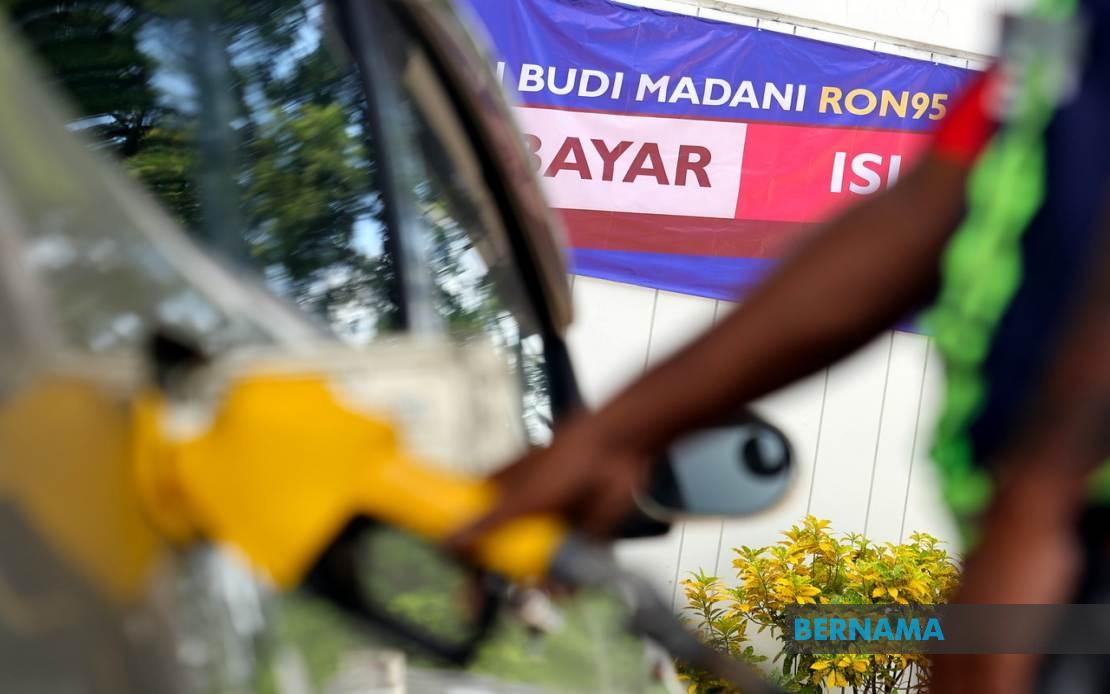
Central to this commitment is the BUDI MADANI RON95 scheme, which was introduced in September of the previous year as a circuit-breaker against fuel price shocks. The programme operates by fixing the retail price of RON95 petrol while imposing consumption quotas on users, effectively decoupling Malaysian fuel costs from the volatile international market. Liew emphasised that this mechanism has proven its worth, particularly during the peak of regional tensions in March and April when global crude prices approached RM5 per litre. By contrast, Malaysian consumers continued purchasing RON95 at RM1.99 per litre, insulating households and small businesses from the full impact of geopolitical disruption.
The gap between the international reference price and Malaysia's controlled domestic rate underscores the true scale of government intervention. When the West Asian conflict intensified earlier in the year, the disparity between what Malaysians were paying and the actual global cost of fuel widened dramatically. This situation would normally force any administration into painful budgetary trade-offs, yet the government has determined that maintaining price stability and supply security justifies the fiscal commitment. For Malaysian households already managing inflation across other consumer goods, this represents a meaningful buffer against further cost-of-living pressures.
Liew's parliamentary comments addressed a supplementary question about potential reductions to food subsidies, cash assistance, and educational support programmes. The fact that such questions were raised reflects legitimate budgetary concerns in an environment of constrained fiscal resources. However, the deputy minister's response indicated that the government views these welfare measures and fuel price controls as complementary rather than competing priorities. This suggests a deliberate policy framework in which protecting purchasing power across multiple fronts takes precedence over balanced-budget orthodoxy.
The BUDI95 scheme incorporates two key mechanisms that Liew highlighted as distinctive advantages. The first is the fixed-price element, which provides certainty for consumer planning and prevents sudden shocks to transportation costs and business logistics. The second is the government-ensured supply guarantee, which addresses concerns about fuel availability during periods of international stress. Together, these elements mean that Malaysian motorists continue moving through traffic congestion, assured of fuel availability and predictable costs, rather than facing queues at petrol stations or rationing scenarios witnessed in other countries.
From a regional perspective, Malaysia's approach contrasts with the responses of some peers facing similar pressures. While some nations have pursued subsidy rationalisation or targeted support schemes, Malaysia has opted for broader protection combined with strategic price controls. This reflects particular vulnerabilities in the Malaysian economy where fuel costs ripple through transportation, agriculture, and small-business sectors that employ significant portions of the workforce. The decision to maintain assistance programmes acknowledges these structural realities.
The RM40 billion petroleum subsidy projection itself warrants scrutiny as an indicator of how substantially fuel prices have diverged from government-controlled domestic rates. This figure represents a significant allocation within the national budget, equivalent to funding multiple large infrastructure projects or substantial expansions of social programmes. The fact that the administration is absorbing this cost rather than passing it to consumers reflects a policy decision rooted in social stability and household financial resilience.
Looking forward, the sustainability of this approach depends partly on how long regional tensions persist and whether global oil prices moderate. Should the West Asian situation stabilise and international crude prices decline, the subsidy burden would ease automatically, reducing the fiscal pressure on the government. Conversely, further geopolitical complications could intensify the budgetary strain. The government appears to be gambling that either normalisation occurs or that sustained support for people-focused programmes remains politically and economically preferable to the alternative of sharp reductions.
For Malaysian voters and households, the immediate implication is continuity in cost-of-living support during an uncertain period. The commitment to maintaining STR and SARA alongside fuel price controls provides a safety net that functions across different economic dimensions. Small businesses relying on stable transportation costs, workers concerned about fuel surcharges, and families dependent on cash assistance all benefit from the government's position. This multi-layered approach to protecting household finances suggests that budgetary flexibility and political will currently align to prioritise people's welfare over fiscal consolidation targets, at least in the near term.

