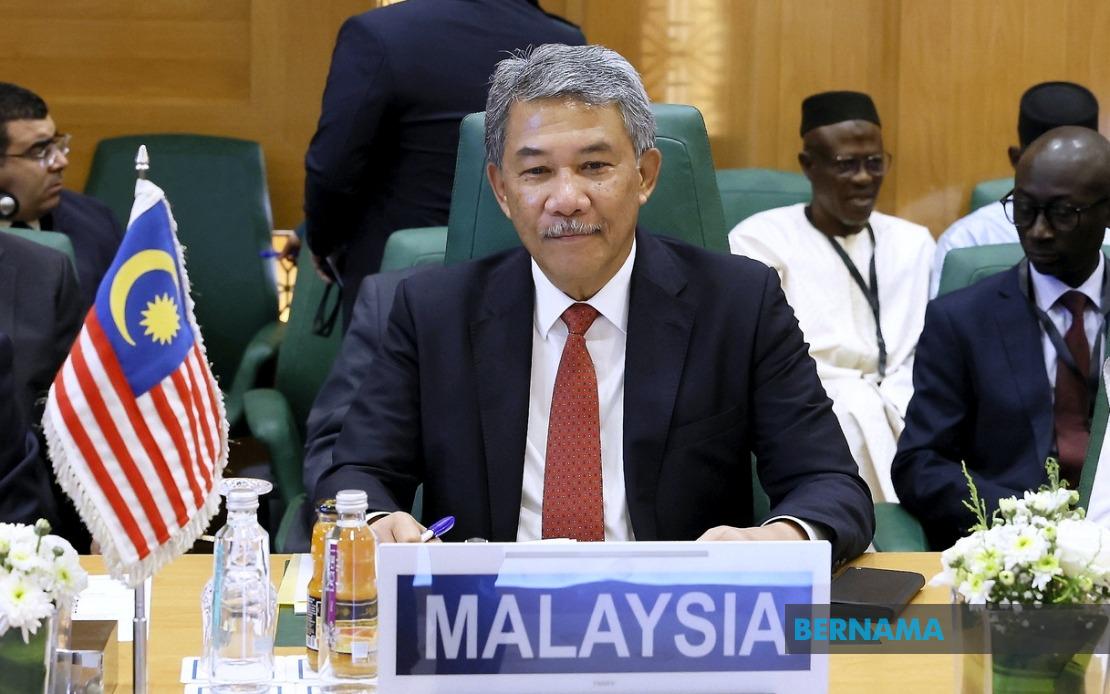
At an extraordinary meeting of the Organisation of Islamic Cooperation's Council of Foreign Ministers in Jeddah, Malaysia has issued a forceful call for all member states to unite in rejecting Israel's US$2.3 billion settlement scheme in the occupied Palestinian territories. Foreign Minister Datuk Seri Mohamad Hasan delivered the Malaysian position, emphasising that OIC nations must translate the International Court of Justice's July 19, 2024 advisory opinion into concrete diplomatic and political action by systematically withdrawing support for Israeli settlement activities and the occupation framework itself.
The core concern driving Malaysia's intervention centres on Israel's accelerating construction of settlements across the West Bank, including East Jerusalem, which Kuala Lumpur views as a calculated strategy to render Palestinian statehood structurally impossible. By fragmenting Palestinian territorial holdings and establishing irreversible demographic and infrastructural facts on the ground, settlement expansion fundamentally alters the political calculus needed for any meaningful two-state arrangement. The E1 settlement initiative represents a particularly aggressive manifestation of this approach, as it would physically sever the northern and southern segments of Palestinian territory, eliminating the contiguity essential for governance and economic viability.
Malaysia's diplomatic posture reflects deepening frustration across the Islamic world at the apparent ineffectiveness of international legal mechanisms and humanitarian appeals. The country has positioned itself as a vocal advocate for Palestinian rights within multilateral forums, and this Jeddah statement reinforces that commitment by framing settlement rejection not as mere symbolic protest but as a binding obligation derived from ICJ jurisprudence. For Malaysian audiences, this represents continuity with Kuala Lumpur's long-standing pro-Palestinian foreign policy, which remains a cornerstone of the country's identity within Muslim-majority Southeast Asia and the broader Islamic world.
Beyond settlements, Malaysian officials have escalated condemnation of security-related violations, particularly the incursion into the Al-Aqsa Mosque compound by Israeli ministers and far-right figures on July 23. This incident, according to Malaysia's interpretation, exemplifies a pattern of deliberate provocation targeting Islam's third-holiest site and represents an assault on Muslim dignity that transcends territorial disputes. By invoking the historical Hashemite Custodianship—Jordan's long-recognised authority over Christian and Islamic holy sites in Jerusalem—Mohamad has invoked a framework that underscores international legitimacy and regional consensus on the sanctity of these locations.
The humanitarian dimensions of Malaysia's statement reveal the interconnected nature of contemporary Palestinian challenges. While settlement expansion represents a long-term existential threat to Palestinian statehood, the Gaza conflict has created an immediate catastrophic crisis claiming over 70,000 lives and reducing entire neighbourhoods to rubble. Malaysian officials argue that nearly three years of international appeals for ceasefire and humanitarian access have yielded minimal results, with Israel continuing bombardment of civilian infrastructure including hospitals and schools while restricting aid flows. This convergence of settlement expansion and acute humanitarian crisis, in Malaysia's view, demonstrates Israel's systematic approach to Palestinian displacement and subjugation across multiple registers.
The demand for United Nations Security Council enforcement of international law reflects Malaysia's belief that existing institutional mechanisms have proven inadequate to the gravity of the situation. Particular concern attaches to the seizure of UNRWA's Kalandia Training Centre and the passage of Israeli legislation imposing mandatory death sentences on Palestinians, actions Malaysia characterises as violations of international humanitarian norms and refugee protection conventions. By calling for Security Council intervention, Malaysia implicitly acknowledges that voluntary compliance with international law has failed and that binding enforcement mechanisms must be activated.
For Southeast Asian observers, Malaysia's assertive stance carries strategic significance beyond bilateral Israeli-Palestinian dynamics. As the region's most prominent Muslim-majority nation and a consistent voice in the Non-Aligned Movement, Malaysia's positioning influences broader developing-world solidarity on global justice issues. By emphasising a rules-based international order while simultaneously arguing that existing rules remain unenforced, Malaysia articulates a paradox confronting much of the Global South: the formal architecture of international law exists, yet powerful states selectively apply or ignore it according to geopolitical convenience.
Malaysia's insistence on the two-state solution based on June 4, 1967 borders, with East Jerusalem as the Palestinian capital, represents the mainstream international consensus, yet this formulation faces mounting challenges from Israeli settlement facts on the ground. Each new settlement expansion narrows the territorial space available for a viable Palestinian state, rendering the two-state framework increasingly theoretical. Malaysian diplomacy thus confronts a fundamental tension: how to advocate for a solution that international law enshrines while that solution becomes progressively less achievable through unilateral Israeli actions that the international community cannot prevent.
The Jeddah meeting itself signals OIC determination to present a united front on Palestinian issues, though historically OIC member states have struggled to translate rhetorical consensus into coordinated action. Malaysia's contribution attempts to bridge this gap by framing Palestinian support not as sectarian obligation but as adherence to ICJ rulings and international law—thereby appealing to secular and religious constituencies alike and grounding advocacy in legal rather than purely emotional terms. This approach may prove more effective in mobilising sustained diplomatic pressure than purely moral arguments, though sceptics question whether symbolic legal appeals carry sufficient weight against established geopolitical interests.
Looking forward, Malaysia's advocacy will likely focus on concrete measures beyond statement-making: supporting UNRWA's mandate amid threats to its institutional survival, mobilising OIC economic leverage through selective trade and investment policies, and championing Palestinian institution-building as a prerequisite for eventual statehood. The underlying argument suggests that while settlement expansion continues unchecked, the OIC must simultaneously strengthen Palestinian governance capacity to create facts on the ground supporting Palestinian rather than Israeli territorial claims. This dual strategy acknowledges current military and political realities while building foundations for eventual Palestinian independence.
For Malaysia specifically, maintaining pro-Palestinian advocacy provides critical domestic legitimacy and regional standing, particularly given the country's substantial Muslim population and its aspiration to leadership within the Islamic world. The statement's forceful language and comprehensive framing across settlements, religious sites, humanitarian access, and institutional capacity reflect calculations that audiences expect unambiguous Malaysian commitment to Palestinian rights. Whether such diplomatic pressure translates into meaningful constraint on Israeli policies remains uncertain, but the consistency of Malaysia's position underscores the enduring centrality of the Palestinian question to Malaysian foreign policy and Muslim-world solidarity frameworks.

