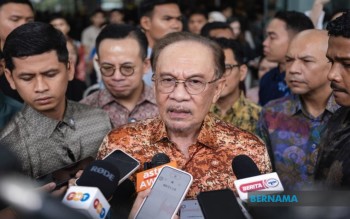
Prime Minister Datuk Seri Anwar Ibrahim has drawn a clear line on Malaysia's consumption tax policy, categorically refusing to embrace the foundational concept of a Goods and Services Tax whilst leaving room for targeted improvements to the existing Sales and Service Tax framework. Speaking after opening the TikTok Shop Summit 2026 in Kuala Lumpur, Anwar, who holds the concurrent position of Finance Minister, emphasised that the government's overarching fiscal philosophy centres on protecting the lowest-income households from additional tax obligations.
The distinction Anwar articulated between GST's core principle and selective components reflects an important nuance in the tax debate. A broad-based GST, as implemented in many countries, casts a wide net across all citizens and consumption patterns, fundamentally different from the targeted approach the MADANI administration advocates. Anwar's insistence on this distinction suggests the government recognises the political and social risks associated with regressive taxation systems that can disproportionately affect purchasing power among vulnerable populations.
Recent months have witnessed intensified discussion around Malaysia's tax structure, prompted partly by fiscal pressures and the government's need to expand revenue sources. Various stakeholders have proposed solutions ranging from electronic payment transaction levies to comprehensive tax regime overhauls. Some economists and policy analysts have championed GST reintroduction as a mechanism to achieve fiscal consolidation targets, arguing that a modern, well-designed broad-based consumption tax could enhance efficiency. However, Anwar's position makes clear that such considerations remain subordinate to the administration's commitment to protecting lower-income Malaysians from increased taxation.
Malaysia's tax journey over recent years reflects the political economy of consumption taxation. The previous government introduced GST in 2015 at a standard rate of six percent, but the policy faced substantial public backlash amid concerns about rising living costs and reduced household purchasing power. When Pakatan Harapan took office in 2018, replacing GST with the current SST regime became a priority, responding to widespread public sentiment that the broad-based tax was regressive and contributed to affordability pressures across the economy.
The SST system, which separates taxes on goods and services rather than applying a unified rate, theoretically allows greater flexibility in targeting specific sectors and products. However, implementation challenges and compliance complexities have prompted ongoing review. Anwar's openness to SST adjustments suggests the government recognises room for improvement without fundamentally restructuring the tax base. Potential refinements might include streamlining administration, adjusting rates on specific goods categories, or enhancing digital compliance infrastructure to broaden the tax net more efficiently.
From a Southeast Asian perspective, Malaysia's tax policy approach matters considerably. The region encompasses diverse development levels and income distributions, making regressive taxation particularly contentious. Nations across ASEAN grapple with similar challenges of broadening tax bases whilst maintaining social equity. Malaysia's choice to prioritise low-income protection whilst exploring targeted adjustments offers a model distinct from neighbours that have embraced broader consumption taxes, illustrating different pathways to fiscal sustainability.
The government's positioning also reflects awareness of macroeconomic headwinds affecting Malaysian households. Inflation, volatile commodity prices, and global supply chain disruptions have compressed real incomes for many workers. Against this backdrop, introducing or expanding broad-based consumption taxes risks compounding affordability challenges and potentially dampening consumer spending, which remains crucial for economic growth. By constraining the poorest households' tax burden, the government maintains space for consumption-driven expansion.
Anwar's comments indicate that any future tax policy evolution will proceed within defined parameters. The government may explore hybrid approaches combining elements of both systems or introducing targeted taxes on specific transactions or consumption patterns, provided these do not substantially increase obligations on low-income earners. This suggests pragmatism: acknowledging that the pure SST framework may require adjustment whilst respecting political commitments and social considerations underpinning the current regime.
The fiscal dimension remains implicit in these policy discussions. Malaysia faces medium-term budget pressures requiring revenue enhancement and expenditure discipline. However, Anwar's stance suggests the administration believes these objectives can be achieved through mechanisms other than broad-based consumption tax expansion. These might include improving tax collection efficiency, combating evasion, expanding the income tax base, or introducing targeted levies on specific high-value transactions or sectors.
International experience demonstrates that successful tax reform requires public confidence and perceived fairness. Countries that have implemented comprehensive tax overhauls typically invested substantial effort in explaining rationales and demonstrating how revenue generation serves public priorities. Malaysia's emphasis on protecting vulnerable populations reflects recognition that legitimacy underpins compliance and effectiveness. A tax system perceived as unfairly burdening the poor faces implementation difficulties regardless of theoretical soundness.
Looking ahead, the government's flexibility on SST improvements whilst maintaining GST resistance suggests a pragmatic incrementalism. Rather than wholesale structural changes, the approach involves periodic refinements responding to implementation experience and evolving economic conditions. This strategy offers stability for businesses and households whilst preserving room for efficiency gains. However, it also implies that Malaysia's fundamental consumption tax architecture will remain distinctive within the region, reflecting distinctive policy priorities and political economy constraints.

