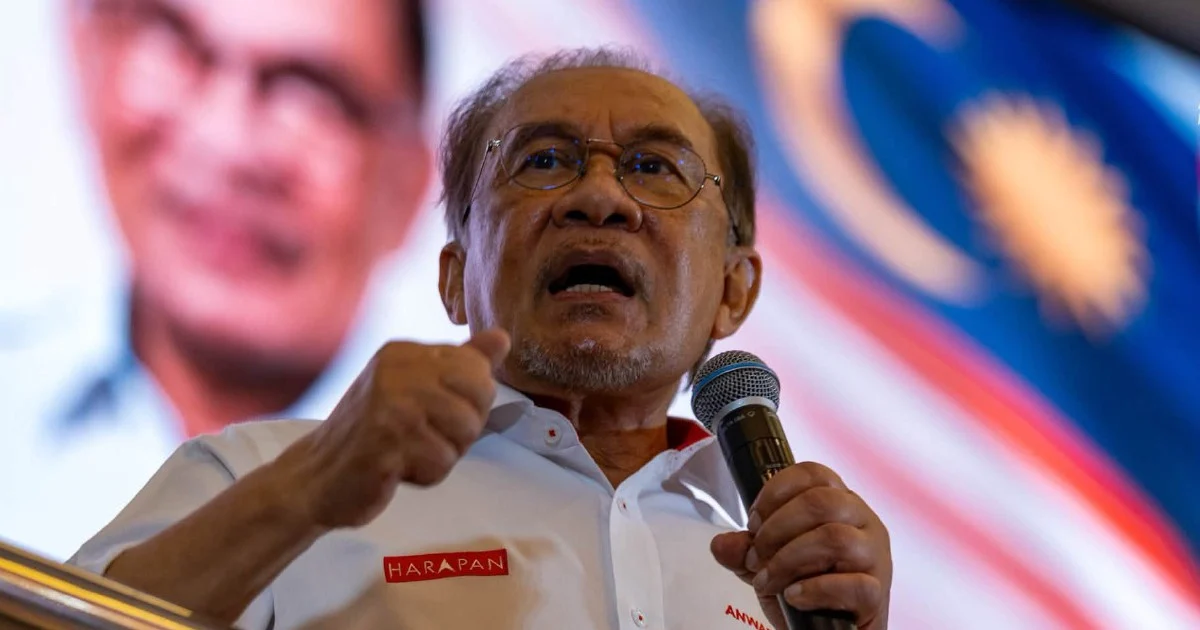
Prime Minister Datuk Seri Anwar Ibrahim has ruled out seeking assistance from Singapore to facilitate voting for Malaysians working across the Causeway during the upcoming Johor state election on July 11. The announcement addresses speculation that had emerged regarding potential voting arrangements for the substantial workforce commuting between the two nations.
The clarification carries significance for Malaysia's electoral processes and cross-border labour dynamics in the region. Each year, tens of thousands of Malaysian workers travel daily to Singapore for employment, creating logistical questions whenever elections are scheduled. The decision to proceed without requesting facilitation through Singapore maintains Malaysia's independent electoral administration while acknowledging the constraints facing workers during polling periods.
Anwar's statement reflects the established practice of conducting elections within Malaysia's territorial jurisdiction without external coordination on voting mechanisms. While many Commonwealth nations have experimented with overseas voting facilities and cross-border arrangements, Malaysia has traditionally confined polling operations to designated stations within the country. This approach ensures that election administration remains entirely under the purview of the Election Commission.
For Malaysian workers in Singapore, the implications are straightforward: they face the familiar choice of either taking leave to return home for voting or forfeiting participation in the election. This arrangement has been the norm for previous state and federal elections, creating a recurring tension between employment obligations and civic participation. The July 11 election will present the same dilemma for the approximately 300,000 to 400,000 Malaysians estimated to work regularly in Singapore.
The decision also reflects broader considerations about bilateral relations and sovereignty. Requesting Singapore to host polling facilities would have represented a novel arrangement requiring inter-governmental coordination and potentially establishing precedents for future elections. By maintaining the status quo, Malaysia preserves clear demarcation lines in electoral administration while respecting Singapore's autonomy over activities conducted within its borders.
For Johor specifically, the state election assumes particular importance as a political bellwether. As Malaysia's second-largest state by population and a significant economic engine, Johor's electoral outcome carries implications extending beyond the peninsula's southern tip. The state has historically been competitive, with multiple political coalitions contesting vigorously for control. The July 11 vote will determine the state government composition following the constitutional dissolution of the state assembly.
The timing of Anwar's clarification suggests that enquiries or speculation had circulated regarding potential voting accommodations. Such discussions may have arisen from civil society groups, worker organisations, or opposition figures seeking to address the franchise challenges faced by cross-border workers. The Prime Minister's explicit confirmation that no approach to Singapore would be made provides finality to the matter, allowing stakeholders to plan accordingly.
This situation illuminates a broader Southeast Asian pattern where large-scale labour migration creates electoral participation challenges. Countries throughout the region grapple with reconciling workers' democratic rights against practical constraints. Some nations have developed external voting mechanisms for citizens abroad, though these typically apply to overseas nationals rather than cross-border daily workers. Malaysia's approach remains more restrictive, reflecting different policy priorities around election administration.
The decision may prompt renewed discussion about alternative mechanisms for enhancing cross-border worker participation. Some analysts have previously suggested virtual voting, extended early polling periods, or designated voting stations in major Malaysian border towns as potential solutions. However, such measures involve administrative complexity and resource allocation that the Election Commission would need to evaluate independently of bilateral considerations.
For employers in Singapore, the announcement clarifies that Malaysian workers will face the established constraints on voting participation. Large multinational firms and regional corporations employing significant Malaysian workforces may need to consider leave policies during major elections. The absence of special arrangements means that individual workers must navigate employment and civic participation obligations through existing frameworks.
Anwar's statement also carries symbolic weight in emphasizing Malaysia's full control over its electoral processes. As Prime Minister, his confirmation that no external arrangements will be sought underscores the government's commitment to preserving electoral sovereignty and administration within exclusively Malaysian institutional structures. This positioning becomes particularly relevant given ongoing discussions about election conduct and integrity across Southeast Asia.
Looking forward, the July 11 Johor election will unfold according to established procedures, with voters required to physically present themselves at polling stations within Malaysia. The decision maintains consistency with precedent while acknowledging the real-world constraints faced by the cross-border workforce. For Malaysian democracy, the approach prioritizes institutional autonomy and clear jurisdictional boundaries over accommodations that would require coordination with a foreign government, even one as closely integrated with Malaysia as Singapore.

