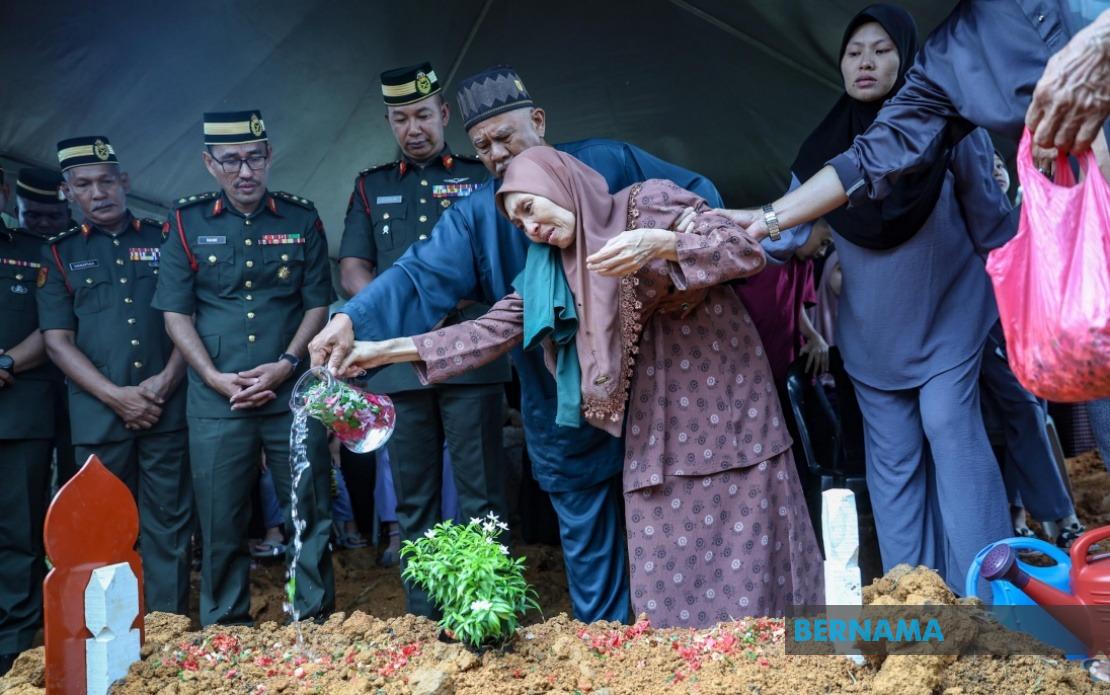
Private Siti Khadijah Sungip, a 24-year-old member of the Malaysian Army's First Squadron of the Royal Engineer Regiment, was buried at the Taman Sri Lambak Muslim Cemetery in Kluang on Monday afternoon following her death in a training accident at Hobart Camp in Gurun, Kedah. The funeral service, held at 1.15 pm, drew military personnel, family members, relatives and friends who gathered to honour the fallen soldier in what observers described as a solemn ceremony befitting her service.
The fatal incident occurred during grenade throwing training at Hobart Camp on Sunday morning at 10.57 am, when an explosion claimed the lives of two personnel undergoing instruction at the target range. In addition to Private Siti Khadijah, Corporal Norazmi Abu Bakar from the Sixth Battalion of the Royal Malay Regiment was also killed. Both soldiers sustained severe injuries in the blast and were pronounced dead en route to Sultan Abdul Halim Hospital in Sungai Petani, where they were being transported for emergency treatment. The Malaysian Army has classified the incident as occurring during an accidental explosion at the training facility, though investigators are continuing to examine the circumstances.
The symbolic presentation of the Malaysian flag to the deceased's family marked a poignant moment during the funeral proceedings. Brigadier General Datuk Zulhelmy Masdar, Commander of the 7th Brigade based at Mahkota Camp, formally handed the Jalur Gemilang to Private Siti Khadijah's father, Sungip Jais, 65, in recognition of his daughter's sacrifice in service to the nation. This ceremonial gesture underscores the military's acknowledgment of the risks inherent in defence force training operations and its respect for those who lose their lives in the line of duty.
The deceased's journey from the hospital to her final resting place involved careful coordination among military units. Following completion of post-mortem examination at Sultanah Bahiyah Hospital in Alor Setar at approximately 2.30 am on Monday, Private Siti Khadijah's body was transported to her family residence in Taman Sri Lambak, arriving at 12.10 pm. Throughout this process, the coffin was accompanied by First Field Troop Leader Lieutenant Muhammad Lutfil Hadi Osman and four members of the First Squadron of the Royal Engineer Regiment stationed at Sangro Camp in Taiping, Perak, ensuring proper military protocol was observed. The body was subsequently conveyed to Darul Iman Mosque, where funeral prayers were conducted by Major Mohd Azlan Shah Abdul Razak from the Malaysian Army Field Engineering Institute.
The incident at Hobart Camp has renewed scrutiny of safety procedures during grenade training exercises, which remain among the most hazardous components of infantry instruction. While such training is essential for developing combat capabilities, the fatal accident highlights the unpredictable dangers soldiers face even in controlled environments. The target range at the Gurun facility serves as a primary location for ordnance training across multiple military units, accommodating personnel from various branches and regiments who rotate through instruction cycles throughout the year.
Private Siti Khadijah's death represents a significant loss for the Royal Engineer Regiment, which plays a crucial role in Malaysia's military engineering operations, including infrastructure development, disaster relief and combat support. Female personnel have become increasingly integral to Malaysian Armed Forces operations across all branches, with women serving in diverse roles from combat engineering to command positions. The loss of a young trained engineer underscores not only the human cost of military service but also the broader implications for the professional development and operational capacity of technical military units.
For the broader Malaysian defence community, such incidents prompt essential conversations about training safety protocols, equipment standards and risk mitigation measures. The grenade throwing exercise, though fundamental to soldier preparation, requires meticulous attention to safety procedures to prevent inadvertent detonation or fragmentation hazards. Military training institutions must balance the necessity of realistic, challenging exercises with robust safeguards designed to protect personnel during the learning process.
The funeral service reflected the respect accorded to military personnel who die in service, with the presence of senior officers and the formal flag presentation ceremony demonstrating institutional recognition of the sacrifice involved. Such ceremonies serve not only to honour the deceased but also to reinforce among active service members the weight of their commitment and the military's obligation to remember those lost. For Sungip Jais and Private Siti Khadijah's extended family, the formal military recognition provided some measure of acknowledgment for their loss, though it cannot diminish the personal grief of losing a young family member during peacetime training operations.
The incident will likely trigger an official investigation by Malaysian Army command to determine whether procedural lapses, equipment failures or other factors contributed to the explosion. Such inquiries are standard practice following training fatalities and serve to identify corrective measures that might prevent similar occurrences. The findings may inform updates to training protocols, equipment inspection procedures or personnel certification requirements across the armed forces, potentially affecting how similar exercises are conducted at facilities throughout Malaysia.