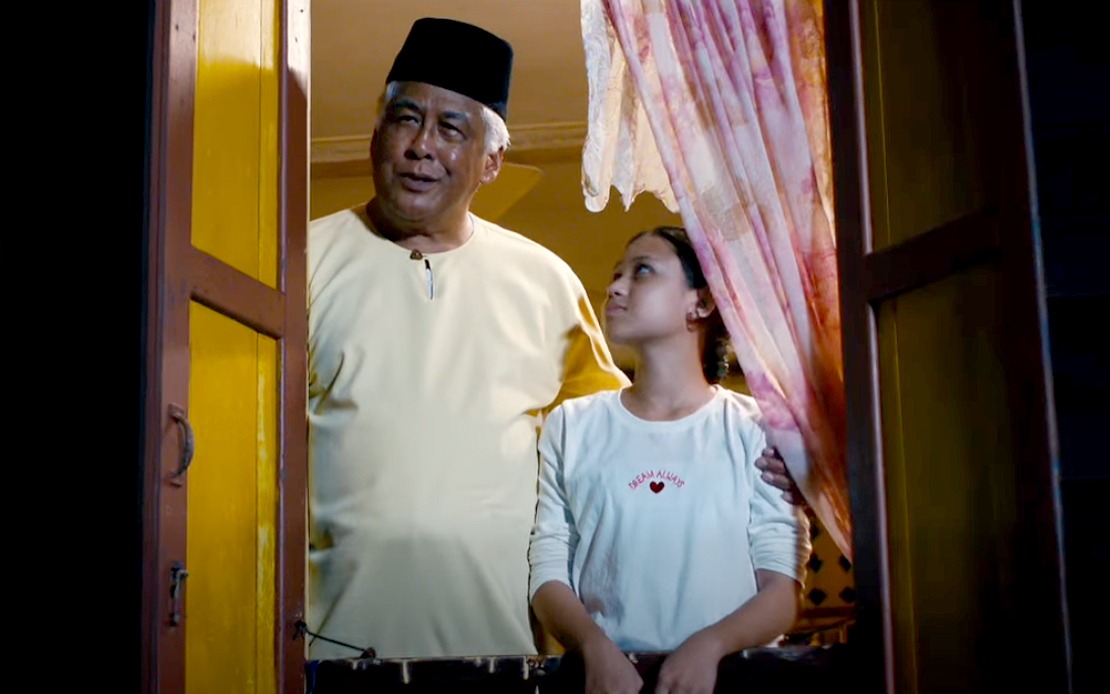
Malaysia's Cabinet ministers have marshalled social media platforms to amplify a unified message of patriotism and national cohesion as the country marks its National Day celebrations. The coordinated campaign across Facebook, X, and Instagram reflects an intensified government effort to reinforce themes of national pride and collective responsibility during a period traditionally reserved for public reflection on the nation's journey since independence.
Deputy Prime Minister Datuk Seri Fadillah Yusof anchored the ministerial messaging with an emotionally resonant eight-minute video featuring veteran actor Datuk Jalaluddin Hassan portraying a grandfather imparting values of sacrifice and patriotism to his grandchild. The production, shared on his official Facebook account alongside a personal address, articulated a core government narrative: that Malaysia's contemporary prosperity represents the accumulated sacrifice of preceding generations and demands vigilant stewardship from citizens today. In his remarks, Fadillah Yusof encapsulated the government's framing of national identity as a shared endeavour transcending divisive boundaries, urging citizens to "guard its sovereignty, respect its differences, and strengthen the spirit of togetherness."
Deputy Prime Minister Datuk Seri Dr Ahmad Zahid Hamidi reinforced this messaging by linking the government's recent policy announcements to its stated commitment of governance responsive to public sentiment. He positioned the Unity Government's framework as fundamentally oriented toward ensuring that development benefits permeate all socioeconomic strata, suggesting that inclusive prosperity and national cohesion are strategically intertwined within the administration's policy architecture.
National Unity Minister Datuk Aaron Ago Dagang deepened the philosophical dimensions of the campaign by distinguishing between enforced uniformity and authentic unity rooted in mutual respect. His articulation that "we do not need to become identical to become one" directly confronts long-standing Malaysian anxieties regarding cultural and religious pluralism, proposing instead that a "shared identity as Malaysians" can coexist with the preservation of distinct linguistic, religious, and cultural expressions. This framing carries particular resonance in Malaysia's perpetually delicate communal landscape, where accusations of cultural dilution periodically surface in public discourse.
The emphasis on non-military dimensions of national defence figured prominently in statements from Minister of Defence Datuk Seri Mohamed Khaled Nordin, who promoted the Total Defence (HANRUH) framework as a mechanism enabling citizen participation in national security without militarisation. His characterisation of national strength as fundamentally rooted in interethnic and interfaith trust rather than military capability alone introduces a subtle but significant reorientation of security discourse, positioning social cohesion as strategically equivalent to conventional defence infrastructure.
Minister of Home Affairs Datuk Seri Saifuddin Nasution Ismail articulated an economic logic underpinning the government's unity messaging, proposing that political stability and social harmony function as prerequisites for sustained economic expansion. His observation that when security is maintained, "the economic pie will grow larger, and every citizen will be able to enjoy their share" attempts to demonstrate material consequences of unity for ordinary Malaysians, potentially addressing public concerns regarding equitable distribution of development benefits.
The campaign's invocation of the 69th National Day theme "Malaysia MADANI: Kesejahteraan Dinikmati" signals governmental intent to link prosperity distribution explicitly to preservation of harmony, suggesting that welfare cannot materialise amid social discord. This framing potentially positions unity not merely as a moral imperative or constitutional principle but as instrumental to individual economic advancement, thereby attempting to mobilise self-interest toward communal solidarity.
Minister of Human Resources Datuk Seri R. Ramanan and Minister of Domestic Trade and Cost of Living Datuk Armizan Mohd Ali extended the campaign into economic and social welfare domains, emphasising that national progress must reach all community layers and that citizens possess individual responsibility in ensuring equitable development spillover. Their messaging positions citizens as active participants in the distribution mechanisms rather than passive beneficiaries, potentially reflecting governmental expectation that prosperity will generate social goodwill sufficient to sustain political legitimacy.
The coordinated ministerial social media campaign represents a deliberate strategy to saturate public discourse with consistent messaging regarding national identity, social harmony, and shared responsibility during a symbolically significant period. By mobilising multiple ministers across diverse portfolios, the government amplifies thematic consistency while lending institutional weight to prosperity and unity narratives. For Malaysian and regional audiences, this campaign illuminates how contemporary Southeast Asian governments increasingly leverage social media and coordinated messaging to construct and reinforce national narratives, particularly around sensitive questions of ethnic and religious pluralism. The sophistication of the campaign—employing emotional storytelling through prominent cultural figures, economic reasoning linking prosperity to harmony, and explicit rejection of forced uniformity—suggests governmental recognition that unity narratives require multidimensional reinforcement rather than simple exhortation. However, the campaign's emphasis on citizen responsibility for harmony preservation implicitly raises questions regarding governmental accountability for structural inequities and intercommunal grievances, potentially deflecting systemic challenges toward individual moral failings.

