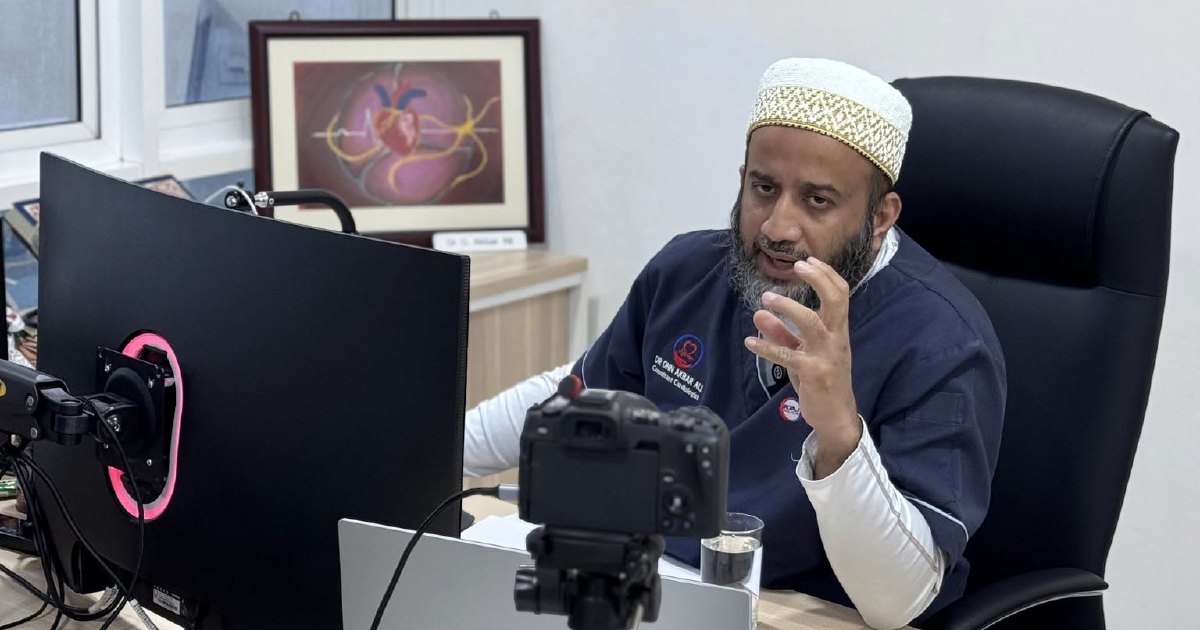
Consultant cardiologist Dr Onn Akbar Ali experienced a troubling moment when he encountered a video purporting to show him endorsing herbal tea as a diabetes treatment. The footage was fabricated—a deepfake using his face and voice—yet it was being circulated online to deceive patients seeking medical solutions. His discovery underscores a widening and deeply troubling pattern: artificial intelligence technology is being weaponised to perpetrate medical fraud, placing vulnerable people at serious risk across the region.
The proliferation of deepfake health scams represents a confluence of technological capability and criminal intent that poses unprecedented challenges for healthcare authorities and medical professionals alike. Unlike traditional medical fraud, which often relies on impersonation or false credentials, deepfake-enabled deception can appear remarkably authentic. Sophisticated artificial intelligence algorithms can seamlessly map facial movements, replicate vocal patterns, and generate convincing medical dialogue—making it nearly impossible for ordinary internet users to distinguish fabricated content from genuine medical endorsements.
For Malaysian medical practitioners, the implications are particularly troubling. Doctors across the country now face the prospect that their professional reputations can be compromised without their knowledge or consent. The damage extends beyond personal embarrassment; when unscrupulous fraudsters leverage a respected physician's likeness to promote unproven remedies, patients may delay legitimate medical treatment or consume dangerous substances believing they are following evidence-based recommendations. This creates a public health hazard that transcends individual fraud cases.
The specific case involving false diabetes cures exemplifies how these scams target people managing chronic conditions. Diabetes patients are understandably desperate for effective treatments and may be particularly susceptible to claims of breakthrough remedies. Deepfake videos presenting themselves as doctor testimonials add an apparent veneer of medical authority that makes such fraudulent promotions remarkably persuasive. The scammers deliberately exploit the intersection of technological sophistication and human vulnerability.
Regional health authorities have been slow to respond to this emerging threat. While Malaysia has experienced steady growth in online fraud generally, deepfake-specific legislation and enforcement mechanisms remain underdeveloped. Medical regulatory bodies, which traditionally focus on credentialing and disciplinary matters, lack clear frameworks for addressing identity theft via artificial intelligence. This regulatory gap creates opportunities for criminals to operate with relative impunity across borders, as victims in one country may report incidents to authorities unfamiliar with the technology or jurisdiction.
The technical sophistication required to create convincing deepfakes has decreased dramatically as open-source AI tools have proliferated. What once required significant computational resources and specialized expertise can now be accomplished by individuals with basic technical knowledge. Several free or low-cost platforms enable users to swap faces in videos or synthesize convincing speech patterns. This democratisation of deepfake technology means the threat landscape continues expanding, with potentially hundreds of fraudsters capable of replicating the methods used against Dr Onn Akbar Ali.
Beyond individual doctors, healthcare institutions themselves face reputational and financial risks. Hospitals and clinics may be impersonated or their specialists falsely represented in promotional schemes for dubious products. The cumulative effect of such scams damages public trust in the healthcare system itself, making patients more sceptical of legitimate medical guidance. This erosion of institutional credibility can have measurable consequences for health outcomes, particularly when vulnerable populations lose confidence in mainstream medical advice.
The cross-border nature of online fraud complicates enforcement efforts further. Deepfake videos promoting false remedies can originate from anywhere on the globe, targeting Malaysian victims while evading local law enforcement jurisdiction. International cooperation mechanisms exist but remain cumbersome and slow, often too sluggish to prevent initial harm. By the time authorities in one country identify a scam operator in another, significant victim losses have already occurred.
Medical professionals are beginning to take defensive measures. Some doctors now monitor their online presence more vigilantly, setting up alerts for unauthorized videos using their names or likenesses. Others are issuing public statements explicitly disavowing fraudulent content bearing their images. However, reactive approaches prove insufficient when technology advances faster than awareness. Dr Onn Akbar Ali's experience serves as an urgent wake-up call that Malaysian medical professionals and regulatory authorities must transition from detection to prevention.
The solution requires coordinated action across multiple sectors. Healthcare regulators need to develop clear reporting mechanisms and rapid response protocols for deepfake health fraud. Technology platforms must implement more robust verification systems and facial recognition tools to flag unauthorized use of real people's likenesses. Law enforcement agencies require specialized training in digital forensics related to synthetic media. Education campaigns must help patients develop critical thinking skills when evaluating online medical claims, particularly those presented as video testimony.
For Malaysian consumers, the immediate lesson is clear: verify medical advice through official channels before accepting recommendations from online videos, regardless of how authentic they appear. Contact physicians directly through established hospital or clinic numbers. Consult only licensed healthcare providers whose credentials can be independently verified through official medical directories. These steps, while elementary, remain essential protections against increasingly convincing fraudulent content.
The emergence of deepfake health scams targeting Malaysian doctors signals a maturation of AI-enabled fraud that extends beyond individual victims to threaten the integrity of medical practice itself. As artificial intelligence continues advancing, the stakes will only rise unless the healthcare sector, technology industry, and government authorities act decisively to establish safeguards. Dr Onn Akbar Ali's encounter with his own fabricated doppelgänger should galvanize immediate action across Southeast Asia before such scams become routine features of the medical landscape.

