A Malaysian man who spent just three days working for a Cambodian scam operation before being terminated for incompetence has become the latest casualty of Southeast Asia's intensifying crackdown on cross-border fraud networks. Yip Chee Ming, 30, was sentenced to 16 months and two weeks' imprisonment on Friday (June 26) after pleading guilty to membership in an organised crime syndicate based in Phnom Penh. The case underscores both the reach of these criminal enterprises and the fragility of individuals caught within their web—even those who proved wholly unsuited to their roles.
Yip's journey into the underworld began innocuously enough. In October 2024, his friend Jason approached him about lucrative work at a call centre in Cambodia, where operatives impersonated government officials to defraud Singaporean victims. The prospect of earning US$1,800 monthly in cryptocurrency, plus one per cent commission on each successful victim, proved sufficiently enticing. Tang Soon Wah, identified as a leadership figure within the operation, arranged a recruitment trip and flew both men to Cambodia to inspect the five-storey scam compound in Phnom Penh, where armed security guards maintained constant watch over the premises.
On November 22, 2024, after returning from Malaysia to formally accept the position, Yip commenced his duties as an impersonator bank officer. The syndicate had equipped him with carefully crafted scripts designed to manipulate unsuspecting Singaporeans, and trainers had coached callers on techniques for sounding convincing—including adopting authentic Singaporean accents to heighten credibility. Yet despite these professional supports and meticulous preparation, Yip proved utterly incapable of executing the fraud. His first day yielded no successful cons; his second attempt on November 23 similarly failed to produce any victims. By day three, his supervisors had concluded that Yip represented an unacceptable liability to their operation. Tang summarily dismissed him and deleted their correspondence, severing all traces of their brief association.
The syndicate that terminated Yip's employment was operating at a staggering scale. Between September 3, 2024, and September 5, 2025, the organisation orchestrated at least 528 reported scam incidents that collectively extracted approximately S$52.5 million from Singaporean targets. The operation maintained a hierarchical structure typical of sophisticated criminal enterprises: leadership oversaw strategic direction and distributed commissions to frontline callers; supervisors and trainers managed daily operations and coached operatives; and dedicated money-laundering cells converted illicit proceeds into cryptocurrency for rapid dispersal. Investigators identified at least 78 suspected members across these functional tiers, suggesting a well-established network with redundancy built into key positions—explaining why one failed recruit barely disrupted normal operations.
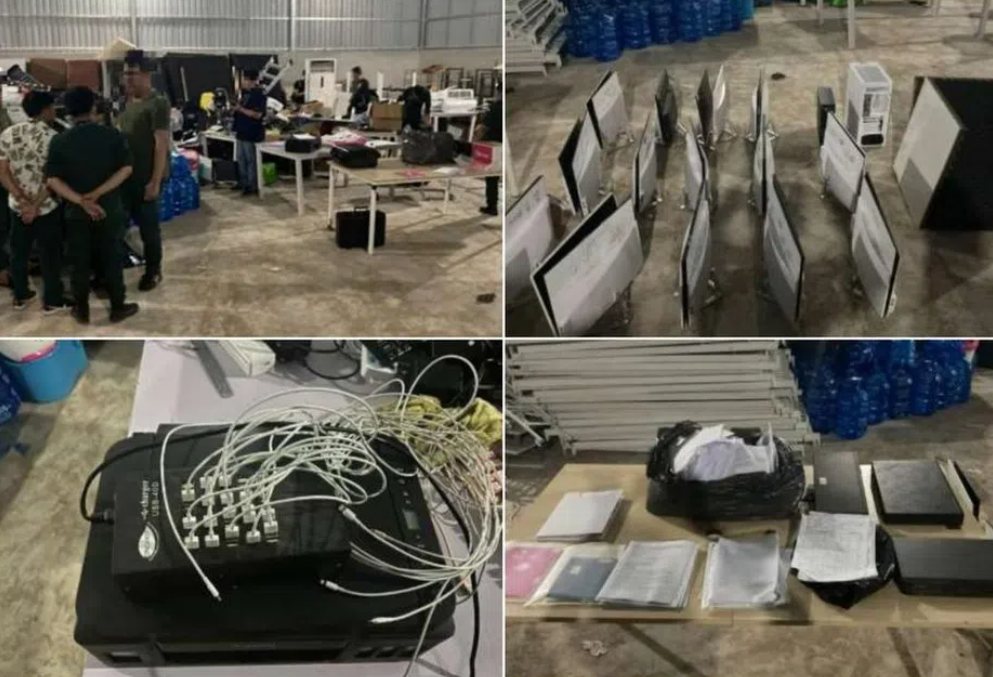
Yip's arrest came nearly a year after his dismissal, when police and Cambodian authorities mounted a coordinated operation in September 2025. Twelve individuals were charged as alleged syndicate members, arrested during joint enforcement action on September 9, 2025. Nine were Singaporean nationals ranging in age from 25 to 39, while two were Malaysian—Yip and Muhamad Asyraf Anuar, 29—and one was a Filipina, De Villar Rizalyn Panganiban, 34. The multinational composition of the arrested group reflects how these networks operate across Southeast Asian borders, recruiting operatives from multiple countries to establish plausible layers of insulation against law enforcement.
The timing of Yip's conviction coincides with troubling trends in Singapore's 2025 scam landscape. Whilst overall fraud cases declined compared to 2024, government official impersonation scams experienced explosive growth, more than doubling from 1,504 reported instances to 3,363—making it the fifth most prevalent scam category. This particular fraud method proves devastatingly effective because impersonation carries inherent psychological authority; when targets believe they are communicating with legitimate government representatives, their natural resistance to financial demands diminishes significantly. The surge suggests that criminal syndicates have consciously pivoted toward this methodology as other scam tactics face increasing public awareness and institutional defences.
Under Singapore law, membership in organised crime syndicates carries substantial penalties. Offenders face potential fines up to S$100,000, imprisonment for up to five years, or both. Yip's sentence of 16 months and two weeks reflects the courts' assessment of his culpability, whilst the fact that additional cheating charges were considered during sentencing indicates prosecutors possessed evidence of criminal intent regardless of his operational failure. The case demonstrates that legal consequences attach to participation in these networks even when the individual perpetrator never successfully victimised anyone, establishing that mere membership in such organisations constitutes serious criminal wrongdoing.
For Malaysian readers and broader Southeast Asian audiences, Yip's case carries particular significance. It illustrates how cross-border scam operations actively recruit from neighbouring countries, promising substantial income to individuals vulnerable to financial incentives. The operation was physically anchored in Cambodia, demonstrating how certain jurisdictions continue to provide operational bases for sophisticated fraud networks despite growing regional law enforcement cooperation. Moreover, the multinational composition of the arrested group reveals how these syndicates exploit differences in national legal jurisdictions and enforcement capabilities to maintain operational resilience.
The Phnom Penh-based syndicate operated with remarkable openness for an extended period, recruiting operatives through personal networks and maintaining physical compounds with security infrastructure. This suggests either inadequate local law enforcement scrutiny or deliberate cultivation of relationships that permitted operation. The subsequent joint operation by Singapore and Cambodian police indicates improving bilateral cooperation on transnational crime, yet the scale of losses and victim count before intervention demonstrate significant investigative and enforcement gaps remain.
Yip's brief, unsuccessful tenure within the syndicate ultimately provides minimal mitigation. He voluntarily joined a criminal enterprise with full knowledge of its fraudulent purpose, travelled internationally to participate in organised wrongdoing, and demonstrated commitment to the venture despite its illegal nature. That he lacked aptitude for the role does not diminish his culpability as an organised crime participant. His case serves as a cautionary narrative for others tempted by overseas criminal recruitment: involvement in such networks carries serious legal consequences regardless of success or failure in commission of the underlying crimes, and cross-border law enforcement cooperation increasingly ensures that distance provides little protection from eventual prosecution.

