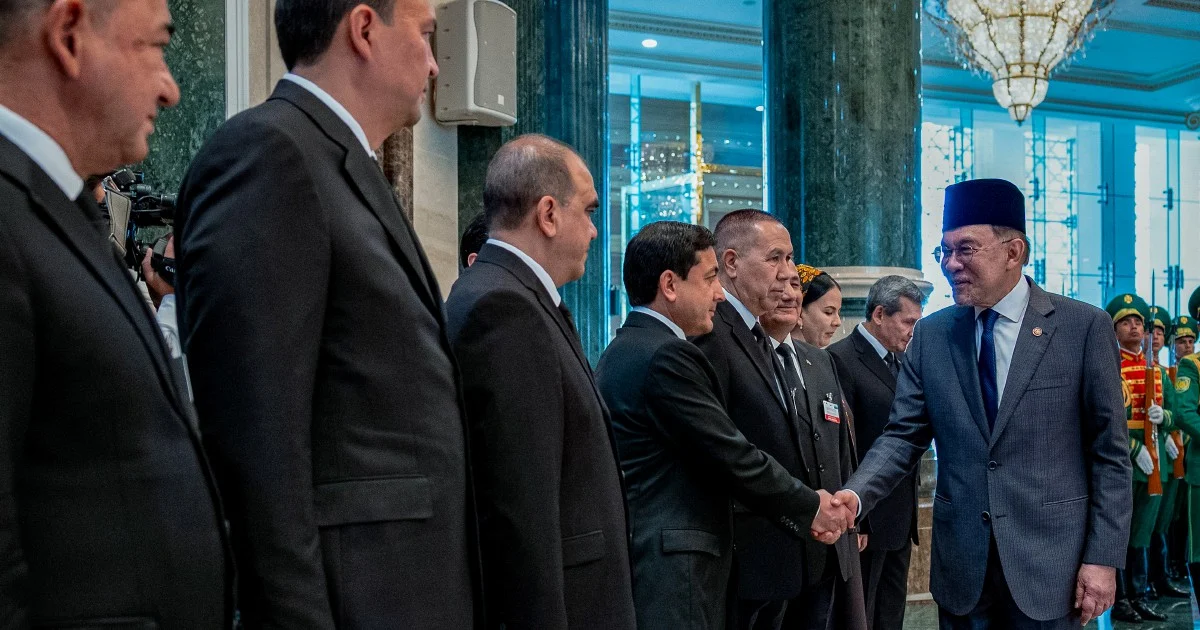
Prime Minister Datuk Seri Anwar Ibrahim's proactive engagement with foreign governments and multilateral institutions has garnered support among Malaysian observers, who increasingly view such diplomatic overtures as fundamental to the nation's economic resilience during a period of deepening global uncertainty. The consensus emerging from academic and policy circles reflects broader recognition that Malaysia's prosperity depends heavily on its ability to navigate a fractured international order characterised by competing power blocs, supply chain fragmentation, and heightened protectionist pressures.
Under Anwar's leadership, Malaysia has intensified bilateral and multilateral diplomacy across Asia-Pacific and beyond, seeking to position itself as a trusted, non-aligned partner capable of bridging different economic and geopolitical interests. This approach stands in contrast to the zero-sum calculations dominating great-power rivalry, offering Malaysian companies and investors opportunities to exploit niches in regional value chains without forcing stark ideological commitments. Observers note that such positioning requires sustained diplomatic effort precisely because Malaysia lacks the military or economic muscle to dictate terms, instead relying on diplomatic skill, institutional credibility, and strategic flexibility.
The potential economic dividend from strengthened international relations extends across multiple channels. Enhanced diplomatic relations create the foundations for expanding bilateral trade agreements that lower tariff barriers and simplify customs procedures, directly benefiting Malaysian exporters of manufactured goods, agricultural products, and services. Simultaneously, improved diplomatic standing signals stability and reliability to foreign investors considering long-term commitments in Southeast Asia, a region increasingly viewed as a hedge against concentration risk in China-dependent supply networks. The technology and semiconductor sectors, where Malaysia holds established positions, stand to benefit particularly from this climate of renewed international confidence.
Geopolitical uncertainty has fundamentally altered investor calculations worldwide. Multinational corporations increasingly conduct geographic diversification strategies to mitigate exposure to any single jurisdiction or region. Malaysia's traditional strengths—proximity to major shipping lanes, established manufacturing infrastructure, a relatively educated workforce, and stable governance—become substantially more attractive when complemented by strong diplomatic relationships with both traditional Western partners and rising Asian powers. Anwar's efforts to cultivate these relationships simultaneously with leading Southeast Asian neighbours has been interpreted as creating a regional anchor that reassures international business of Malaysia's continued centrality to Asian commerce.
The Prime Minister's engagement has specifically addressed investor concerns regarding market access and regulatory predictability. High-level visits, trade missions, and participation in multilateral forums provide platforms for signalling Malaysia's commitment to international rule-based systems whilst simultaneously asserting regional interests. This dual positioning resonates particularly with multinational corporations seeking to expand operations in Asia whilst maintaining exposure to established developed markets and emerging economy growth opportunities.
Trade diversification represents another dimension where diplomatic efforts yield tangible returns. Overreliance on any single market exposes Malaysia to demand shocks and geopolitical manipulation. By cultivating relationships across diverse partners—from European Union nations to Middle Eastern economies to fellow ASEAN members—Malaysia reduces vulnerability whilst expanding the customer base for its goods and services. Recent diplomatic initiatives have emphasised growing economic partnerships in the Middle East and Central Asia, regions where Malaysian firms possess less established market presence but where growth prospects appear robust.
The scholarly consensus also highlights the role of diplomatic credibility in attracting investment from developmental institutions and impact investors increasingly important to regional infrastructure and green energy transitions. Asian Development Bank financing, infrastructure partnerships through frameworks like the Belt and Road Initiative, and climate finance mechanisms all depend substantially on diplomatic relationships and institutional standing. Malaysia's active diplomacy signals to these actors that commitments made in bilateral agreements will be honoured and disputes resolved through established mechanisms rather than unilateral action.
Within ASEAN specifically, Anwar's diplomatic activism has strengthened Malaysia's influence within a regional bloc that collectively represents significant economic and strategic weight. ASEAN unity on key issues—from South China Sea disputes to trade negotiations with external powers—depends partly on trust and coordinated diplomatic messaging among member states. Malaysia's strengthened bilateral relationships with fellow ASEAN nations, combined with its wider international engagement, positions it to play constructive roles in managing regional tensions and advocating for Southeast Asian collective interests in negotiations with major powers.
The cyber and digital economy domains present emerging opportunities where diplomatic frameworks prove increasingly consequential. Data governance agreements, digital trade protocols, and artificial intelligence standards are being negotiated at multilateral levels, with outcomes significantly impacting competitive advantage in digital services and technology sectors. Anwar's diplomatic profile in these forums influences Malaysia's capacity to shape international rules governing these critical domains, with direct implications for Malaysian technology companies and digital service providers.
Critics have occasionally questioned whether diplomatic efforts translate to meaningful economic gains or remain largely symbolic. This scepticism merits consideration, yet historical analysis of successful regional economies demonstrates consistent correlation between diplomatic engagement intensity and investment inflows. South Korea, Singapore, and Vietnam have all invested heavily in diplomatic capital as complementary strategy to economic fundamentals, yielding demonstrable returns through enhanced trade partnerships and strategic foreign direct investment.
Looking forward, the sustainability of benefits derived from diplomatic initiatives depends on consistent execution. Frequent diplomatic engagement generates momentum and goodwill but requires institutional follow-through in regulatory implementation, contract enforcement, and partnership delivery. Malaysia's challenge involves translating diplomatic openings into concrete economic arrangements whilst managing domestic economic fundamentals—infrastructure quality, education standards, regulatory clarity—that remain prerequisites for converting diplomatic advantage into sustained prosperity.
For Malaysian policymakers and business leaders, the broader lesson centres on recognising that national economic performance increasingly reflects not merely domestic policy choices but also international positioning. Anwar's diplomatic strategy, viewed through this lens, represents pragmatic recognition that Malaysia's economic future depends substantially on how effectively it engages an interconnected global system, transforms potential diplomatic relationships into tangible trade and investment flows, and maintains credible partnerships across a divided international order.

