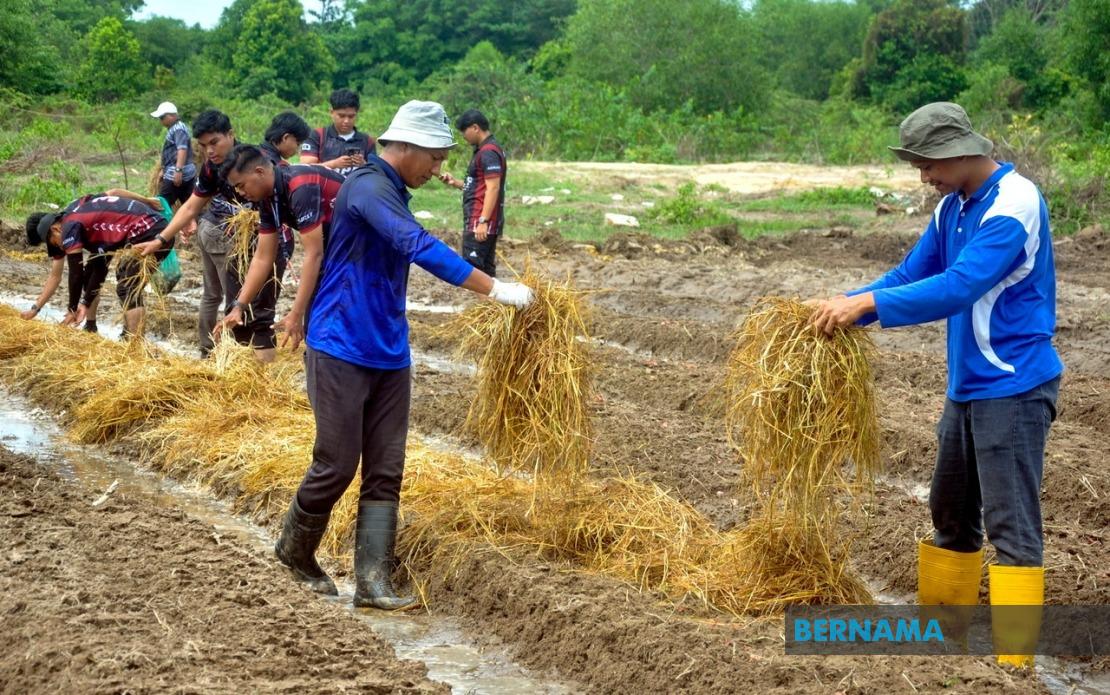
Malaysia's agricultural sector is gradually attracting more technical and vocational education graduates, with employment figures rising substantially over the past six years, yet a significant gap remains between agricultural TVET outcomes and broader TVET performance across the country. According to a comprehensive study released by the Ministry of Agriculture and Food Security, the employment rate for agricultural TVET graduates reached 76 per cent in 2024, up from 61 per cent in 2018—a 15-percentage-point increase that signals growing labour market absorption in farming and related fields. However, this progress is overshadowed by the reality that agricultural TVET employment trails the national TVET average of 95 per cent by nearly two decades, exposing a critical weakness in the nation's capacity to channel young talent into food production.
The findings emerge from the Graduate Outcomes of Agricultural TVET in Malaysia report, a joint initiative between the Ministry of Agriculture and Food Security and PNB Research Institute, presented at a stakeholder engagement session in Putrajaya. The collaboration, formalised through a Memorandum of Understanding signed in September 2025, deliberately targets strengthening agricultural TVET capacity and boosting youth participation in support of Malaysia's long-term food security objectives. The research drew on ministry data accumulated over several years, permitting detailed analysis not only of employment rates but also of income trajectories and entrepreneurial ventures among graduates who chose agricultural pathways versus those who pursued work outside the sector.
The income dimension of the report reveals an intriguing competitive advantage embedded within agricultural careers. Graduates who engaged directly in farming or related agricultural pursuits earned on average RM100 more per month than their peers who secured employment in non-agricultural sectors, suggesting that the agriculture industry offers financial rewards comparable to or exceeding alternative career options. This finding takes on additional significance when considering entrepreneurship: agricultural TVET graduates who became agro-entrepreneurs recorded substantially higher incomes than those running non-agricultural businesses, implying that farming-based self-employment generates stronger financial returns. Such data challenges the persistent perception among Malaysian youth that agriculture represents a lower-wage, less attractive career option compared to services, manufacturing, or technology sectors.
Despite these encouraging income figures, the agriculture sector confronts a demographic crisis that threatens future productivity and innovation. The research documents that one in two farm workers is now aged 40 years or above, a stark indicator of an ageing workforce that lacks the energy and technological fluency required for modernised agricultural operations. Simultaneously, youth participation in farming has declined consistently over the past decade, reflecting a broader cultural shift whereby younger generations view agricultural work as physically demanding, low-status, and offering limited career progression. This generational hollowing-out poses significant risks to Malaysia's food security ambitions, as institutional knowledge held by older farmers risks dissipating without sufficient younger practitioners to carry forward expertise, adopt new techniques, and drive sector innovation.
Geographical concentration of agricultural TVET graduates presents another policy puzzle that the ministry must address. The study identifies Sabah as the leading region for graduate participation, accounting for 15 per cent of all agricultural TVET graduates, followed by Kedah at 14 per cent and Sarawak at 13 per cent. These figures reflect the established agricultural footprints of Malaysia's eastern states, where farming and plantation activities remain economically prominent. However, the data simultaneously reveal a troubling gap: major agricultural states such as Johor, Pahang, and Perak—historically significant food production zones—have yet to be fully leveraged or mobilised for agricultural TVET development. This uneven distribution suggests either inadequate programme availability, insufficient outreach, or misalignment between graduate training and actual labour demand in these peninsular states, inefficiencies that constrain the sector's capacity to maximise graduate absorption.
Addressing these multifaceted challenges, the ministry has articulated six strategic policy directions intended to reshape agricultural TVET delivery and outcomes. The first priority involves tailoring programme expansion according to state-specific needs and economic characteristics, rather than adopting a standardised national model that may prove poorly suited to diverse regional contexts. Second, the ministry commits to measuring success using outcome metrics genuinely relevant to agriculture—such as farm productivity, crop yields, or entrepreneurial venture sustainability—rather than generic employment statistics. The third direction targets risk reduction in agricultural entrepreneurship, recognising that many graduates aspire to farming-based self-employment but lack sufficient capital buffers or access to credit facilities. Fourth, programmes must systematically embed entrepreneurial and market-oriented skills into curricula, ensuring graduates understand not merely production techniques but also supply chain dynamics, pricing, and customer engagement.
The fifth policy direction emphasises strengthening graduate exposure to the entire agricultural value chain, moving beyond narrow specialisation in single commodities or practices to develop holistic understanding of farm-to-consumer pathways. Such breadth equips graduates to identify diversification opportunities, add value to primary products, and adapt flexibly to market shifts. Sixth, the ministry prioritises building stronger collaboration between educational institutions and agricultural industry stakeholders, creating feedback loops whereby employers help shape curricula and graduates gain work-integrated learning opportunities that ease school-to-work transitions. Together, these six directions constitute a comprehensive attempt to reorient agricultural TVET away from supply-driven education toward demand-responsive training aligned with sector modernisation.
The government's emphasis on this issue reflects alignment with two major national policy frameworks guiding Malaysia's economic and food security strategies. The National Food Security Policy 2030 establishes targets for domestic food production resilience and self-sufficiency across key commodities, a goal increasingly urgent given global supply chain volatility and climate-related agricultural disruption. The National Agro-Food Policy 2021-2030, commonly abbreviated as DAN 2.0, provides a more granular roadmap for sector development encompassing productivity improvements, value addition, and competitiveness enhancement. Agricultural TVET graduate employment thus functions as both an input metric—reflecting the sector's capacity to attract and retain talent—and an output metric—demonstrating the sector's success in offering viable careers that justify investment in training.
At the highest political level, the findings received consideration from the National Technical and Vocational Education and Training Council, chaired by Deputy Prime Minister Datuk Seri Dr Ahmad Zahid Hamidi, signalling executive-branch attention to TVET reform more broadly. The June 4 council meeting at which these results were presented underscores the interconnection between agricultural TVET performance and the government's wider TVET agenda, which aims to upgrade the status and relevance of vocational pathways relative to traditional university-bound educational trajectories. Malaysia's success in developing agricultural sectors depends not on elite expertise alone but on a broad cadre of skilled practitioners distributed across regions, equipped with both technical competence and entrepreneurial capability.
Moving forward, the 76 per cent employment rate for agricultural TVET graduates represents measurable progress worthy of recognition, yet the gap relative to the 95 per cent national TVET average demands urgent attention. Policymakers must determine whether the shortfall reflects insufficient graduate supply relative to labour demand—in which case programme expansion is warranted—or excessive graduate supply chasing limited positions—in which case curricula should refocus on entrepreneurship and non-traditional career pathways. The income advantages documented for agricultural TVET graduates who remain in farming suggest that employment gaps may stem more from attraction and retention challenges than from inherent sector weakness. If Malaysia is to build the youthful, skilled agricultural workforce essential for food security and rural economic vitality, both government and industry must move decisively to transform how farming careers are marketed, supported, and rewarded.

