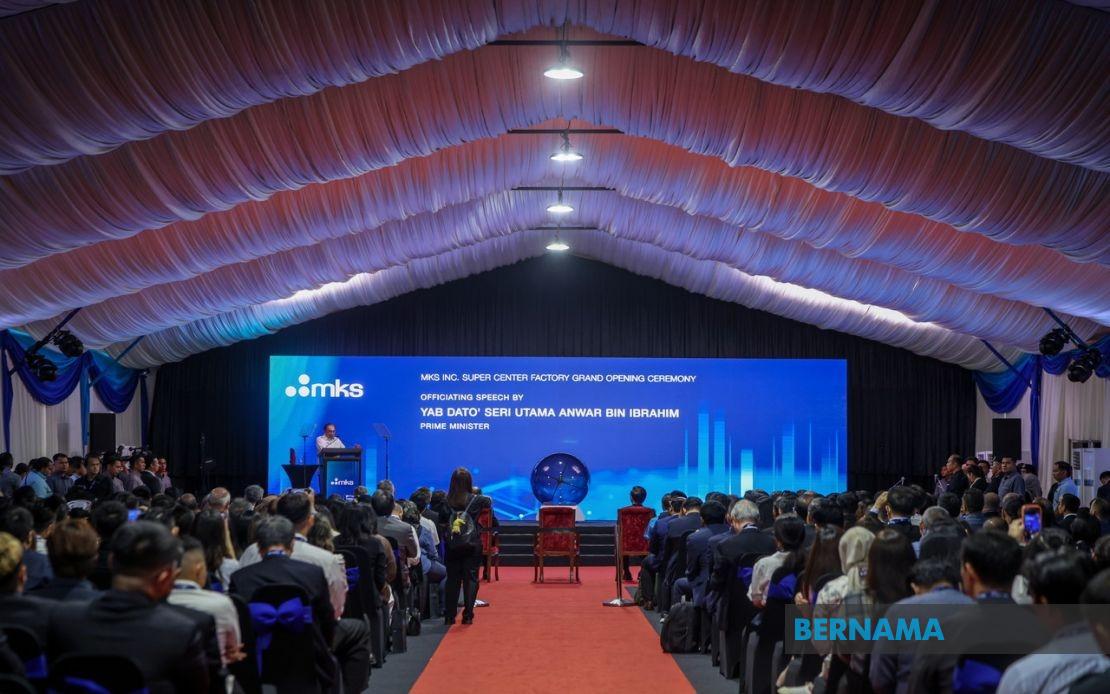
Malaysia's strategy of remaining diplomatically neutral while actively engaging with major powers across competing geopolitical spheres has become a significant economic asset, Prime Minister Datuk Seri Anwar Ibrahim said on June 20. Speaking at an industrial facility opening in Penang, the Premier underscored how this carefully calibrated approach to foreign relations has translated into concrete commercial advantages for the nation, positioning Malaysia as an attractive partner for countries with divergent strategic interests.
The Prime Minister's remarks reflect a deliberate repositioning of Malaysia's international standing in an increasingly complex global environment characterised by tensions between established and emerging powers. By declining to align exclusively with any single bloc, Malaysia has cultivated relationships spanning North America, Europe, Asia, and beyond, creating opportunities that would be unavailable to nations bound by restrictive bilateral or multilateral commitments. This flexibility has proven particularly valuable for Malaysian companies seeking to expand operations or secure resource agreements in regions where geopolitical sensitivities might otherwise complicate negotiations.
Anwar specifically highlighted the strategic benefit of Malaysia's recent engagement with Russia, placing it alongside earlier high-profile visits and interactions with the United States, China, and India. These connections underscore Malaysia's positioning as a nation capable of maintaining productive diplomatic channels with powers that are themselves in competition or tension with one another. The approach requires skillful navigation and clear articulation of Malaysia's own interests and red lines, distinguishing genuine neutrality from mere non-alignment.
The economic payoff from this diplomatic strategy has materialised in tangible form through agreements such as Petronas' latest venture in Turkmenistan. State-owned Petronas, which functions as a key instrument of Malaysia's economic and foreign policy objectives, has secured deals that reflect the international confidence Anwar referenced. Such energy partnerships are particularly significant for Malaysia given the nation's own hydrocarbon interests and the critical importance of energy security for regional economic stability. Access to Turkmen resources and partnerships with Central Asian governments opens supply-chain diversification opportunities that reduce dependence on any single source region.
The visit of United States President Donald Trump to Malaysia last year exemplified the kind of high-level engagement that reinforces Malaysia's standing with Western powers whilst not precluding equivalent relationships elsewhere. Similarly, Malaysia's substantial economic ties with China and India demonstrate that the nation has successfully avoided the zero-sum trap that constrains countries forced into exclusive bloc membership. For multinational corporations and investors evaluating regional headquarters locations or investment destinations, Malaysia's demonstrated ability to maintain cordial relations across the geopolitical spectrum reduces political risk and ensures continued market access regardless of international alignments.
Anwar's framing of Malaysia's position as ensuring the nation's "centrality" reveals the strategic logic underlying this approach. By positioning itself at the intersection of multiple power centres rather than at the periphery of any single sphere, Malaysia maximises its negotiating leverage and the range of economic opportunities available to both government-linked enterprises and private companies. This centrist positioning has historical roots in Malaysia's post-independence foreign policy but has acquired renewed relevance given contemporary great-power competition and supply-chain reconfiguration.
The Prime Minister's emphasis on Malaysia's willingness to articulate its own positions on contentious international issues whilst remaining open to engagement with all nations represents a more nuanced version of non-alignment than that practised during previous eras. Malaysia does not remain silent on matters affecting regional or global stability but does so without allowing moral or political stances to foreclose economic relationships. This calibrated approach requires consistent, clear communication to prevent partners from misinterpreting Malaysia's statements as either implicit endorsement of their rivals or hidden alignment with competing camps.
The industrial ceremony at Bandar Cassia Technology Park provided an appropriate venue for these remarks, as Penang's development as a manufacturing and technology hub depends significantly on Malaysia's ability to attract multinational firms seeking supply-chain alternatives to China or seeking access to regional markets without geopolitical complications. Companies evaluating Malaysia as a production or logistics centre assess not only tax incentives and infrastructure but also the political and diplomatic environment in which they will operate. A nation perceived as stable, neutral, and capable of maintaining relationships with their home governments and key markets represents considerably lower operational risk than alternatives.
The presence of Penang Chief Minister Chow Kon Yeow and federal Investment, Trade and Industry Deputy Minister Sim Tze Tzin at the event highlighted the alignment between national foreign policy and state-level economic development initiatives. Penang, as a maritime trading hub and industrial centre with historical roots as an international commerce gateway, has particular interest in Malaysia's diplomatic reach and the resulting commercial opportunities. State and federal governments share interest in translating the Prime Minister's diplomatic achievements into job creation and investment flows.
For Malaysia's private sector, the implications of this strategic neutrality extend beyond large corporations like Petronas. Small and medium enterprises exporting goods or seeking to establish regional operations benefit from reduced trade friction and expanded market access. Malaysian entrepreneurs expanding into Central Asian markets, for instance, encounter fewer diplomatic obstacles and potentially benefit from government-to-government relationships that facilitate market entry and regulatory approval. The economic multiplier effects of such arrangements ripple through entire sectors and supply chains.
The sustainability of Malaysia's balanced-engagement strategy depends on consistent execution and clear communication about both the nation's independent interests and its genuine openness to cooperation with all partners. Missteps in either direction risk undermining the credibility that Anwar emphasised. If Malaysia appears to tilt too heavily toward any single power, it risks alienating others and sacrificing the competitive advantages that diversity of partnerships provides. Conversely, if Malaysia appears inconsistent or opportunistic, international partners may lose confidence in the reliability of commitments made by Malaysian government and business counterparts.
Looking forward, Malaysia's ability to leverage its diplomatic positioning for economic gain will likely increase in importance as supply-chain pressures and geopolitical tensions continue reshaping international commerce. Nations and corporations seeking alternatives to polarised trade environments will find Malaysia's demonstrated neutrality and connectivity increasingly valuable. The challenge for policymakers lies in maintaining this balancing act whilst simultaneously advancing Malaysia's own development agenda and protecting genuine national interests that may not always align with all partners' preferences.

