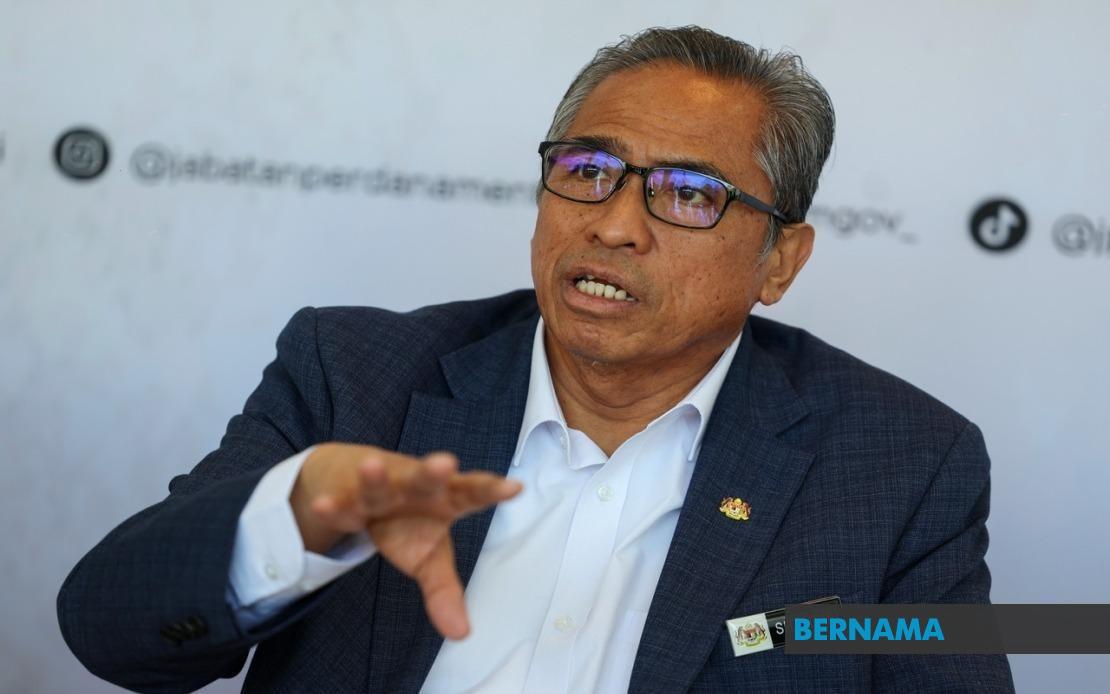
The machinery of government must become the driving force behind converting Malaysia's diplomatic achievements into concrete economic gains, according to Tan Sri Shamsul Azri Abu Bakar, the nation's Chief Secretary to the Government. Speaking in Kuala Lumpur, he underscored that Prime Minister Datuk Seri Anwar Ibrahim's recent working visits to Russia and Turkmenistan represent more than foreign policy successes—they signal Malaysia's readiness to engage strategically with emerging economic powers and diversify its international partnerships at a critical juncture in global affairs.
The diplomatic missions have positioned Malaysia advantageously within shifting geopolitical corridors, particularly as the country seeks to unlock fresh markets and deepen ties with established trading partners. However, according to Shamsul Azri, the real measure of success will not be determined by the handshakes in Moscow or Ashgabat, but rather by how swiftly and effectively Malaysian government agencies can operationalize the partnerships, agreements, and frameworks that have been negotiated. This transition from diplomatic promise to economic reality demands a fundamentally different mode of governance than what has traditionally characterized the Malaysian bureaucracy.
Shamsul Azri emphasized that the civil service, functioning as the backbone of national development, must recognize this moment as a mandate for immediate action. He stressed that senior officials across economic ministries and trade-related agencies must possess both the agility and preparedness to capitalize on the openings created by the leadership's international engagements. The bureaucracy cannot afford to operate at its customary pace when market windows are open and international partners are receptive. Instead, government officials must demonstrate the capacity to move decisively while maintaining strategic oversight.
Central to this transformation is what the Chief Secretary described as the adoption of a global mindset among public servants. This goes beyond understanding international business practices or foreign languages, though these are important. Rather, it requires Malaysian officials to recognize how the global economic order is being reconfigured, where new centers of influence are emerging, and how Malaysia can position itself not as a passive recipient of investment but as an active architect of its own economic destiny. This perspective shift is particularly vital for a country whose prosperity has traditionally relied on international trade and capital flows.
The emphasis on the 'Whole-of-Government' approach and MADANI Diplomacy reflects an understanding that siloed decision-making undermines national strategy. When trade ministry officials work independently from investment promotion agencies, or when economic planning occurs in isolation from diplomatic considerations, opportunities slip away. Shamsul Azri called for these traditionally compartmentalized functions to operate with integrated purpose, ensuring that every policy decision, every regulatory adjustment, and every facilitation effort aligns with the overarching objective of capturing the benefits promised by the government's international initiatives.
A particular focus has been placed on enhancing the Ease of Doing Business framework. Malaysia's ranking on this global metric directly influences how attractive the country appears to potential investors, especially those considering diversification away from traditional investment destinations. By removing bureaucratic friction, streamlining approval processes, and creating predictable regulatory environments, the civil service can directly contribute to translating diplomatic engagements into actual capital flows and business expansion. This requires not just policy changes but a genuine cultural shift within government agencies toward viewing foreign investors as partners rather than supplicants.
The implications for job creation and household income growth are substantial. Shamsul Azri explicitly connected the performance expectations of the civil service to the ultimate goal of generating high-income employment opportunities for Malaysian citizens. This creates accountability that extends beyond traditional metrics of government efficiency. When international agreements result in new manufacturing facilities, expanded trading operations, or technology transfer arrangements, the benefits should cascade through to ordinary Malaysians in the form of better jobs, higher wages, and improved economic security.
Securing commodity supply chains has emerged as another critical dimension of this strategy. Malaysia's vulnerability to supply disruptions in energy, food, and critical raw materials makes diversification of sourcing and trading partnerships a matter of national economic resilience. The diplomatic missions to Russia and Turkmenistan, regions with significant natural resources and production capacity, signal an attempt to reduce dependency on traditional suppliers and create redundancy in critical supply channels. The civil service's role here involves not merely signing purchase agreements but establishing institutional relationships and monitoring mechanisms that ensure long-term reliability.
The Public Service Reform Agenda represents the broader institutional framework through which these objectives are being pursued. The 'internationalisation' enabler specifically targets the development of a civil service with genuine global competence and capability. This is not merely about training or exposure but about fundamentally reshaping how the government apparatus thinks about its role in an interconnected world. Malaysian bureaucrats must become fluent in the language of international business, familiar with global supply chains, and capable of engaging with sophisticated international actors on equal terms.
The stakes for Malaysia are considerable. The country faces intensifying competition from regional neighbors and other emerging economies for investment, talent, and market access. Without a responsive and globally-oriented civil service, even the most skillful diplomacy at the highest levels will prove insufficient. The window created by successful diplomatic initiatives remains open only temporarily; the capacity to act decisively determines whether such opportunities yield lasting economic advantage or become merely forgotten photo opportunities.
Shamsul Azri's message carries implicit recognition that Malaysia's development trajectory depends increasingly on the quality of execution at the bureaucratic level. Government officials are positioned at the critical juncture where international aspiration meets domestic capacity. Their willingness to embrace global standards, adopt innovative approaches, and operate with genuine urgency will ultimately determine whether the nation's diplomatic investments generate the prosperity and security they promise.

