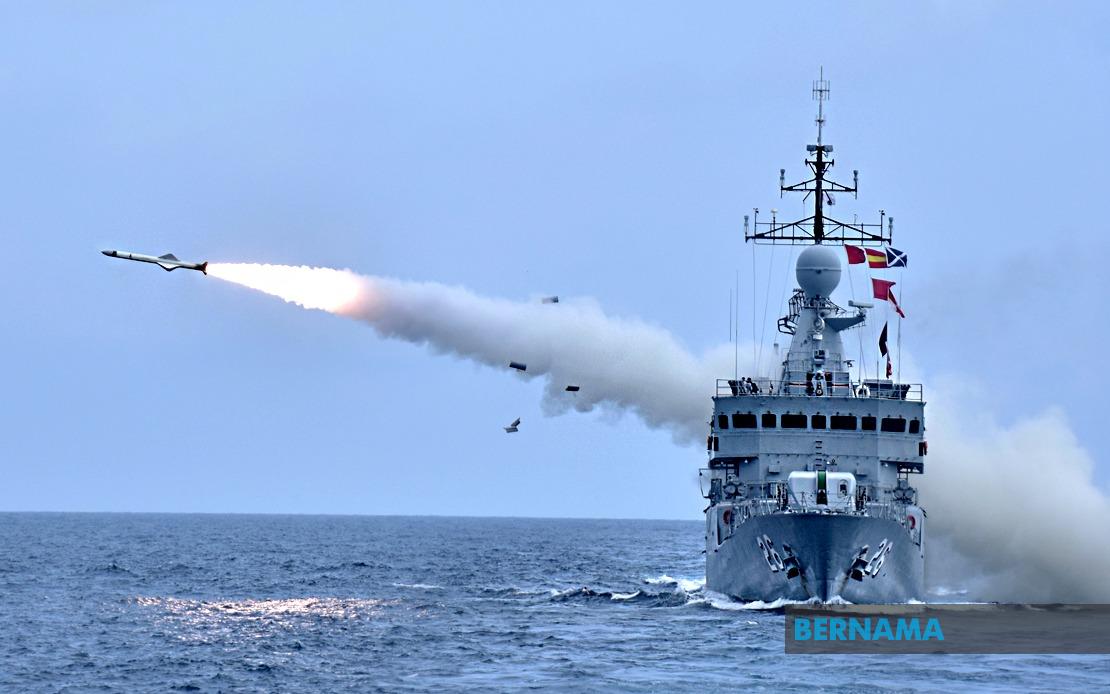
Malaysia's approach to defence spending reflects a fundamental shift in how the nation perceives contemporary security challenges, Defence Minister Datuk Seri Mohamed Khaled Nordin revealed in a statement today. While regional military dynamics remain relevant to strategic planning, the government has increasingly recognised that emerging threats ranging from cyber attacks to coordinated misinformation campaigns present equally pressing concerns that demand financial and operational resources.
The Defence Minister's comments follow Prime Minister Datuk Seri Anwar Ibrahim's announcement yesterday that Malaysia is considering substantial increases to its defence budget, potentially amounting to hundreds of millions to billions of ringgit. This expenditure is intended to equip the Malaysian Armed Forces with assets and capabilities suited to navigating a security environment that has become markedly more intricate in recent years. The modernisation trajectory reflects a recognition that 21st-century security threats operate across multiple domains, extending beyond traditional naval and air force considerations.
Mohamed Khaled articulated how Malaysia's strategic calculus has evolved in response to several intersecting developments. Cyber and electromagnetic threats have assumed greater prominence in defence planning conversations, while the proliferation of mass misinformation campaigns—particularly those designed to exacerbate regional tensions or manipulate public opinion—now occupies a central place in threat assessments. These digital-age vulnerabilities require both technological investment and institutional adaptation, adding layers of complexity to defence budgeting that were largely absent from strategic discussions a decade ago.
The Defence Minister characterised the regional security environment as increasingly shaped by intensifying strategic competition between major powers. Malaysia does not identify any singular nation as a direct threat, he stressed, but rather acknowledges that the region is experiencing elevated levels of military activity and strategic positioning. This phenomenon creates a security dilemma familiar to strategic theorists: as one power augments its regional presence or capabilities, neighbouring states naturally respond with their own enhancements, potentially triggering cascading cycles of military build-up across Southeast Asia.
Within this competitive landscape, the geographical concentration of military assets poses particular risks. Mohamed Khaled highlighted how the presence of numerous military forces and assets within the relatively confined waters of Southeast Asia increases the probability of miscalculation or unintended escalation. A minor incident could rapidly metastasise into something more serious when multiple armed forces operate in close proximity with potentially conflicting strategic objectives. This concern has direct relevance for Malaysia, whose maritime boundaries intersect with contested zones and major power competition routes.
Developments in the southern Philippines, particularly in areas proximate to Sabah, exemplify how regional instability can radiate consequences beyond the immediate actors involved. The Defence Minister indicated that even incidents not directly implicating Malaysia could trigger wider repercussions for national security and stability across the South China Sea. This acknowledgement reflects Malaysia's understanding that it operates within an interconnected security ecosystem where events in neighbouring maritime zones inevitably affect its own strategic position and vulnerabilities.
Significantly, Mohamed Khaled emphasised that Malaysia respects the Philippines' sovereign prerogative to make independent decisions regarding its own defence arrangements and international partnerships. Bilateral security decisions fall squarely within the purview of individual nations, and Malaysia has maintained consistent dialogue with Manila to ensure that misunderstandings do not escalate into genuine friction. This diplomatic posture reveals Malaysia's balancing act: strengthening its own defences while avoiding rhetorical or strategic moves that could be interpreted as alignment with any particular major power against another.
The Defence Minister was careful to frame Malaysia's defence modernisation as a non-aligned undertaking. The country's military build-up is not directed against the Philippines, the United States, China, or any other specific nation, he stated. Rather, it reflects longstanding national defence planning principles and represents a gradual expansion of spending toward a target of 1.5 per cent of Gross Domestic Product by 2030. This measured, technocratic framing attempts to depoliticise defence spending and present it as a natural evolution of military readiness rather than a response to any particular geopolitical rivalry.
Malaysia's strategic approach follows a dual-track methodology, according to the Defence Minister. On one track, the government pursues sufficient military capabilities to protect national sovereignty and advance Malaysian interests, including strengthened defences at strategically significant locations such as Pulau Layang-Layang. Simultaneously, on the second track, Malaysia actively advocates for regional stability through dialogue, diplomacy, and multilateral engagement. This bifurcated strategy attempts to demonstrate that capacity-building and conflict prevention are not mutually exclusive objectives but rather complementary dimensions of responsible statecraft.
The South China Sea remains central to Malaysia's regional security calculations, and the Defence Minister reiterated the importance of all parties exercising restraint and avoiding actions that could trigger escalation spirals. Progress on negotiating a Code of Conduct for the South China Sea assumes paramount importance in the Malaysian analysis, as such an agreement would establish predictability and reduce the risk of miscalculation among multiple claimant states and major power navies transiting the region. Malaysia continues to champion the ASEAN approach of maintaining institutional space for dialogue even amid unresolved territorial disputes and overlapping maritime claims.
Ultimately, Mohamed Khaled's articulation of Malaysia's defence strategy reflects the priorities of a medium-sized maritime nation navigating an era of intensifying great power competition without possessing the military capabilities to shape outcomes unilaterally. Malaysia's response emphasises maintaining sufficient strength to defend its interests, cultivating diplomatic relationships that reduce misunderstanding, and supporting regional mechanisms that promote stability and predictability. The rising defence expenditure should thus be understood not as aggressive repositioning but as a calculated effort to preserve strategic autonomy in an increasingly contested region where the actions of distant powers increasingly determine Southeast Asia's security environment.

