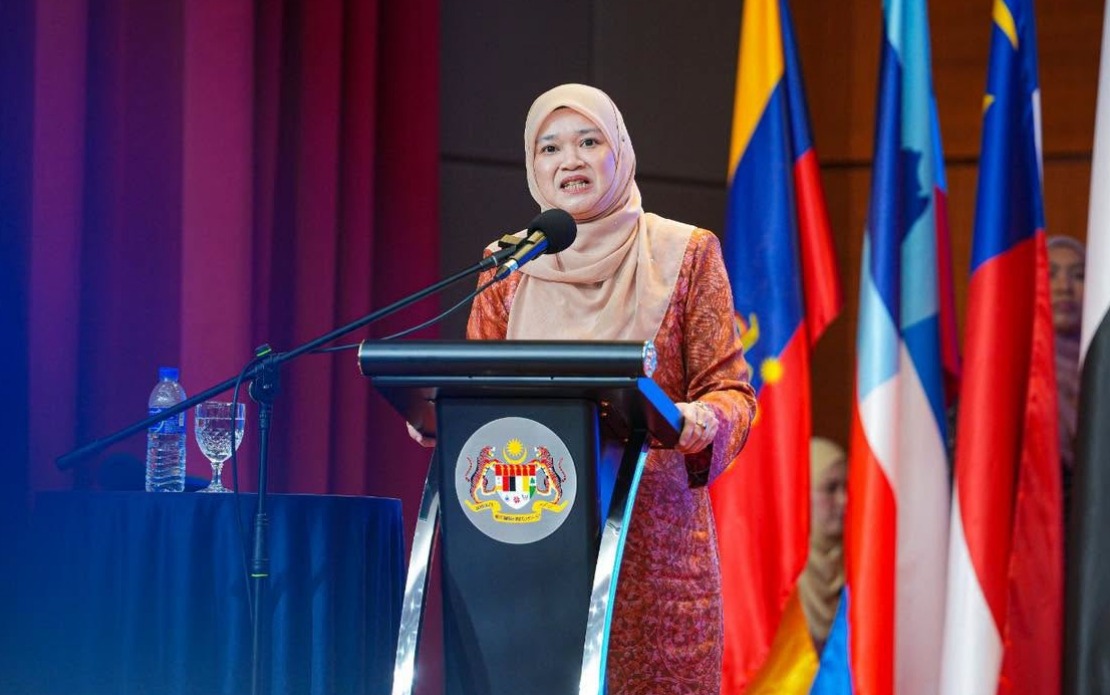
The Malaysian Education Ministry has committed to formally recognising the sporting and co-curricular accomplishments of students studying within prison institutions, opening a pathway for these young people to access higher education after completing their secondary qualifications. Minister Fadhlina Sidek outlined the initiative during the closing ceremony of the 17th Hijrah Kasih Programme in Kajang, a collaborative effort between the Ministry and the Malaysian Prison Department designed to support educational development behind bars. The decision reflects a growing recognition that custodial settings need not represent a dead-end for academic ambition, and that students in these circumstances deserve equivalent opportunities to their peers in conventional schools.
Under the proposed framework, students participating in physical education, sports competitions, and organised club activities will have these contributions formally documented and assessed through the Physical, Sports and Co-curricular Assessment (PAJSK) system. Currently used to evaluate students in mainstream schools, extending PAJSK recognition to prison institutions signals institutional acceptance that achievement in these domains carries legitimate educational value regardless of where it occurs. Datuk Zainal Abas, the deputy director-general of Education overseeing School Operations, indicated that the Ministry aims to secure official recognition of PAJSK scores this calendar year, which would allow SPM candidates graduating from 2027 onwards to claim a ten percent merit advantage when submitting university applications. This timeline, while requiring patience, provides prison school administrators and educators with concrete benchmarks to work toward.
Beyond athletic and co-curricular recognition, the Ministry is simultaneously exploring mechanisms to award formal skills certificates to students who complete vocational training programmes while incarcerated. These credentials would validate practical competencies in fields such as food preparation, textile manufacturing, and hospitality services, equipping graduates with tangible qualifications recognised by employers upon reintegration into society. Fadhlina emphasised that students acquire substantial, marketable abilities through prison-based training schemes, yet currently lack standardised documentation to demonstrate these capabilities to potential employers. Creating a structured certification pathway addresses this gap and acknowledges that technical proficiency developed in institutional settings holds equivalent value to skills taught elsewhere.
The Ministry's initiative arrives against an impressive backdrop of educational achievement within prison institutions. Students at school facilities operated within Malaysian prisons have maintained a one hundred percent pass rate in the SPM examination across two consecutive examination cycles, a performance that demolishes stereotypes suggesting that a student's institutional environment determines educational outcomes. Fadhlina highlighted this accomplishment to underscore a fundamental principle: access to excellence depends fundamentally on individual determination rather than location or administrative designation. This framing reorients public discourse away from deficit narratives toward recognising agency and resilience among incarcerated youth populations, many of whom face substantial personal and family challenges yet persist in academic pursuits.
Acknowledging the digital divide that separates prison institutions from mainstream educational environments, the Ministry is investigating expanded access to DELIMa, the Digital Educational Learning Initiative Malaysia platform. Prison school educators and administrators would gain fuller platform access, enabling them to integrate online learning resources into classroom instruction and bridge geographical or facility-based disparities in educational resources. More ambitiously, the Ministry is examining controlled student access to DELIMa that would permit prisoners to engage with digital learning materials and participate in online educational communities while maintaining appropriate security protocols. This measured approach recognises legitimate institutional constraints while prioritising educational equality, acknowledging that technology increasingly underpins academic development across all settings.
Fadhlina contextualised these institutional reforms within a broader Ministry commitment to ensuring that educational trajectories do not terminate when students complete secondary schooling while incarcerated. Rather than treating prison school completion as a final endpoint, the Ministry increasingly conceptualises post-secondary pathways as legitimate continuation routes. By awarding merit for co-curricular participation, recognising vocational credentials, and facilitating digital learning access, the Ministry removes bureaucratic obstacles that previously channelled prison graduates toward limited economic and social options. This represents substantial policy reorientation, signalling that incarcerated young people merit investment comparable to investments made in conventional school populations.
The role of family support emerged as a crucial reinforcing factor in the Minister's address, highlighting that parental engagement and presence substantially influences educational persistence among institutionalised youth. Many students studying within prison environments experience familial separation, fractured relationships, and inconsistent contact with relatives, conditions that create emotional and psychological barriers to academic concentration. Fadhlina called for sustained parental involvement, particularly during the most psychologically challenging phases of incarceration, recognising that emotional stability and family connection generate motivation to pursue educational credentials. This emphasis acknowledges that institutional reform cannot succeed without concurrent family-centred support, positioning relatives as essential stakeholders in rehabilitation and reintegration strategies.
For Malaysian society, these policy developments carry broader implications regarding rehabilitation philosophy and criminal justice approaches. By investing substantively in educational achievement and skills development within custodial settings, the Ministry signals commitment to reducing recidivism and facilitating successful community reintegration. Students who complete secondary education with recognised qualifications, supplemented by vocational credentials and enhanced university admission prospects, enter post-release environments with enhanced employment prospects and social legitimacy. This investment in human capital formation among currently incarcerated populations generates downstream economic and social benefits extending well beyond prison walls.
The initiative also reflects evolving regional approaches to juvenile and young adult justice, positioning Malaysia within a broader Southeast Asian conversation regarding rehabilitation versus purely punitive detention models. Countries including Singapore, Thailand, and Indonesia face similar challenges regarding educational provision in custodial settings and post-release reintegration of formerly incarcerated youth. Malaysia's policy trajectory, emphasising educational continuation and skills certification, provides a demonstrable model that other jurisdictions might adapt to their contexts. The Ministry's work thus transcends domestic policy to influence regional approaches toward criminal justice and youth development.
Implementation of these reforms will require substantial coordination between multiple Ministry divisions, prison administration authorities, and educational institutions. Teachers working in integrity schools and Henry Gurney schools nationwide require training in PAJSK assessment methodologies and access to digital platforms supporting online instruction. Prison authorities must establish secure yet functional protocols enabling student access to DELIMa while maintaining institutional security standards. Universities must develop admissions procedures that meaningfully integrate the ten percent merit allocation for prison school graduates rather than treating the provision as merely symbolic. Sustained political commitment, adequate resource allocation, and inter-agency cooperation will determine whether these announced initiatives materialise into substantive opportunities or remain aspirational statements.

