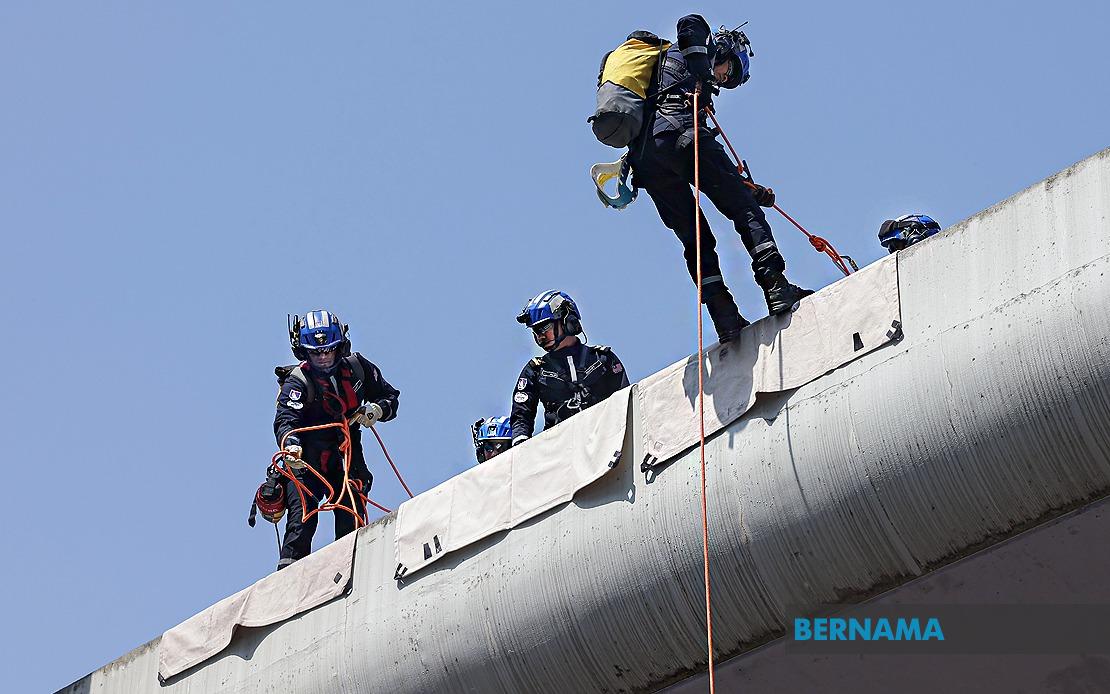
Malaysia has positioned its premier search and rescue capability at the ready to respond to Nepal's flooding crisis, though deployment hinges on formal approval from authorities in Kathmandu. The Malaysian Special Search and Rescue Team, known as SMART, is in a state of operational readiness and could be mobilised at short notice once the Nepali Government formally accepts the offer of assistance, according to statements from the National Disaster Management Agency.
The standby arrangement reflects Malaysia's established role as a regional humanitarian responder, though the actual deployment requires diplomatic coordination and explicit consent from the receiving nation. Officials from NADMA emphasised that while SMART possesses the expertise and equipment necessary for complex rescue operations in challenging terrain, the decision to cross borders and conduct SAR work ultimately rests with Nepal's government authorities. All liaison efforts are being conducted through Malaysia's Foreign Ministry to ensure proper protocols are observed and to facilitate rapid clearance should Nepal formally request assistance.
Senior Fire Superintendent I Abdul Manaf Che Isa, commanding the SMART contingent, underscored the team's dedication to rapid response capability. Despite the unit's involvement in Malaysia's 69th National Day celebration on August 31, the commander conveyed that preparedness for deployment to Nepal remains undiminished. He stressed to assembled media that SMART maintains perpetual readiness and can mobilise within hours of receiving official orders, demonstrating the versatility required of Malaysia's premier disaster response team.
Beyond the immediate rescue mission, Malaysia has defined a multifaceted support framework for Nepal's recovery. Prime Minister Anwar Ibrahim announced that SMART would be tasked not only with search and rescue operations but also with locating and repatriating Malaysian nationals affected by the flooding. This dual mandate reflects practical concerns about citizens abroad during natural disasters, an issue that resonates across Southeast Asia where significant diaspora populations exist in vulnerable geographic areas. The team will also coordinate closely with Malaysia's Embassy in Nepal to ensure comprehensive welfare coverage for Malaysians in the affected region.
The financial commitment adds another dimension to Malaysia's response. A pledge of US$1 million, equivalent to approximately RM4.03 million, will be directed toward immediate relief for flood victims and longer-term post-disaster reconstruction efforts. This monetary contribution complements the technical expertise that SMART brings, recognising that comprehensive disaster response requires both skilled personnel and material resources. The scale of the pledge places Malaysia alongside other regional and international contributors to Nepal's recovery, though the exact allocation and implementation mechanisms remain subject to ongoing negotiation between Malaysian and Nepali authorities.
Nepal's monsoon flooding represents one of the recurring humanitarian challenges affecting the Himalayan region. The country's topography, combining steep mountain terrain with monsoon-influenced precipitation patterns, creates conditions where search and rescue operations become inherently complex and dangerous. SMART's specialisation in operating within such demanding environments—including mountainous and remote areas—makes the team a valued resource for international disaster response. The unit has accumulated significant experience responding to earthquakes, landslides, and flooding across the region, building operational knowledge particularly relevant to Himalayan conditions.
The coordination framework established by NADMA and the Foreign Ministry illustrates how Malaysia's humanitarian response machinery operates in practice. Disaster response transcends military or purely governmental structures, requiring integration across multiple agencies to ensure clarity of command, appropriate resource allocation, and diplomatic sensitivity. NADMA serves as the focal point for domestic disaster management but must necessarily interface with the Foreign Ministry when cross-border operations are contemplated, creating potential delays even when operational urgency is apparent.
For Malaysian readers, this situation underscores both the capabilities that Malaysia has developed in disaster management and the practical constraints that govern international assistance. While SMART represents genuine expertise and capacity, political acceptance by recipient nations remains a prerequisite. This principle applies equally whether Malaysia seeks to assist Nepal or another country; sovereignty considerations necessarily precede humanitarian operations. The standby arrangement reflects realistic preparation for a likely outcome while acknowledging that final decisions rest elsewhere.
Regionally, Malaysia's positioning as a reliable SAR partner contributes to broader stability and mutual assistance frameworks increasingly important as climate variability intensifies weather-related disasters. The MADANI Government's emphasis on this readiness demonstrates continuity in Malaysia's regional role, even as domestic political circumstances evolve. For Nepal, having neighbouring countries positioned to provide rapid assistance offers some reassurance, though the country's own disaster management systems bear primary responsibility for response and recovery.
The coming days will clarify whether Nepal's government formally requests Malaysian assistance and, if so, how quickly SMART personnel can transition from standby status to active deployment. The bureaucratic machinery of international assistance, while necessary for maintaining sovereignty and ensuring appropriate coordination, inevitably introduces temporal delays that disaster situations rarely accommodate gracefully. Malaysia's contribution, whether ultimately deployed or maintained as a symbol of regional solidarity, reflects evolving norms around collective responsibility for managing natural disasters in an increasingly interconnected Asia.

