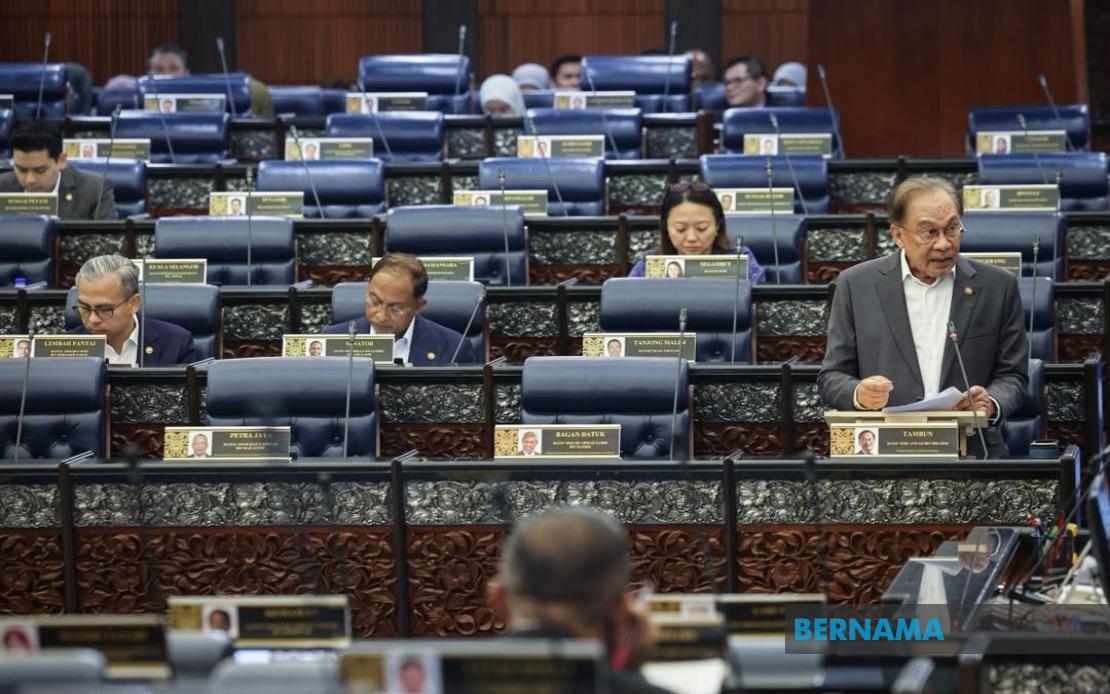
Prime Minister Datuk Seri Anwar Ibrahim has pushed back against criticism of Malaysia's fuel pricing, asserting that domestic petrol costs continue to offer better value than those found in leading global oil-producing nations. Speaking in Parliament on July 14, he highlighted that the government's commitment to maintaining affordable fuel remains evident through the pricing structure of subsidised RON95 petrol under the BUDI MADANI initiative, which stands at RM1.99 per litre.
The Prime Minister drew direct comparisons with major oil exporters to substantiate his position. Saudi Arabia's fuel prices have climbed above RM2.40 per litre, marking a significant premium over Malaysia's current offering. This distinction carries particular weight given Saudi Arabia's status as one of the world's largest crude producers and its historical role in establishing global energy benchmarks. Anwar used this example to counter what he characterised as inaccurate claims circulating about Malaysia's competitive position in regional fuel markets.
Beyond Saudi Arabia, Anwar referenced pricing in Qatar and the United Arab Emirates, both nations blessed with substantial hydrocarbon reserves. The UAE notably increased its fuel prices just two months prior, a decision that underscores how even oil-rich states face pressures driving costs upward. Qatar similarly maintains higher pump prices than Malaysia, according to the Prime Minister's parliamentary statement. These comparisons serve to illustrate that Malaysia's pricing reflects broader global energy dynamics rather than unique domestic mismanagement.
The government's BUDI MADANI initiative represents a deliberate policy choice to shield Malaysian consumers from volatile international oil markets. By maintaining RON95 at RM1.99, the administration attempts to balance fiscal sustainability with household purchasing power—a calculation that becomes increasingly complex as global crude prices fluctuate. The programme underscores a fundamental tension in petrol policy: governments must weigh the budgetary cost of subsidies against the political and social consequences of sudden price shocks to ordinary citizens.
Anwar's remarks arrived in response to a parliamentary question from Datuk Rosol Wahid, a Perikatan Nasional representative from Hulu Terengganu, who raised the matter of fuel price differentials between the previous administration under Datuk Seri Najib Razak and the current government. This line of questioning touches on long-standing political debate regarding energy policy management and the government's ability to deliver on electoral promises. The question implicitly invoked Anwar's opposition-era pledge to reduce petrol prices to RM1.50, a commitment made during a period of higher international crude values.
Contextualising his current position, Anwar noted that when the opposition had campaigned for RM1.50 petrol, Saudi Arabia's fuel cost approximately 50 sen per litre. The dramatic widening of this gap—to 40 sen or more in Malaysia's favour—reflects how global energy markets have fundamentally shifted. Crude prices, geopolitical disruptions, refining capacities, and currency movements all influence the final pump price consumers encounter. Malaysia's position as a net energy exporter does provide some insulation, yet the nation remains tethered to international market realities that no government can entirely control.
The broader implications of this debate extend beyond simple price comparisons. Malaysia's fuel pricing strategy must accommodate competing objectives: supporting lower-income households dependent on transport for livelihoods, maintaining fiscal discipline amid competing budget demands, encouraging efficiency in energy consumption, and preserving international competitiveness for industries reliant on petroleum-based inputs. The BUDI MADANI framework attempts to thread these needles through targeted subsidisation, though debates persist about whether such programmes represent the most efficient allocation of public resources.
For Malaysian consumers and businesses, the significance lies in understanding that domestic pump prices reflect policy choices layered atop global commodity dynamics. A litre costing RM1.99 represents both market forces and government intervention working in tandem. This reality matters for household budgeting, transport sector economics, and broader inflation management. Disparities with neighbouring economies similarly influence perceptions of value and competitiveness across the region, particularly for cross-border commerce and labour mobility.
Anwar's parliamentary intervention also speaks to a wider narrative about governance credibility and policy communication. When leaders dispute opposition claims about pricing, the underlying concern often extends beyond the specific numbers to questions about whose calculations merit trust and whether government pronouncements accurately reflect reality. By invoking concrete Saudi Arabian, Qatari, and Emirati price data, the Prime Minister attempts to ground his position in verifiable facts rather than abstract principles, though the political resonance of such arguments depends partly on public awareness of international fuel costs.
Looking forward, Malaysia's fuel policy will likely remain calibrated to balance multiple pressures. Crude prices may rise or fall, global geopolitical tensions could reshape supply chains, and domestic fiscal conditions will evolve. The BUDI MADANI initiative itself represents a relatively recent iteration of petrol management, suggesting that policy refinements may continue. Whether future adjustments prove necessary will depend on how international markets develop and how the government assesses the trade-offs between subsidy costs and social stability.
The debate ultimately reflects a fundamental challenge facing energy-producing nations: how to leverage hydrocarbon resources for domestic benefit while operating within global market constraints. Malaysia's current positioning—offering cheaper fuel than major oil exporters despite its smaller production base—suggests that policy choices and fiscal commitments do measurably influence what citizens actually pay. This consideration matters not only for immediate household economics but for longer-term assessments of how effectively governments steward national resources.

