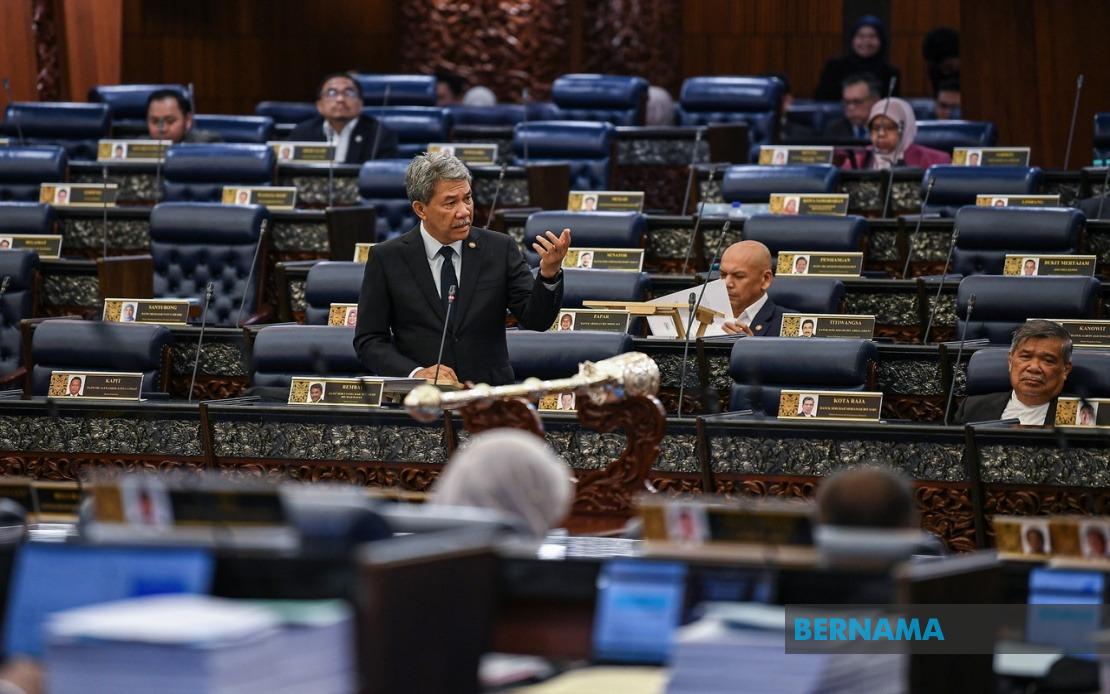
Malaysia's Foreign Minister Datuk Seri Mohamad Hasan has moved to counter suggestions of mismanagement surrounding the Humanitarian Trust Fund for the People of Palestine (AAKRP), reaffirming that the facility operates under rigorous governmental supervision and transparent accounting procedures. Speaking in Parliament, he clarified that the fund functions as a state-managed trust account rather than an independently operated mechanism, thereby subjecting it to the full array of government accountability measures and oversight mechanisms.
The minister's remarks came in response to parliamentary questioning about the efficacy and oversight of humanitarian assistance reaching Gaza's civilian population. His statement represents an attempt to address concerns circulating on social media platforms regarding potential irregularities in fund administration. Mohamad stressed that such allegations fundamentally misrepresent the fund's operational structure and governance framework, emphasizing that misinformation about the AAKRP has proliferated despite the transparency mechanisms already in place.
According to Mohamad, the governance architecture encompassing the AAKRP incorporates multiple layers of accountability. The fund undergoes regular audits conducted by Malaysia's Auditor-General, the constitutional office responsible for examining government expenditure. Furthermore, the Foreign Ministry submits periodic reports to the Cabinet, ensuring that elected officials maintain awareness of fund utilization and outcomes. This reporting cycle represents a standard component of Malaysian government accountability protocols.
The distribution methodology employed for Palestinian humanitarian assistance reveals careful coordination with established international organizations and humanitarian bodies. Rather than distributing funds independently, Malaysia channels aid through the United Nations Relief and Works Agency for Palestine Refugees in the Near East (UNRWA), which operates under UN auspices and maintains its own accountability frameworks. Additional partner organizations include the Jordan Hashemite Charity Organisation (JHCO), the Palestine Red Crescent Society, and King Hussein Hospital, each of which brings institutional credibility and established operational capacity within the region.
Beyond financial transfers, Malaysia has supplemented its assistance through in-kind humanitarian shipments comprising food supplies, medical provisions, and specialized health equipment destined for Gaza. The minister noted that logistical challenges previously delayed certain consignments, but that the recent reopening of overland humanitarian corridors—negotiated in coordination with the Egyptian government—has enabled successful delivery of these materials. This practical dimension of Malaysian aid complements the fund's financial mechanisms and demonstrates multi-faceted engagement with Gaza's humanitarian crisis.
The humanitarian context underlying these assistance efforts underscores the urgency of international engagement. Gaza's infrastructure has experienced catastrophic damage as the prolonged conflict persists, with hospitals, educational institutions, and places of worship suffering substantial destruction. Such devastation creates cascading humanitarian consequences affecting access to essential medical care, educational continuity, and psychosocial wellbeing among affected populations. The deterioration of basic services compounds existing vulnerabilities, particularly among children, elderly persons, and those with pre-existing medical conditions.
Mohamad's emphasis on combating misinformation reflects broader regional concerns about information credibility in conflict-affected contexts. Southeast Asian publics increasingly encounter contradictory narratives about humanitarian initiatives, with social media facilitating rapid dissemination of unverified claims. By explicitly addressing these allegations and detailing governance mechanisms, Malaysia's Foreign Ministry attempts to sustain public confidence in official humanitarian programs whilst simultaneously discouraging reliance on unsubstantiated online narratives.
The specific parliamentary intervention by Ahmad Tarmizi Sulaiman (PN-Sik) indicates that concerns about aid delivery effectiveness have registered sufficiently within the legislature to warrant ministerial clarification. This legislative engagement, while routine for parliamentary question time, demonstrates that opposition lawmakers continue monitoring humanitarian assistance administration. The public response from the Foreign Minister thus serves dual purposes: providing factual reassurance to Parliament and, by extension, addressing public discourse surrounding Malaysia's Palestinian engagement.
Malaysia's approach reflects broader Southeast Asian diplomatic positioning toward the Israeli-Palestinian conflict, wherein countries maintain humanitarian commitments whilst managing complex regional and international relationships. The establishment and administration of dedicated trust funds represents Malaysia's substantive policy response, distinguishing between rhetorical support and institutional resource allocation. The transparency measures described—audits, Cabinet reporting, and channeling through international organizations—reflect standard practices for managing government funds whilst maintaining diplomatic credibility.
The minister's reference to professional and responsible fund management encapsulates Malaysia's intended framing of its Palestinian assistance. By emphasizing governance mechanisms and institutional partners rather than individual discretion or informal distribution networks, the government seeks to position its aid programs within conventional international humanitarian frameworks. This approach facilitates both domestic accountability and international legitimacy, essential considerations for sustained foreign assistance operations.
Looking forward, the resumption of humanitarian logistics through Egyptian-coordinated overland routes potentially expands Malaysia's capacity to deliver assistance. Such expanded delivery capacity depends upon continued coordination between Malaysian, Egyptian, and humanitarian organizations, as well as the maintenance of humanitarian access corridors. The minister's acknowledgment of previous logistical obstacles and recent improvements suggests ongoing attention to operational challenges affecting aid delivery timelines.

