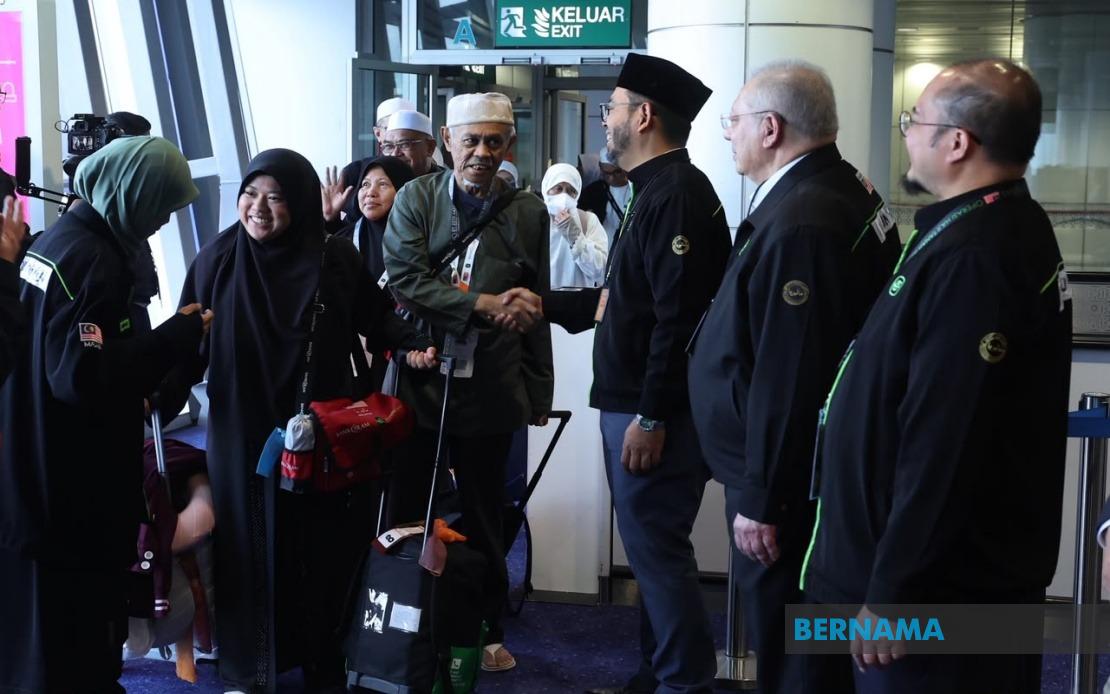
Malaysia has officially wrapped up its haj operations for the 1447 Hijrah season with the homecoming of 258 pilgrims on July 1, marking the culmination of a campaign that maintained its momentum despite regional tensions affecting the broader Middle East. The final group touched down at Kuala Lumpur International Airport at 12.10 pm after departing Madinah the previous evening aboard Malaysia Airlines flight MH 8385, bringing to a close months of coordinated religious and logistical efforts.
The completion of this year's pilgrimage cycle represents more than simply getting all participants safely home. Dr Zulkifli Hasan, the Minister in the Prime Minister's Department (Religious Affairs), framed the moment as a collective achievement worthy of national celebration, emphasising the safe return of every pilgrim in good health as the ultimate measure of success. His remarks underscored how the entire operation, from departure to final arrival, had proceeded without major incident despite the challenging regional security environment that could have disrupted travel schedules and arrangements.
The international accolade bestowed upon Malaysia deserves particular attention given the competitive global landscape of haj management. The Labbaikum Diamond Award, presented by Saudi Arabia's Ministry of Haj and Umrah, represents the highest recognition available for haj administering nations and reflects the quality of Malaysia's organisational infrastructure and service delivery standards. This award positions Malaysia among the world's elite performers in pilgrim management and signals to the Muslim world that the country possesses world-class capabilities in this sensitive and spiritually significant domain.
The success of Malaysia's haj season did not materialise spontaneously but rather resulted from meticulous preparation and interagency coordination. Tabung Haji, the dedicated pilgrimage management authority chaired by Tan Sri Abdul Rashid Hussain, orchestrated a complex web of partnerships involving the Health Ministry, Malaysia Airlines, Immigration authorities, and private logistics providers. Each component of this ecosystem had to function seamlessly to ensure that nearly 1,500 Malaysian pilgrims could proceed through the religious rites of Hajj unimpeded and supported throughout their journey.
Beyond institutional performance, the discipline exhibited by Malaysian pilgrims themselves contributed substantially to the season's success. Dr Zulkifli attributed this comportment to intensive preparatory courses that Tabung Haji had conducted before departure, suggesting that proper education and orientation of intending pilgrims reduces friction and enhances compliance with operational procedures. This emphasis on pre-departure training reflects a sophisticated understanding that pilgrim behaviour directly impacts overall programme execution and reflects national reputation in the Islamic world.
The technological dimension of this year's operations also merits examination. The deployment of the MyNIISe system for visa management demonstrated Malaysia's commitment to modernising administrative processes traditionally prone to bureaucratic delays. By streamlining visa issuance and documentation, the system freed resources for other aspects of pilgrim welfare, exemplifying how targeted technology adoption can enhance service delivery without compromising security or verification standards. Such innovations position Malaysia as a progressive Muslim nation capable of balancing tradition with contemporary administrative efficiency.
Physical infrastructure improvements in Saudi Arabia likewise shaped the pilgrim experience and contributed to health and morale. The provision of sofa beds and upgraded tent accommodations directly addresses comfort during stays in Mecca and Medina, where outdoor exposure and basic conditions have historically challenged elderly and infirm pilgrims. Complementing this, the introduction of around-the-clock bus services connecting mosques to residential facilities ensured that the elderly and mobility-impaired could participate fully in worship without constraint. These provisions signal Malaysia's demographic consciousness in a pilgrim population increasingly dominated by older adults seeking to fulfil this fundamental Islamic obligation.
The post-mortem evaluation processes that Tabung Haji has already commenced represent institutional learning mechanisms essential for continuous improvement. Scheduled deliberations at the National Haj Muzakarah conference in August will enable government officials, religious scholars, and operational experts to analyse what worked, identify bottlenecks, and formulate enhancements for future seasons. This cyclical refinement approach contrasts sharply with complacency and recognises that international standards and pilgrim expectations evolve annually.
For Malaysian readers, the successful conclusion of the haj season carries both spiritual and practical significance. Spiritually, it affirms Malaysia's capacity to facilitate the sacred journey for its Muslim citizens, fulfilling a core governmental obligation within the Islamic framework. Practically, it demonstrates administrative competence and resource management at a scale that few developing nations achieve. The prestigious international recognition elevates Malaysia's standing within the Organisation of Islamic Cooperation and enhances the nation's soft power among Muslim-majority countries.
The geopolitical context underlying this year's haj operations deserves emphasis. The conflict dynamics in West Asia created unprecedented uncertainty for pilgrimages occurring in Saudi Arabia's vicinity. That Malaysia navigated these challenges without cancellations, compromised itineraries, or security incidents testifies to crisis management capabilities and the trust placed in Malaysian institutions by both Saudi authorities and intending pilgrims. This success may embolden future participation and strengthen Malaysia's position as a reliable facilitator of religious obligations in an unstable region.

