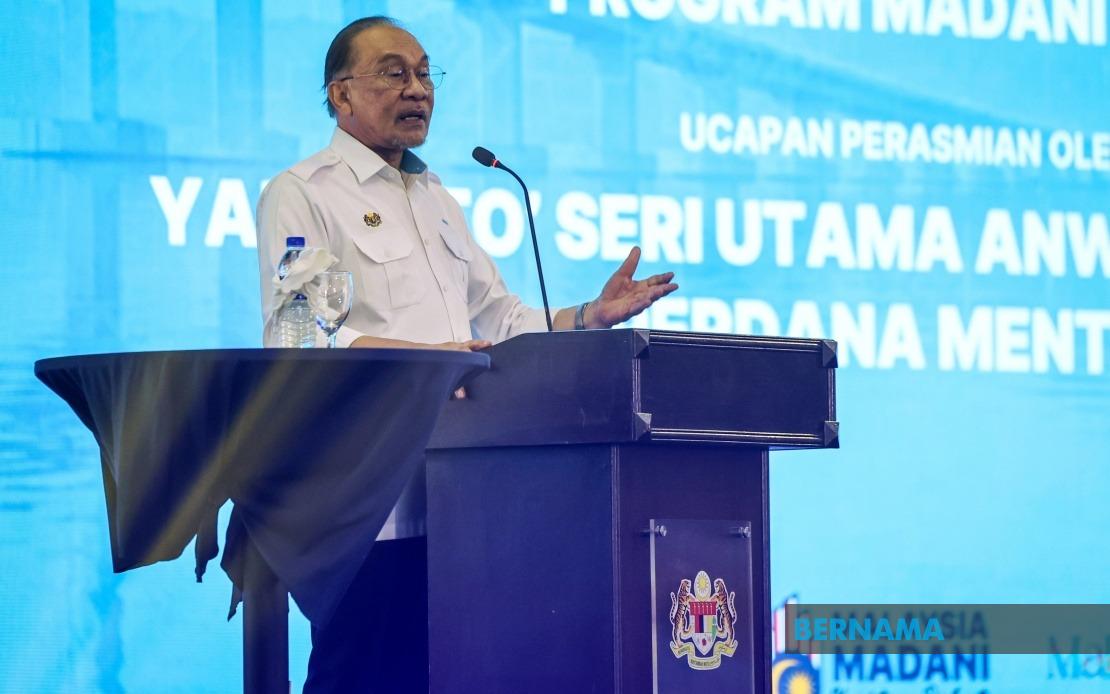
Prime Minister Datuk Seri Anwar Ibrahim has outlined an ambitious vision for Malaysia to consolidate its position as a heavyweight in the global halal industry, but success depends critically on translating the country's certification prowess into tangible manufacturing and supply chain competitiveness. Speaking at the opening of the Penang International Halal Expo 2026 and the Penang Bumiputera Entrepreneurs Gathering at Politeknik Seberang Perai in Permatang Pauh on July 25, Anwar emphasised that global recognition alone is insufficient without corresponding investment in production infrastructure and skilled workforces.
The Prime Minister highlighted that Malaysia's halal certification system has achieved remarkable international standing, creating a platform for economic expansion across multiple sectors. This recognition represents the culmination of decades of regulatory refinement and institutional credibility, positioning the country uniquely as a trusted certifier in a market increasingly conscious of product authenticity and religious compliance. The system's reputation extends beyond food and beverages into pharmaceuticals, cosmetics, logistics, and financial services—sectors where halal compliance commands premium valuations and opening new export corridors.
Anwar revealed that engagement with major global powers has underscored the strategic value of Malaysia's halal ecosystem. During bilateral meetings with Chinese President Xi Jinping, Brazilian President Luiz Inacio Lula da Silva, and South African President Matamela Cyril Ramaphosa, each leader independently raised interest in collaborating with Malaysia to either obtain halal certification for their domestic industries or establish certification frameworks aligned with Malaysian standards. This pattern of interest across geographically and economically diverse nations suggests halal compliance is transitioning from a niche religious requirement to a mainstream commercial necessity.
For Malaysian companies and entrepreneurs, this external demand represents a significant opportunity window. The halal sector currently contributes substantially to the national economy through exports, but the ceiling remains determined by domestic production capacity. If Malaysia can only certify products but cannot manufacture sufficient volume to meet burgeoning international demand, the country risks ceding industrial opportunity to competitors in Turkey, Indonesia, or the Gulf states who may establish their own certification pathways. The gap between certification authority and manufacturing capability could ultimately limit Malaysia's leverage and returns.
The emphasis on industry capability reflects a pragmatic understanding of how certification markets function. A nation's certification body gains authority through consistent oversight and quality assurance, yet that authority remains academic unless backed by commercial entities capable of delivering products that meet those standards at competitive prices and scales. Malaysia's strength lies in the synergy between its reputation for rigorous certification and its emerging supply chains across food processing, contract manufacturing, and logistics hubs. This combination differentiates Malaysia from countries with emerging halal frameworks but limited industrial ecosystems.
International collaboration takes on heightened importance given the complexity of building halal industries in nations without existing Muslim consumer bases or technical expertise. Malaysia possesses institutional knowledge spanning decades of halal governance, regulatory frameworks, and industry engagement that is difficult to replicate. By positioning itself as a collaborative partner rather than merely a certifying authority, Malaysia can earn consultancy fees, technology transfer revenues, and partnership stakes in joint ventures. This model transforms halal certification from a transactional service into a platform for deeper economic integration.
For Southeast Asian competitors and observers, Malaysia's strategic approach carries implications for the regional halal ecosystem. If Malaysia successfully leverages its certification authority to anchor industrial partnerships with major economies, the country could consolidate a disproportionate share of halal value chains in the region. This would benefit Malaysia but might raise questions in neighbouring countries about fair access to certification and market opportunities. Indonesia, with its massive Muslim population and growing manufacturing base, may view Malaysia's assertion of leadership with some caution, potentially sparking discussions about certification reciprocity or regional standards harmonisation.
The timing of PIHEX 2026 and the emphasis on bumiputera entrepreneurship also signal a domestic priority: ensuring that Malaysian businesses, particularly small and medium enterprises and indigenous entrepreneurs, capture value from the halal sector's expansion. Anwar's presence at these events underscores commitment to broadening participation beyond large conglomerates, a democratic principle with economic justification given that SMEs drive employment and innovation. However, translating international halal partnerships into grassroots business opportunities requires downstream support including financing, technology transfer, and market access guarantees.
The global recognition Anwar references has taken years to build and reflects Malaysia's institutional commitment to halal governance through bodies like the Department of Islamic Development Malaysia (JAKIM). The certification system's credibility rests on transparent auditing, consistent standards enforcement, and genuine engagement with industry stakeholders. As demand from China, Brazil, South Africa, and other nations accelerates, maintaining that credibility becomes even more critical—any decline in certification rigour would undermine the entire value proposition.
Looking ahead, Malaysia's path toward halal industry dominance depends on threading a complex needle: expanding industrial capacity without compromising certification standards, partnering with international players without surrendering strategic control, and distributing prosperity across the economy without allowing inefficiencies to creep into supply chains. The opportunity is genuine and potentially transformative, but converting global interest into sustained competitive advantage demands disciplined execution across government, industry, and civil society.

