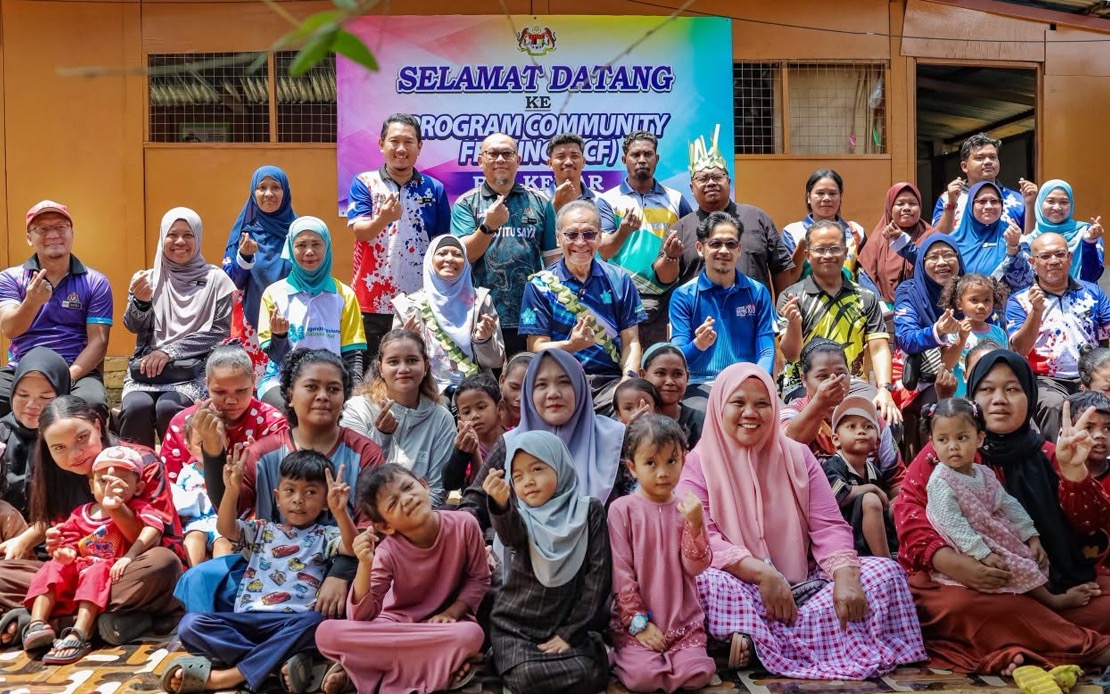
The Ministry of Health has committed RM500,000 in immediate funding to enhance healthcare infrastructure at the Kemar Health Clinic serving the Orang Asli community in Gerik, Hulu Perak. Health Minister Datuk Seri Dr Dzulkefly Ahmad announced the allocation during a recent visit to the remote facility, signalling the government's determination to narrow healthcare access gaps in areas where terrain and geography have historically created barriers to medical services.
A significant portion of the funding will construct a replacement boat storage facility, addressing a critical infrastructure gap that has hampered emergency response capabilities. The existing structure, now over a decade old and showing considerable deterioration, can only house a single vessel—a constraint that compromises both the protection of this essential asset and the efficiency of rapid medical deployment. For communities situated along waterways where boats represent the primary means of transport, this infrastructure investment carries outsized practical importance. The new facility will accommodate the expanded fleet operations required to serve the growing demands of the region's healthcare system.
Concurrently, the ministry will procure a four-wheel-drive vehicle to replace the ageing transport currently in service, alongside critical medical equipment including a Video Laryngoscope. This device facilitates advanced intubation procedures during emergency situations, bridging a technological gap that could prove life-saving for patients requiring intensive respiratory intervention in settings where advanced facilities may be distant. The equipment purchases reflect the ministry's broader strategy of equipping remote clinics with diagnostic and emergency capabilities that approach those available in urban centres.
Dr Dzulkefly emphasised that the health facility's modernisation extends beyond immediate upgrades. The ministry is accelerating construction of a new Kemar Health Clinic classified as Type 5, a facility designation indicating comprehensive, modern clinical infrastructure. Once operational, residents will transition from the current constrained environment to healthcare premises offering expanded capacity, improved comfort, and enhanced service scope—a transition expected to significantly elevate service quality across the region.
Complementing these facility investments, the ministry has deployed the Medik 8 multipurpose boat, a 12-passenger vessel costing RM350,000, to strengthen emergency response reach. The boat was officially commissioned at Belum Rainforest Resort Jetty, where it joins an existing fleet of six vessels. This waterborne ambulance service addresses a fundamental challenge: the more than 4,500 Orang Asli residents in the RPS Kemar settlement depend entirely on river routes for transportation, making boat-based medical response an indispensable component of healthcare delivery rather than a supplementary service. The addition extends response capacity and reduces emergency response intervals for acute medical incidents in the community.
The minister's remarks underscored that sophisticated infrastructure becomes meaningful only through the dedication of frontline personnel. Healthcare workers including doctors, nurses, and boat operators operate under demanding conditions—navigating river currents, contending with adverse weather, and maintaining service continuity despite geographical isolation. Recognition of this human dimension reflects understanding that healthcare equity depends not merely on allocations and equipment but on sustained commitment from professionals willing to operate in challenging environments.
Dr Dzulkefly articulated healthcare access as a fundamental principle aligned with Malaysia MADANI, the government's development framework. Under this doctrine, healthcare access represents an equal right regardless of geography or terrain, with challenging landscapes and remote location explicitly rejected as legitimate barriers to service delivery. This philosophical positioning transforms infrastructure investment from discretionary development into core governance obligation, framing rural and indigenous healthcare expansion as inseparable from national developmental goals.
Beyond acute care infrastructure, the ministry demonstrated commitment to preventive health through the Community Feeding Programme at RPS Kemar. This initiative targets nutritional intervention for Orang Asli children aged six months to six years, combining active feeding, full-cream milk supplementation, multivitamins, and Ready-to-Use Therapeutic Food for malnutrition cases. The programme's decade-long implementation from 2015 through 2025 has demonstrated measurable population health improvements, reducing childhood stunting rates from 75.2 per cent to 50.8 per cent—a substantial decline reflecting sustained nutritional intervention effectiveness.
Parallel improvements in underweight rates similarly testify to programme impact. Reductions from 43.7 per cent to 25.2 per cent indicate that targeted nutritional investment produces durable health outcomes across the Orang Asli demographic. These metrics carry particular significance for Southeast Asian development contexts, where childhood malnutrition remains both prevalent and consequential for long-term human capital development. Success in Kemar provides a replicable model for other remote indigenous populations across the region facing comparable nutritional challenges.
The comprehensive approach—combining infrastructure modernisation, equipment acquisition, personnel support, and preventive nutrition programmes—reflects evolved understanding of healthcare equity. Remote area medicine cannot rely exclusively on facility construction; it requires complementary investments in transport capacity, emergency capabilities, workforce support, and upstream prevention. The Kemar initiative demonstrates how sustained commitment across multiple intervention dimensions produces measurable population health improvement, establishing a template potentially applicable across Malaysia's remaining underserved regions and offering lessons for other Southeast Asian nations addressing indigenous health equity.

