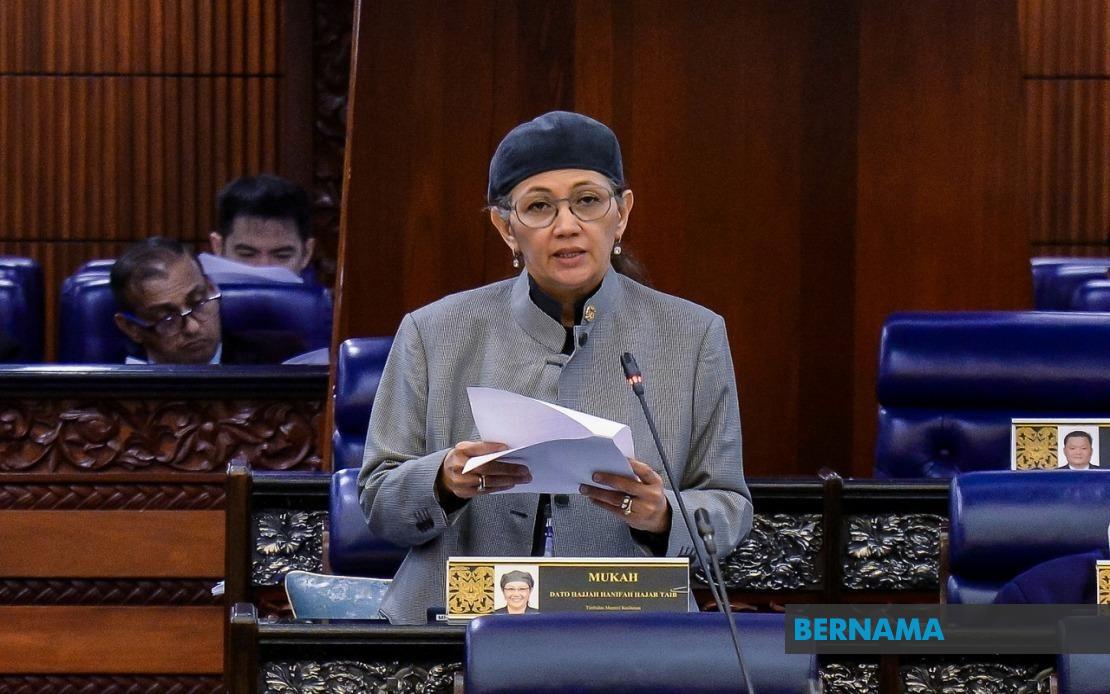
Malaysia's Health Ministry is mounting a substantial recruitment campaign to tackle Sabah's entrenched doctor shortage, with Deputy Health Minister Datuk Hanifah Hajar Taib announcing plans to place 560 permanent medical officers in the state beginning October 2026. The announcement, delivered during a Special Chamber session of the Dewan Rakyat, represents part of a broader nationwide initiative to fill 4,500 permanent medical posts through two accelerated phases. Yet beneath the headline figures lies a more sobering reality: officials privately expect only 280 of the 560 newly appointed doctors to actually report for duty, a projection grounded in the ministry's historical experience with reporting rates hovering around 50 per cent.
Sabah faces a documented shortfall of 256 medical officers, a gap that has strained healthcare delivery across the state's public institutions. Even if all 560 recruited officers take up their postings, this would theoretically address the identified deficit. However, the ministry's candid acknowledgement of anticipated attrition—with half the cohort expected to reject assignments—reveals the structural challenges underpinning recruitment efforts in East Malaysia. This disconnect between offers and actual placements reflects broader employment dynamics: medical graduates' career preferences, geographic considerations, family circumstances, and opportunities in private practice all compete with government postings in determining whether appointments translate into deployed personnel.
The scale of Sabah's healthcare workforce challenge becomes evident through the official inventory of established positions. The state currently maintains 2,803 medical officer posts, yet only 1,863 positions—representing 66.5 per cent of the establishment—are actively filled. An additional 366 officers, comprising 13.1 per cent of posts, are on study leave pursuing further qualifications. This leaves 570 positions, or 20.3 per cent of the total establishment, unfilled. To manage this structural gap, the ministry has deployed 680 contract doctors to Sabah, creating a patchwork workforce that blends permanent and temporary arrangements. This reliance on contract personnel, while addressing immediate staffing needs, creates instability and complicates long-term workforce planning.
Context matters significantly for understanding Sabah's situation within Malaysia's broader healthcare landscape. According to the 2024 Health Indicators report, eight states—including Sabah—fall below the national average for doctor-to-population ratios, indicating that workforce challenges extend beyond a single jurisdiction. Nevertheless, Sabah has demonstrated measurable progress: the state's doctor-to-population ratio improved by 25.1 per cent between 2020 and 2023, suggesting that targeted interventions yield results. This upward trajectory provides grounds for cautious optimism, though the absolute numbers remain insufficient for optimal healthcare delivery in a state with Sabah's geography and population distribution.
The recruitment initiative operates within a two-phase structure. In the first phase, concluding in mid-2026, 328 officers received permanent postings, with 39 assigned to Sabah. However, only 20 of these Sabah-bound doctors actually reported, while 19 declined their placements. This 51 per cent acceptance rate in the initial phase underscores the retention challenge that has prompted the ministry to introduce systemic reforms. The second phase, scheduled for October 2026, encompasses 4,172 permanent offers nationwide, with 560 destined for Sabah. Together, these phases represent an aggressive attempt to stabilize the state's medical workforce.
Essential to understanding the recruitment strategy is the ministry's deployment of enhanced placement mechanisms. The e-Placement system, rolled out in 2025, now incorporates mandatory requirements for contract officers transitioning to permanent positions: they must select at least one placement option from among Sabah, Sarawak, or Labuan. This policy deliberately directs newly permanent doctors toward underserved regions, recognizing that without structural incentives, candidates gravitate toward urban centres with superior amenities and professional opportunities. By bundling the permanent contract transition with geographic preferences, the ministry seeks to align career advancement with strategic workforce distribution.
Quota-based allocation forms another pillar of the strategy. The ministry has established a nationwide permanent medical officer placement quota of 2,248 positions. Within this framework, Sarawak receives 650 placements and Sabah receives 310 through the e-Placement system. These two states combined account for 42.7 per cent of the national quota, reflecting the ministry's recognition that East Malaysian states face disproportionate challenges in attracting and retaining medical personnel. The generous allocation signals political commitment to bridging regional healthcare disparities, though implementation success depends on converting quotas into actual appointments and, critically, actual attendance.
For Malaysian readers and policymakers, the Sabah recruitment drive illustrates the persistent tensions between healthcare planning and practical workforce management. Establishing posts, offering positions, and securing acceptances represent three distinct challenges, each more difficult than the preceding one. The gap between 560 offers and anticipated 280 arrivals reflects not ministerial incompetence but rather the complex incentive structures influencing medical professionals' location decisions. Private sector opportunities, family considerations, and the relative appeal of different geographic postings all weigh heavily on individual choices.
The implications for Sabah's healthcare system are considerable. Even if 280 doctors report in October 2026, this would represent a meaningful addition to the current 1,863 filled positions, potentially raising the fill rate to approximately 68.5 per cent of established posts—a marginal but material improvement. Combined with ongoing efforts to manage study-leave periods and contract deployments, such additions might incrementally enhance service capacity, particularly in underserved districts. However, sustainability remains uncertain: unless the underlying factors driving rejection rates change, future recruitment cycles may encounter similar attrition.
Looking forward, the ministry's strategy suggests recognition that recruitment alone cannot solve healthcare workforce challenges. The emphasis on systematic placement mechanisms, geographic incentives, and quota-based allocation indicates a shift toward structured workforce distribution rather than relying on individual doctors' voluntary choices. For Sabah specifically, success will depend on whether 280 or more of the 560 appointed officers actually commence duties, how long they remain in post, and whether the state can simultaneously improve working conditions, professional development opportunities, and career progression pathways that would increase retention beyond the historical 50 per cent reporting baseline.

