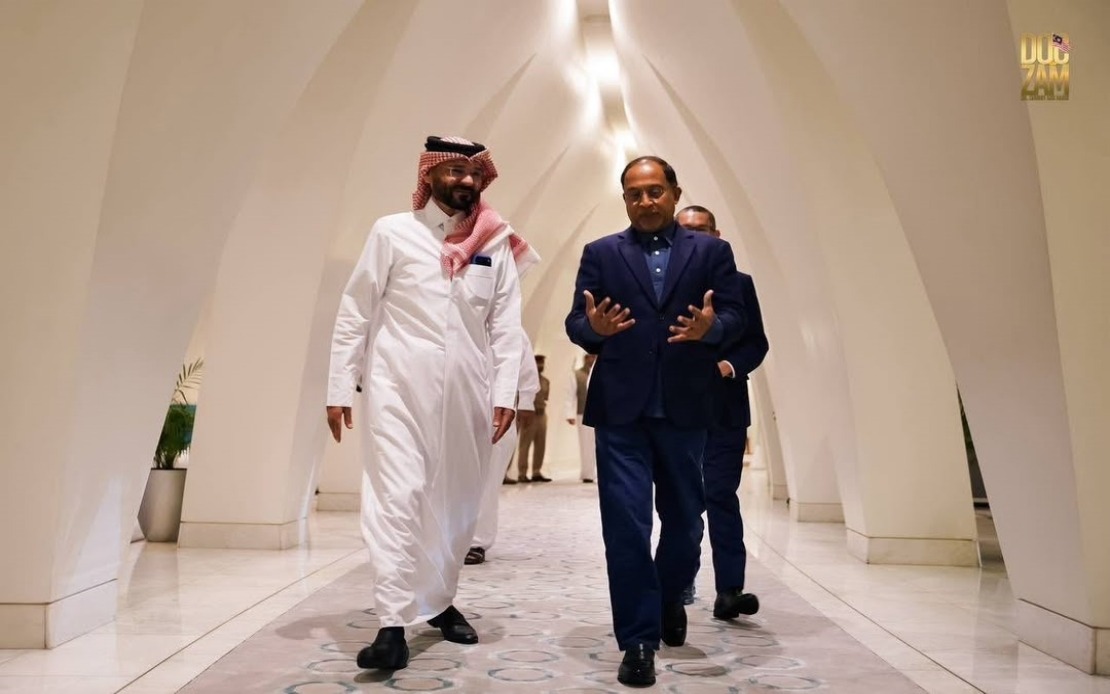
Malaysia's delegation to pay final respects to Qatar's late Father Amir has arrived in the Gulf state. Higher Education Minister Datuk Seri Dr Zambry Abd Kadir touched down in Doha early Tuesday morning, carrying the Malaysian government's condolences to the Gulf nation following the death of Sheikh Hamad bin Khalifa Al Thani. The minister's journey underscores the depth of diplomatic ties between Malaysia and Qatar, two Muslim-majority nations with longstanding bilateral relations spanning trade, education, and religious cooperation.
Sheikh Hamad, who steered Qatar's transformation into a regional and global power, passed away on Sunday morning at the age of 74. His death marks the end of an era in Qatari leadership, as he served as Amir for nearly two decades before transferring authority to his son, Sheikh Tamim bin Hamad Al Thani, in 2013. During his tenure from 1995 onwards, Sheikh Hamad modernised Qatar's economy, diversified its revenue streams beyond oil and gas, and elevated the nation's international standing through strategic investments in sports, culture, and media.
Zambry announced his intention to pay a courtesy call on the current Amir, Sheikh Tamim bin Hamad Al Thani, at the Lusail Palace during his visit. This protocol reflects the formal nature of the condolence mission and demonstrates Malaysia's respect for Qatar's ruling family. The visit also provides an opportunity to reaffirm the diplomatic and strategic partnership between Kuala Lumpur and Doha at a time when regional geopolitics remain fluid and multilateral cooperation increasingly vital.
In his Facebook statement, Zambry articulated Malaysia's position succinctly, stating that the nation extends its deepest condolences to Qatar's leadership and populace. Such expressions of solidarity carry significance beyond ceremonial formality; they signal Malaysia's commitment to maintaining warm relations with Qatar even as regional dynamics shift. For Malaysian readers, this diplomatic gesture reflects the government's engagement with Gulf states, where Malaysian investments, workers, and educational interests remain considerable.
Qatar has designated four days of official national mourning, beginning on Sunday, July 12. During this period, all ministries, government entities, and public institutions across the country will remain closed, enabling the nation to collectively pay respects to the departed leader. This comprehensive halt to official business underscores the profound significance of Sheikh Hamad's legacy within Qatar and the gravity with which his passing is regarded by the state apparatus and broader society.
Sheikh Hamad's 18-year tenure was transformative for Qatar. When he ascended to power in 1995, Qatar was a relatively modest oil-producing nation. Through ambitious vision and calculated strategy, he positioned the country as a regional heavyweight. His government established Qatar Airways, which evolved into one of the world's premier carriers and a symbol of the nation's prosperity. The launch of Al Jazeera television network revolutionised Arab media and extended Qatar's soft power globally. Investment in infrastructure, including the construction of modern ports, airports, and financial districts, reshaped the physical landscape.
The transfer of power to Sheikh Tamim in 2013 occurred smoothly, a rare occurrence in the region and a testament to the family's institutional stability. Sheikh Tamim has continued his father's modernisation agenda whilst maintaining Qatar's independent foreign policy stance. The younger Amir has navigated complex regional relationships, including tensions with neighbouring Saudi Arabia and the United Arab Emirates, whilst strengthening ties with Turkey and Iran. He also oversaw Qatar's successful hosting of the FIFA World Cup in 2022, a showcase event that cemented the nation's position as a global player.
For Malaysia, the relationship with Qatar carries multiple dimensions. Thousands of Malaysian workers are employed in Qatar across various sectors, from construction to hospitality and service industries. Malaysian students attend institutions in Doha, including Education City's campuses. Trade between the two nations, whilst modest in absolute terms, reflects broader commercial networks. More significantly, Malaysia and Qatar share common interests in Islamic affairs, interfaith dialogue, and regional stability. Both nations have supported each other's positions in international forums and maintain cordial diplomatic channels.
Zambry's presence in Doha at this solemn occasion sends a message about Malaysia's foreign policy priorities and its commitment to maintaining stable relationships within the Muslim world. The gesture also reflects growing acknowledgment that engagement with Gulf states is essential for Malaysia's strategic and economic interests. As Asian nations increasingly compete for influence and investment in the Middle East, maintaining strong diplomatic ties becomes crucial for securing access to capital, energy resources, and regional partnerships.
The death of Sheikh Hamad also prompts reflection on succession and institutional continuity in Gulf monarchies. Unlike some regional transitions marked by instability, Qatar's transfer of power occurred without significant domestic disruption, highlighting the robustness of the Al Thani family's governance structures. For Malaysia, observing how established monarchical systems manage succession and sustain legitimacy offers relevant lessons, given the constitutional significance of Malaysia's own institution of monarchy.
As Qatar observes its period of official mourning, the arrival of delegations from across the world, including Malaysia, demonstrates the extensive international relationships Sheikh Hamad cultivated during his lifetime. These visits represent not merely ceremonial observance but acknowledgment of a leader who fundamentally altered his nation's trajectory and left an indelible mark on regional geopolitics. For Malaysia, participating in this moment of collective mourning reinforces shared values and mutual respect that form the foundation of bilateral engagement.
Zambry's mission to Doha encapsulates broader patterns in contemporary Asian diplomacy, where engagement with Gulf states has become increasingly important. As regional powers recalibrate their foreign policies and seek new partnerships, maintaining strong ties with established players like Qatar serves Malaysian interests across multiple domains. The minister's visit, whilst rooted in the immediate occasion of Sheikh Hamad's passing, also symbolises Malaysia's determination to sustain and deepen relationships that underpin regional stability and prosperity.

