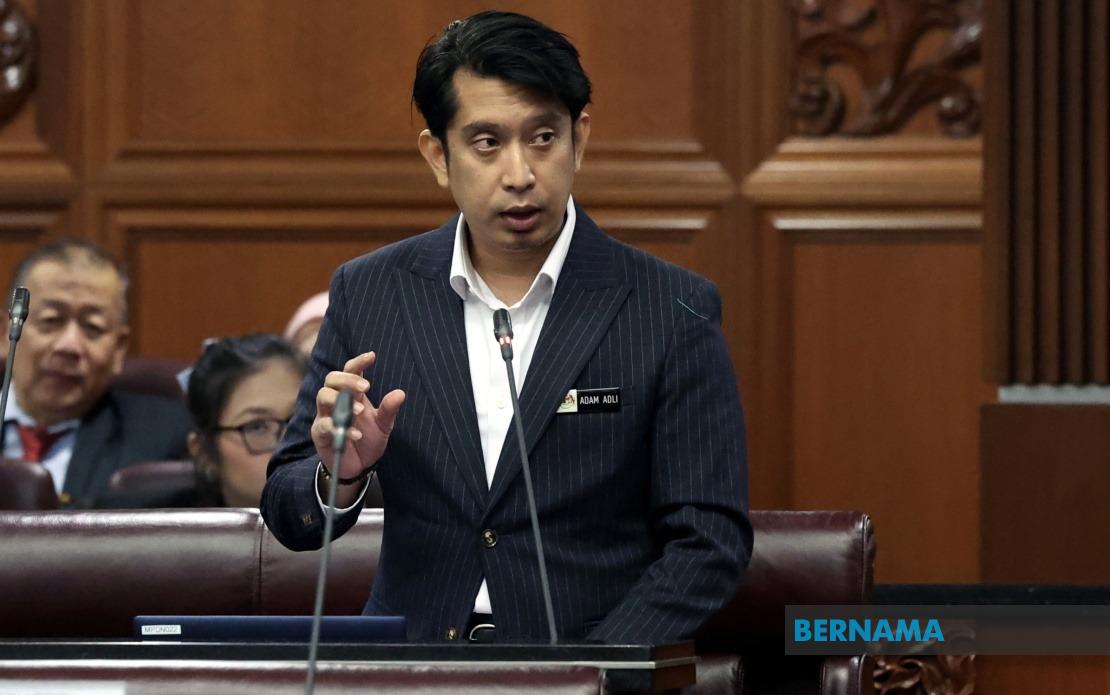
The Ministry of Higher Education has begun detailed work on a significant infrastructure proposal to construct a residential college capable of housing approximately 700 students in Betong, Sarawak, addressing a critical gap in accommodation for technical and vocational education learners across the country's rural regions. Deputy Higher Education Minister Adam Adli Abd Halim outlined the initiative during parliamentary proceedings, emphasising the ministry's commitment to expanding TVET accessibility beyond urban centres and ensuring equitable educational opportunities for underserved communities in East Malaysia.
The proposed facility would primarily serve students attending Politeknik Metro Betong Sarawak and Kolej Komuniti Betong, both institutions that have experienced growing demand for technical qualifications but have struggled with infrastructure constraints. The residential college represents a strategic intervention to remove accommodation barriers that have historically limited rural student participation in vocational pathways, a persistent challenge across Southeast Asia's remote areas where inadequate housing has forced capable learners to abandon tertiary education aspirations.
Authorities have identified an 8.814-hectare site in Batu Api district, situated approximately 650 metres from the PMBS campus, as the proposed location for this development. Significantly, the land is already owned by the federal government through the Prime Minister's Department, simplifying acquisition procedures. The Sarawak Land and Survey Department formally recommended this parcel, having conducted detailed site assessments to ensure suitability for residential and educational infrastructure.
The implementation pathway requires the ministry to secure a change in land classification and obtain formal approval from the Prime Minister's Department, a procedural safeguard ensuring alignment with broader federal development priorities. Adam Adli indicated the ministry intends to accelerate this process, recognising that accommodation limitations have constrained growth at existing institutions and restricted the demographic base from which these polytechnics can recruit. The target capacity of 700 students, or slightly higher, was calibrated to address both current demand and anticipated enrolment expansion over the next five to seven years.
The housing initiative reflects a deliberate sequencing strategy within the ministry's broader development agenda for Betong's technical institutions. Rather than immediately pursuing elevation of Politeknik Metro Betong to full polytechnic status—a request raised by local parliamentarian Datuk Dr Richard Rapu—the ministry has prioritised foundational welfare and accommodation challenges. This approach recognises that institutional upgrade proposals lack credibility without addressing basic student support infrastructure, a realistic assessment given that many rural institutions struggle to attract qualified applicants precisely because residential facilities remain inadequate.
Politeknik Metro Betong currently enrolls 291 students across its Diploma in Finance and Diploma in Tourism Management programmes, substantially below its 600-student maximum capacity. This underutilisation suggests that supply-side constraints—such as inadequate accommodation—rather than demand limitations have suppressed enrolment figures. The gap between capacity and actual student numbers underscores the housing project's strategic importance; without addressing residential barriers, expanding academic offerings would prove futile if potential learners cannot access the institution.
To accelerate programme diversification during the hostel planning phase, PMBS will introduce a new Diploma in Business Information Systems beginning in the December 2026/2027 academic session. This addition reflects labour market responsiveness, as information systems skills command premium salaries across Malaysia's digitalising economy. The curriculum expansion signals ministry intent to broaden PMBS's appeal beyond traditional hospitality and financial services pathways, potentially widening the student recruitment base and strengthening justification for expanded residential capacity.
Beyond formal diploma programmes, Politeknik Metro Betong has expanded its footprint through lifelong learning initiatives, hosting 1,137 participants in short-term courses during the previous year. These workshops in accounting and tourism management demonstrate institutional capacity for flexible skill development, addressing regional workforce needs beyond traditional enrolment categories. Such activity provides revenue diversification and community engagement, factors that strengthen institutional sustainability and advocacy for infrastructure investment.
While awaiting hostel project completion, the ministry has established a Student Residential and Accommodation Management Committee to oversee welfare and safety protocols for learners in private rental housing near campus. This interim governance structure acknowledges that adequate accommodation remains an immediate concern requiring active management rather than delayed resolution. The committee's work provides a foundation for scalable accommodation services once the residential college becomes operational, allowing staff to develop best-practice protocols and student support frameworks.
The Betong hostel proposal carries implications extending beyond Sarawak's borders, establishing a template for rural TVET infrastructure investment across Malaysia. Rural student persistence and completion rates typically suffer when accommodation insecurity forces learners to commute long distances or abandon programmes entirely. By demonstrating federal commitment to hostel provision in regional polytechnics, this project creates precedent and justification for similar investments in other underserved areas, potentially transforming rural TVET accessibility across Southeast Asia's broader development landscape.
The initiative also addresses demographic and regional equity imperatives within Malaysia's higher education framework. Sarawak's dispersed population and significant distances between population centres and existing institutions have historically advantaged urban-based students with greater residential stability. Federally funded hostel infrastructure redistributes opportunity, enabling talented rural youth to access technical qualifications without requiring family relocation or private accommodation resources that many rural households cannot afford. This dimension aligns with broader regional development strategies prioritising equitable growth across Malaysia's diverse geography.

