The Ministry of Human Resources (KESUMA) is rolling out a comprehensive reskilling initiative designed to cushion the impact of the global supply chain crisis on Malaysian workers. Datuk Seri R. Ramanan, the ministry's minister, announced the programme in Johor Bahru on June 23, signalling the government's commitment to helping individuals transition out of vulnerable sectors into sustainable employment.
The initiative targets workers who have lost their livelihoods across three critical economic pillars: services, manufacturing and construction. These sectors have faced particular strain as international supply networks remain volatile, creating cascading job losses that ripple through local communities. By channelling affected workers into structured Technical and Vocational Education and Training (TVET) pathways, KESUMA aims to address both immediate employment gaps and longer-term skills mismatches in the economy.
The retraining effort will be complemented by a dedicated job placement service operated through the Social Security Organisation's (PERKESO) MYFutureJobs platform. This digital matching system represents a modernised approach to employment assistance, moving beyond traditional labour market interventions to leverage data-driven placement strategies. Workers completing their TVET courses will undergo structured job matching protocols, with government oversight ensuring that new placements align with individual capabilities and career trajectories rather than simply filling vacancies.
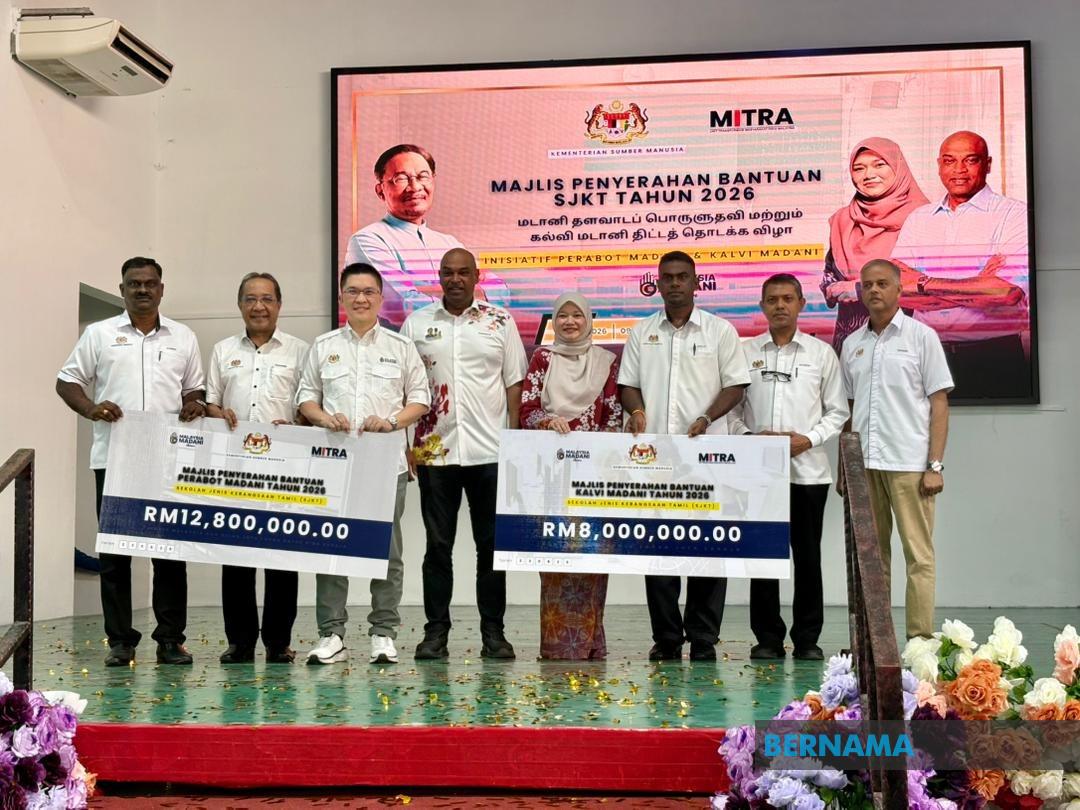
The announcement comes alongside two significant initiatives targeting Tamil vernacular schools, reflecting the government's broader education and social equity agenda. The MADANI Furniture Initiative will distribute high-quality school furnishings across 361 government-aided Tamil schools nationwide, benefiting nearly 40,000 pupils and more than 5,000 educators. The rollout, scheduled in phases from June through August, will supply fourteen categories of essential equipment including desks, seating, storage and cooling systems to institutions that have historically faced resource constraints.
Paralleling the furniture upgrade, KESUMA is allocating RM8 million for the KALVI MADANI Programme, a targeted support scheme designed specifically for Indian students in selected Tamil vernacular schools. This initiative encompasses four integrated support mechanisms: subsidised tuition instruction, nutritional provision for pupils, educational technology devices and learning materials, alongside welfare enhancements for teaching staff. The programme's structure recognises that academic achievement depends not solely on classroom infrastructure but on addressing the socioeconomic barriers many disadvantaged students encounter.
The dual-track announcement—workforce upskilling for displaced adults alongside educational investment in vulnerable student populations—reveals an integrated policy philosophy. By strengthening foundational education in underserved communities whilst simultaneously rerouting displaced workers into higher-skilled roles, the government attempts to break cyclical patterns of economic marginalisation. This approach acknowledges that supply chain disruptions create not merely temporary unemployment but structural vulnerabilities that compound across generations if left unaddressed.
For Malaysia's broader economic context, these interventions arrive at a critical juncture. Global supply chain volatility continues to create employment uncertainty, particularly in export-dependent sectors like electronics manufacturing and petrochemicals where Malaysia maintains significant regional presence. Workers in these industries face heightened redundancy risk, especially those in entry-level or semi-skilled positions. By investing in TVET capacity, KESUMA positions the country to retain and redeploy its workforce rather than experiencing permanent skill-base erosion.
The scale of the TVET expansion remains crucial. While specific enrolment targets were not disclosed in the announcement, the availability of PERKESO's MYFutureJobs platform suggests systematic capacity planning. The success of such programmes depends critically on course quality, employer engagement and wage progression outcomes. International evidence indicates that TVET effectiveness improves substantially when vocational curricula align closely with industry demand and when employers participate in curriculum design and recruitment.
For Southeast Asian observers, Malaysia's response model offers instructive lessons. Regional economies increasingly contend with supply chain fragmentation and shifting manufacturing geographies. Thailand, Indonesia and Vietnam face similar workforce displacement pressures. By developing integrated reskilling infrastructure now, Malaysia may establish comparative advantage in managing labour market transitions more smoothly than regional competitors who lack comparable safety-net mechanisms.
The timing of these announcements also reflects political calculation. Investing visibly in Tamil vernacular school infrastructure and targeting support toward Indian-Malaysian communities addresses historical education equity gaps whilst generating tangible community benefits ahead of electoral cycles. The visible infrastructure improvements—new furniture, classroom devices—represent immediate demonstrable outcomes distinct from abstract reskilling promises that take longer to yield visible results.
Implementation will prove determinative. TVET programme quality depends on instructor expertise, apprenticeship partnerships and employer demand signals. PERKESO's job-matching platform requires sufficient employer participation to function effectively. If implementation proves merely cosmetic—if TVET courses fail to improve employment outcomes or if job matching devolves into misaligned placements—the initiative risks becoming another unfulfilled skills-development promise. Malaysian policymakers must ensure sustained funding, quality oversight and genuine employer partnership to convert the announced commitments into sustained livelihood improvements for displaced workers.

