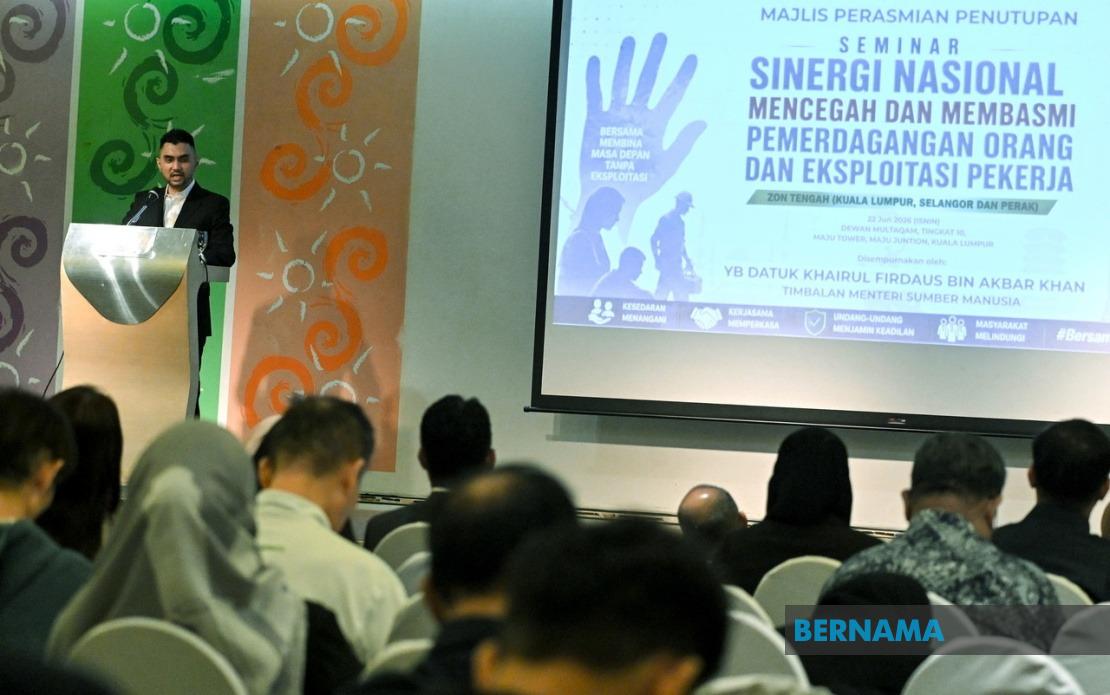
The number of people rescued from human trafficking and labour exploitation in Malaysia has trended downward since 2023, according to data presented by Deputy Human Resources Minister Datuk Khairul Firdaus Akbar Khan. Citing statistics from the Peninsular Malaysia Manpower Department, the minister indicated that 70 victims were identified in 2023, followed by a sharper drop to 10 in 2024. The figures for 2025 showed a slight uptick to 17 cases, but the year-to-date count through May stands at only four additional rescues, suggesting either seasonal variation or a continued decline in identified cases.
The downward trajectory appears to reflect intensified government action against labour crimes and trafficking networks. During the first five months of this year alone, the manpower department conducted 386 enforcement operations nationwide targeting various forms of labour abuse and exploitation. These operations generated 311 investigation files, indicating sustained pressure on employers and traffickers who engage in forced labour practices. The Malaysian government has aligned these efforts with international protocols, particularly those established under the International Labour Organisation framework, to ensure consistency with global standards and mutual cooperation across borders.
However, Datuk Khairul Firdaus sounded a note of caution about drawing premature conclusions from the declining rescue numbers. He acknowledged that while authorities can take measured satisfaction from the apparent trend, substantial risks remain hidden from official detection. Many trafficking cases go unreported due to victims' fear, language barriers, isolation from support networks, or lack of awareness about available assistance. This gap between reported and actual cases represents a significant blind spot in Malaysia's anti-trafficking efforts, suggesting that the true scale of labour exploitation may be considerably larger than official statistics reveal.
The ministry's broader campaign includes a national awareness initiative designed to educate communities and frontline workers about human trafficking and forced labour. This seminar series, spanning multiple regions of Peninsular Malaysia, aims to build recognition of trafficking indicators among employers, local officials, and ordinary citizens. The Central Zone seminar, which prompted the minister's remarks, formed part of a coordinated regional rollout that previously included sessions in Sungai Petani, Kedah in mid-May and Kluang, Johor in early June. Approximately 1,000 participants attended the various seminars, exchanging perspectives and recommendations on combating these crimes.
Malaysia's labour trafficking problem sits within the broader Southeast Asian context of migration and economic disparity. As a middle-income nation with significant economic activity in construction, agriculture, domestic service, and manufacturing, Malaysia attracts migrant workers from poorer neighbouring countries. This creates conditions where traffickers exploit information asymmetries, debt bondage, document confiscation, and employer power imbalances to coerce labour. The problem extends beyond formal sectors into informal work where regulation remains weak and worker visibility is minimal, making detection particularly challenging for authorities.
The government's commitment to international labour standards signals an attempt to address root causes rather than merely processing cases after they occur. By ratifying ILO protocols on forced labour, Malaysia commits to preventive measures including workplace inspections, employer sanctions, and victim rehabilitation. Yet implementation faces practical obstacles, including limited inspection capacity relative to the scale of the informal economy, variations in enforcement rigour across different states, and the mobile nature of trafficking operations that can shift locations quickly to avoid scrutiny.
From a regional perspective, Malaysia's efforts carry implications for neighbouring nations that supply migrant workers. Thailand, Myanmar, Cambodia, and the Philippines each have populations vulnerable to trafficking, and Malaysia remains a significant destination or transit point. Effective Malaysian enforcement creates disincentives for trafficking syndicates while raising standards for legitimate migrant labour recruitment. Conversely, gaps in enforcement can perpetuate exploitation, as traffickers identify safe operating environments and relocate operations accordingly. The declining rescue figures must therefore be interpreted within this transnational context.
The awareness campaign component of Malaysia's strategy recognises that enforcement alone cannot succeed. Public recognition of trafficking signs—such as workers confined to premises, possessing no personal documents, showing signs of physical abuse, or speaking only when instructed—enables ordinary citizens and business contacts to report suspicious activity. Education initiatives targeting employers, labour brokers, and community leaders attempt to shift cultural norms around labour practices and make exploitative systems less socially acceptable. This preventive orientation complements reactive enforcement operations.
Looking ahead, Malaysia faces the challenge of sustaining political and financial commitment to anti-trafficking work. The trend data remains relatively small in absolute numbers, which could diminish perceived urgency among policymakers and the public. Yet the minister's caution about hidden cases suggests that actual prevalence may justify continued investment. Building robust victim support systems—including shelter, medical care, psychological counselling, and legal assistance—requires sustained resources. Many trafficking survivors face stigma, trauma, and difficulty reintegrating into employment or returning safely to home countries, necessitating comprehensive victim-centred approaches that extend beyond rescue operations.
The effectiveness of Malaysia's approach ultimately depends on sustained coordination among multiple government agencies, private sector cooperation, civil society engagement, and regional collaboration. The manpower department cannot operate in isolation; immigration authorities, police, social services, and other bodies must align their efforts toward consistent anti-trafficking objectives. Similarly, businesses that source labour or supply goods through vulnerable supply chains bear responsibility for due diligence. International partnerships with origin countries can support victim repatriation and prosecute traffickers operating across borders.

