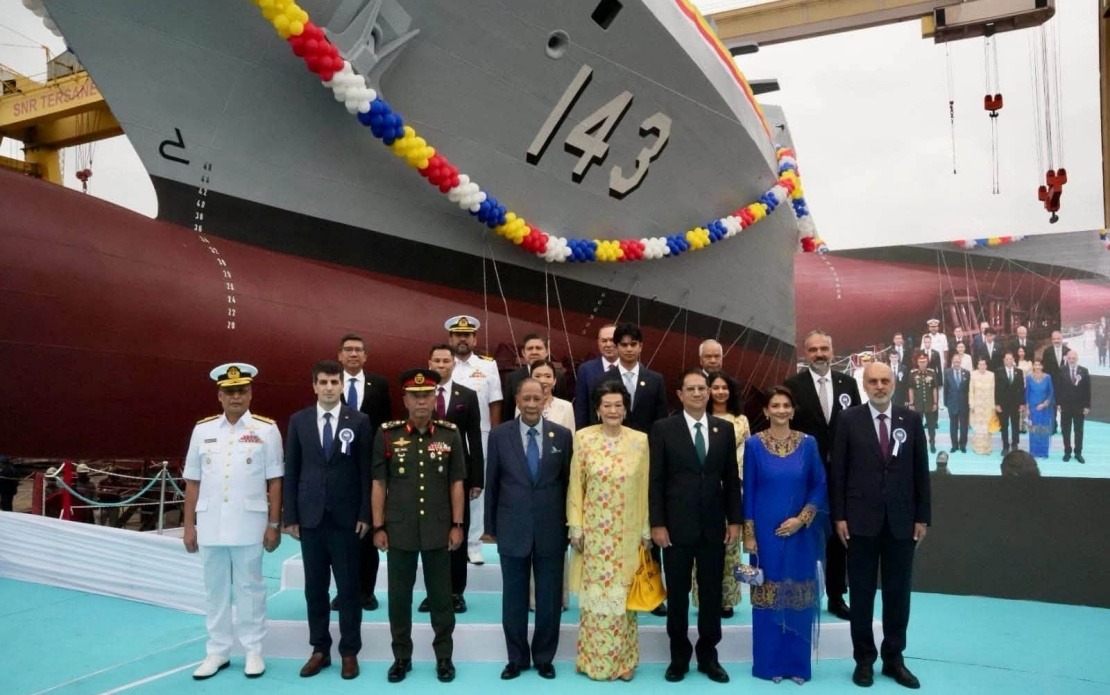
Defence Minister Datuk Seri Mohamed Khaled Nordin has underscored the pressing necessity for the Royal Malaysian Navy to maintain a contemporary fleet capable of addressing the evolving demands of maritime security in the region. Speaking at the christening of the third Littoral Mission Ship Batch 2 vessel, named Tunku Osman Jewa, Mohamed Khaled articulated the government's commitment to ensuring the RMN possesses sufficient operational capabilities to safeguard Malaysia's sovereignty and protect national maritime interests in strategically significant waters.
The completion of the third LMSB2 vessel represents a significant milestone in Malaysia's naval modernisation programme. This latest warship builds upon the earlier launches of its sister vessels, advancing Malaysia's capability to project power and maintain presence across its extensive maritime domain. The naming ceremony, graced by the Sultan of Kedah, Al Aminul Karim Sultan Sallehuddin Sultan Badlishah, and the Sultanah of Kedah, Sultanah Maliha Tengku Ariff, elevated the occasion beyond a routine military procurement event into a formal state affair, reflecting the vessel's national significance.
The christening honours the memory of General Tan Sri Tunku Osman Tunku Mohammad Jewa, a prominent member of the Kedah royal family who once served as Malaysia's Armed Forces chief. By naming the warship after this distinguished military figure, the government has created a symbolic connection between Malaysia's naval heritage and contemporary defence aspirations. This naming convention demonstrates how procurement decisions can simultaneously serve practical military objectives while reinforcing institutional memory and honouring national figures who contributed to the country's defence establishment.
What distinguishes this naval acquisition programme is its unprecedented character as Malaysia's first Government-to-Government defence partnership with Turkiye for warship procurement. This bilateral arrangement extends beyond simple commercial transactions, establishing a framework for defence cooperation that carries broader geopolitical implications for Southeast Asia. The partnership signals Malaysia's willingness to diversify its defence procurement sources and build deeper strategic relationships with non-traditional suppliers, potentially reducing dependence on established Western defence contractors and opening avenues for technology transfer and joint capability development.
The Littoral Mission Ship Batch 2 vessels themselves represent a deliberate strategic choice tailored to Malaysia's geographic and operational requirements. Designed specifically for littoral operations—the shallow waters and coastal zones where many of Malaysia's security challenges manifest—these ships address real maritime threats including unauthorised intrusions, maritime terrorism, and piracy in regional shipping lanes. The selection of vessels optimised for these demanding operational environments reflects a pragmatic approach to naval modernisation rather than pursuing large-scale blue-water capabilities that would exceed immediate strategic requirements.
All three LMSB2 vessels are scheduled for delivery to the Royal Malaysian Navy by the conclusion of 2027, establishing a realistic timeline for fleet integration and operational deployment. This phased delivery approach allows the service adequate preparation time to conduct crew training, shore facility upgrades, and logistical planning necessary for absorbing new assets into operational service. The extended timeline also provides opportunities for Malaysian personnel to develop deeper familiarity with the vessels' systems and operational procedures, ensuring these acquisitions translate into genuine capability improvements rather than remaining underutilised technological additions.
The LMSB2 acquisition programme constitutes a central component of the broader 15-to-5 Transformation Plan, an ambitious restructuring initiative designed to fundamentally reshape the Royal Malaysian Navy's operational posture and combat effectiveness. This transformation strategy prioritises modernisation of ageing fleet elements, enhancement of technological capabilities, and development of personnel competencies necessary to operate increasingly sophisticated platforms. By anchoring the Littoral Mission Ship acquisitions within this comprehensive transformation framework, policymakers have positioned naval modernisation as an integral element of Malaysia's evolving defence strategy rather than an isolated procurement project.
For Malaysian policymakers and regional observers, the government's commitment to equipping the RMN with modern, capable assets reflects recognition of intensifying maritime security complexities throughout Southeast Asia. The region's waters host some of the world's busiest shipping corridors while simultaneously experiencing increased geopolitical competition, territorial disputes, and growing non-traditional security threats. Malaysia's position as a maritime nation with extensive exclusive economic zones and vital maritime interests necessitates a navy capable of sustained operations across diverse operational environments and threat scenarios.
The Turkish partnership also carries implications extending beyond immediate defence procurement. Deepening defence relationships with Turkiye, a NATO member state with sophisticated defence manufacturing capabilities, could facilitate knowledge transfer and technology development beneficial to Malaysia's defence industrial base. Such partnerships occasionally generate broader economic and diplomatic benefits, as defence cooperation frequently catalyses collaboration in other sectors and strengthens overall bilateral relations between participating nations.
From a regional security perspective, Malaysia's naval modernisation contributes to maintaining a balance of power and ensuring that all Southeast Asian nations possess sufficient maritime capabilities to address their respective security requirements. As countries throughout the region confront similar maritime challenges, coordinated capability development among ASEAN members creates frameworks for improved regional stability and more effective cooperative responses to transnational maritime threats affecting the entire region.
The RMN's acquisition of modern Littoral Mission Ships addresses not merely contemporary maritime security demands but also prepares Malaysian naval forces for emerging challenges likely to dominate the strategic environment in subsequent decades. Climate change, resource competition, and technological advancement will create new maritime security imperatives requiring advanced naval platforms and highly trained personnel capable of operating them effectively. By investing in modern assets today, Malaysia positions its navy to navigate these evolving challenges successfully and protect national interests comprehensively.
As the third LMSB2 vessel joins Malaysia's naval fleet, it symbolises the government's sustained commitment to maintaining a credible maritime defence capability. This commitment extends beyond merely acquiring hardware; it encompasses professional development, technological adaptation, and strategic planning necessary for transforming acquired platforms into genuine operational capabilities. The successful completion of the Littoral Mission Ship programme demonstrates Malaysia's capacity to undertake ambitious defence modernisation initiatives while maintaining strategic partnerships beneficial to national interests.

