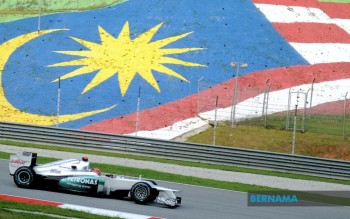
Malaysia is set to stage the Formula 1 Bahrain Grand Prix at Sepang International Circuit from October 2 to 4, 2026, marking a significant return for the country to motorsport's pinnacle competition nearly a decade after the championship departed in 2017. The confirmation by Formula 1 and the Fédération Internationale de l'Automobile signals not merely a one-off spectacle, but potentially a watershed moment for Malaysian motorsport aspirations and the nation's ability to attract and host world-class sporting events. Positioned strategically between the Azerbaijan and Singapore Grand Prix races, the event arrives with considerable economic promise, though industry observers caution that sustainable benefits depend heavily on execution and strategic vision.
Former Sepang International Circuit chief executive Datuk Razlan Razali underscores Malaysia's competitive positioning for such events, noting the circuit's inherent cost-effectiveness compared to alternative international venues such as Portugal's Portimao. The decision to stage the Bahrain Grand Prix in Malaysia rather than relocating it elsewhere reflects pragmatic commercial calculations and the circuit's operational maturity. Razali emphasises that Sepang's infrastructure, managed to the highest standards and homologated to the pinnacle FIM level for motorcycle racing, requires minimal modification to accommodate Formula 1 requirements. This operational readiness proves particularly valuable given the compressed timeline before the 2026 race, eliminating the need for extensive and expensive renovations that could otherwise strain budgets and logistics.
The short lead time between announcement and event, typically a source of concern for large-scale international events, appears manageable given Malaysia's demonstrated experience hosting major sporting competitions. Razali argues that operational bottlenecks will likely prove minimal, with most modifications dependent on Bahrain's willingness to invest in specific upgrades that would simultaneously benefit the circuit's long-term infrastructure profile. This arrangement represents an unusual dynamic in Formula 1 hosting agreements, where the visiting grand prix organisation shoulders financial responsibility rather than the host nation. For Malaysia, this risk distribution fundamentally alters the economic equation, transforming what would ordinarily be a substantial public investment into a largely externally-funded proposition.
The tourism sector emerges as the primary beneficiary, with industry analysts projecting meaningful inflows from international motorsport enthusiasts. However, the compressed promotional window presents challenges, as Formula 1 spectators traditionally plan travel six months in advance. Razali acknowledges this temporal constraint while maintaining confidence that dedicated enthusiasts will prioritise attending the Sepang race, particularly given the venue's historical significance and the rarity of Formula 1 competition in Southeast Asia. The genuine question centres not on whether visitors will come, but rather on the scale of international participation achievable within such compressed timeframes. Domestic tourism, by contrast, faces fewer planning obstacles and may prove more predictable.
Beyond accommodation and ticket revenues, the hospitality, airline, food and beverage, and supply sectors stand positioned to capture meaningful economic activity. Motorsports Association of Malaysia president Tan Sri Mokhzani Mahathir notes that approximately 30 per cent of Formula 1 and MotoGP event attendees typically originate from overseas, suggesting substantial foreign exchange inflows. Significantly, the event's timing one week prior to the Singapore Grand Prix creates a unique regional dynamic, potentially encouraging visitor retention within Malaysia due to cost advantages relative to neighbouring Singapore. Many international spectators may logically extend their regional tour by remaining in Kuala Lumpur and surrounding areas rather than immediately crossing the causeway, multiplying economic benefits across hospitality networks and attractions.
The financial risk profile represents perhaps the most advantageous element for Malaysia. With Bahrain responsible for promotional costs, event management, and operational expenses, Malaysia's return on investment becomes disproportionately favourable relative to traditionally-structured Formula 1 hosting arrangements. Mokhzani articulates this compelling mathematics directly, noting that when external organisations finance events, host nation returns multiply exponentially. This model essentially positions Malaysia as a venue provider rather than event organisor, dramatically reducing financial exposure while preserving revenue generation potential. For a country reassessing its motorsport commitment and economic priorities, such terms prove substantially more palatable than the substantial public expenditure demanded by permanent championship status.
However, industry leaders maintain careful perspective regarding prospects for Formula 1's permanent restoration to Malaysia. Razali describes such a possibility as "very remote" given the championship's astronomical hosting costs, unless Prime Minister Datuk Seri Anwar Ibrahim intervenes with strategic political and financial commitment during the race weekend. The current arrangement represents instead a controlled laboratory condition, a carefully bounded test case through which policymakers can evaluate public reception, organisational capacity, and economic impact without long-term contractual obligations. This framing as a "litmus test" permits Malaysia to gather practical intelligence about re-entering the Formula 1 ecosystem while maintaining flexibility regarding future decisions. The distinction between hosting a guest grand prix and permanently rejoining the championship schedule carries profound implications for budgeting and strategic planning.
Mokhzani expresses confidence in Malaysia's institutional capability to execute the event successfully, citing the nation's abundance of international-standard accommodation, experienced workforce, and proven event management track record. The compression of preparation timelines, often cited as problematic, appears manageable given these existing capacities. Unlike constructing new facilities or developing nascent event management infrastructure, Malaysia leverages established systems and facilities that have successfully hosted international competitions across multiple sporting disciplines. This institutional memory and existing asset base substantially reduce execution risk and allow focus to concentrate on specific Formula 1 requirements rather than foundational preparation.
The Motorsports Association of Malaysia's role encompasses ensuring compliance with FIA regulations, maintaining safety standards, verifying circuit readiness, and validating manpower sufficiency. This supervisory function, while important, remains relatively modest compared to the comprehensive event management and financial responsibility borne by permanent host nations. Mahathir frames Malaysia's responsibilities as essentially regulatory gatekeeping rather than operational ownership, a distinction reflecting the Bahrain Grand Prix's guest status. This bounded scope permits focused attention on legitimate safety and compliance concerns without diverting resources toward comprehensive event marketing or economic stimulus measures that might otherwise strain government budgets.
Former Formula 1 driver Alex Yoong injects a longer-term analytical perspective into discussions, urging that motorsport officials view this event through a strategic lens extending beyond the immediate race weekend. Yoong advocates for leveraging Formula 1's return as a catalyst for broader ecosystem development, particularly grassroots motorsport investment and emerging driver development programmes. His argument reflects a Southeast Asian motorsport constituency frustrated by the region's limited Formula 1 representation despite demonstrated talent and enthusiasm. By positioning Formula 1's arrival as an inflection point rather than merely a commercial transaction, Yoong suggests Malaysia could harness international attention and renewed motorsport investment to build sustainable, generational competitive advantages in driver development and regional motorsport excellence.
The October 2026 Bahrain Grand Prix represents a carefully calibrated opportunity balancing multiple national interests. For tourism and hospitality sectors, the event promises immediate economic activity with minimal financial risk. For motorsport enthusiasts and the broader sporting community, it signals Malaysia's continued relevance in global motorsport calendars following years of absence. For policymakers, it provides genuine data regarding event hosting feasibility and public engagement without committing to permanent Formula 1 status. The arrangement's fundamental appeal lies in this risk-reward asymmetry: Malaysia gains substantial reputational and economic benefits while external actors assume financial responsibility. Whether this singular occasion catalyses permanent championship restoration or remains an isolated weekend depends partly on how comprehensively the nation maximises this opportunity and leverages it toward long-term motorsport ecosystem development.
Looking ahead, success in October 2026 could reposition Malaysia within global Formula 1 deliberations, particularly as the championship navigates evolving venue requirements and geographical expansion pressures. Southeast Asia's growing economic prominence and demonstrated motorsport enthusiasm may generate renewed interest in permanent Malaysian participation. However, such restoration would require political commitment and financial arrangements substantially exceeding the current guest grand prix model. For now, Malaysia appropriately approaches this opportunity as both celebration and strategic assessment, an occasion to welcome Formula 1 back while carefully evaluating what comprehensive future participation might entail for the nation's sporting and economic priorities.

