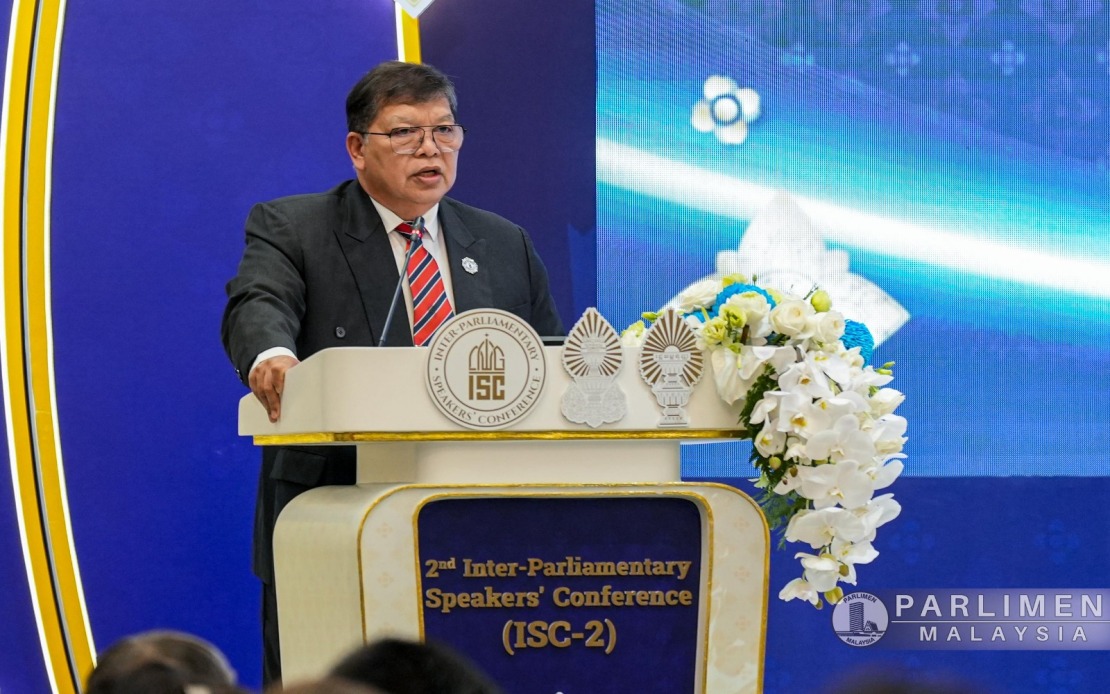
Tan Sri Dr Johari Abdul, Speaker of the Dewan Rakyat, has delivered a stark warning about the escalating climate crisis during the Second Inter-Parliamentary Speakers' Conference in Phnom Penh, stressing that the world must move beyond rhetoric to concrete action. Speaking on the sidelines of the three-day gathering that concluded on Friday, he emphasized that climate change represents far more than an environmental concern—it has become an economic and public health emergency that threatens food security and energy stability across the region.
The urgency of Johari's message comes against a backdrop of catastrophic weather events ravaging South and Southeast Asia. Nepal has been particularly hard hit following a devastating glacial collapse in the Himalayas that triggered severe flooding along the Nepal-China border. As of Friday, the death toll had reached 469 confirmed deaths, with 2,381 people reported missing, including 644 foreign nationals. The tragedy has claimed the lives of several Malaysian nationals, bringing the crisis uncomfortably close to home for policymakers in Kuala Lumpur. This disaster exemplifies the growing pattern of climate-induced disasters across the region that demand immediate policy response.
Beyond the immediate tragedy in Nepal, the broader picture of climate vulnerability across the region is equally alarming. From mountainous terrain in South Asia to the landlocked plains of Laos, communities face relentless threats from flash floods, landslides, and tropical typhoons. The Philippines experiences approximately 20 typhoons annually, while millions of rural residents across Southeast Asia live with constant exposure to extreme weather events that destroy agricultural land and critical infrastructure. These recurring disasters disproportionately affect poorer communities with limited adaptive capacity, exacerbating existing development inequalities.
Johari criticized the current state of climate awareness among legislators and policymakers, noting with concern that many leaders simply do not engage seriously with the issue. He pointed out the fundamental disconnect between energy demands and sustainable solutions, questioning why nations continue to rely on coal-burning power plants when alternatives like solar, wind, and ocean wave energy remain underutilized. This gap between available technology and political implementation reveals a failure of leadership, he suggested, indicating that many lawmakers lack the foundational knowledge necessary to make informed decisions on climate-related legislation.
The Speaker advocated strongly for curriculum reform and research funding as essential components of any comprehensive climate response strategy. He argued that climate change must become a core subject in schools from an early age, building public understanding and creating an informed citizenry capable of supporting necessary policy changes. Equally important, he emphasized that governments must dramatically increase investments in research and development to accelerate innovation in clean energy technologies and climate adaptation measures. Without these foundational investments in human capital and technological advancement, he suggested, the world will remain reactive rather than proactive in addressing the crisis.
Johari drew particular attention to China's long-term commitment to green technology development as a model worthy of emulation. China's sustained investment in eco-friendly infrastructure, electric vehicle manufacturing, and expansion of green spaces demonstrates how strategic industrial policy can align economic growth with environmental protection. Such integrated approaches, he implied, should guide policymakers throughout Asia who must balance development aspirations with planetary boundaries. The contrast between comprehensive national strategies and ad-hoc international discussions underscores the need for coherent, long-term planning.
The political dimension of climate action emerged as a central theme in Johari's remarks. He stressed that without genuine political will and visionary leadership, international climate discussions remain mere exercises in communication. More fundamentally, he highlighted the growing disparity between wealthy nations and developing countries—what he termed the gap between the haves and have-nots—as a critical barrier to equitable climate action. Wealthier nations have greater capacity to invest in renewable energy infrastructure and climate adaptation, while poorer nations bear disproportionate impacts despite contributing minimally to historical emissions. This structural inequality threatens to deepen regional tensions unless addressed through deliberate international cooperation and resource transfer.
Cambodian Prime Minister Hun Manet echoed these concerns in remarks made just days before the Speakers' Conference, specifically warning of rising water levels in the Mekong River. He acknowledged that governments cannot entirely prevent natural disasters but emphasized the critical importance of building resilience and developing effective response systems. His emphasis on preparedness complements Johari's call for systemic change, suggesting recognition among regional leaders that adaptation and mitigation must proceed simultaneously. However, both leaders also implicitly acknowledged that current institutional capacity remains inadequate to the scale of emerging challenges.
Scientific consensus continues to document the accelerating pace of climate change, with rising global temperatures, elevated sea levels, and shifting rainfall patterns creating compound risks to ecosystems and human communities alike. These physical changes translate into economic losses, displacement of populations, and potential conflicts over scarce resources. For Malaysia specifically, the implications include threats to coastal cities from sea level rise, altered monsoon patterns affecting agriculture and water supplies, and increased frequency of severe weather events. The country's position as both a developing economy and a regional hub makes it particularly vulnerable to climate shocks that disrupt trade and investment flows.
Johari's intervention at the Phnom Penh conference reflects growing recognition among Southeast Asian legislators that climate policy cannot remain compartmentalized within environmental ministries but must become central to all governance. The integration of climate considerations into education, technology policy, economic development, and international relations represents the scale of transformation required. Without such comprehensive reorientation, incremental adjustments will prove insufficient to address risks that compound exponentially. Regional cooperation mechanisms like the ASEAN framework must evolve to facilitate knowledge-sharing and coordinated investment in green infrastructure that serves mutual interests.
The intersection of immediate humanitarian needs and long-term systemic change poses a considerable challenge for policymakers in the region. Nepal's floods and Cambodia's Mekong concerns demand rapid disaster response and adaptation investments, yet these immediate pressures often divert attention from the root cause of increasing climate vulnerability. Johari's message essentially argues that lasting security requires simultaneous action on multiple fronts: immediate resilience-building, educational transformation, technological innovation, and political commitment to equitable burden-sharing. For Malaysian policymakers attending such regional forums, the challenge lies in translating such urgent calls into specific legislative action and budgetary commitments that will be felt in communities long after international conferences conclude.

