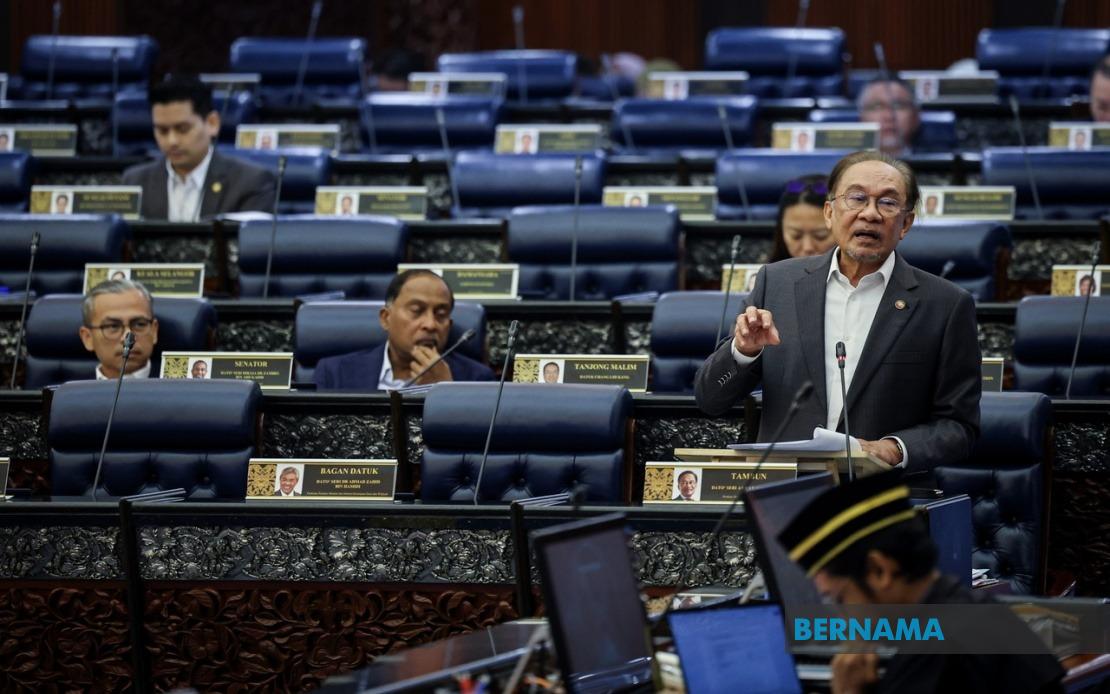
Malaysia's sliding position in international press freedom rankings reflects enforcement actions targeting sensitive content related to religion, race, and the royal institution rather than any systematic effort to muzzle political criticism, Prime Minister Datuk Seri Anwar Ibrahim said today. The country's placement at 95th in this year's World Press Freedom Index marks a decline from 88th position last year, a shift that has drawn scrutiny from media freedom advocates globally. Speaking during Minister's Question Time in the Dewan Rakyat, Anwar provided nuance to what observers abroad have interpreted as press restrictions, clarifying the specific nature of Malaysian enforcement actions and the international assessment framework that underpins the rankings.
Two high-profile cases against established media organisations have substantially influenced Malaysia's international perception on this metric. Sin Chew Daily faced action following its publication of an inaccurate illustration of the Jalur Gemilang, while Sinar Harian encountered enforcement over its publication of the Inspector-General of Police's biography. Anwar acknowledged that international media circles view such actions as serious infringements on press freedom, yet he framed the government's position as proportionate to the severity of the content involved. The flag matter, he emphasised, was treated as a grave issue by Malaysian authorities given the symbolic importance of national emblems in the Malaysian context, even if other democracies might approach such incidents differently.
The Prime Minister stressed that the government distinguishes sharply between legitimate enforcement and press suppression. No action is initiated solely on the basis of factual inaccuracy or political criticism, he stated, positioning the administration's approach as fundamentally different from authoritarian censorship. When the government encounters potentially problematic content, its default response prioritises public explanation and clarification, including parliamentary statements, over punitive measures. This distinction proves crucial for understanding Malaysia's regulatory philosophy: the concern is not dissent itself but specific categories of expression deemed harmful to social cohesion or institutional integrity.
The 3R framework—religion, race, and royalty—represents a constitutional and political consensus across Malaysia's governance structure. Anwar noted that the Conference of Rulers actively monitors reporting touching on these sensitive areas, reflecting deep-rooted institutional concerns about content capable of inflaming communal tensions or disrespecting the monarchy. This position, while increasingly scrutinised by international press freedom organisations, stems from Malaysia's specific historical experience and demographic composition as a multi-ethnic, multi-religious federation where religious and racial sensitivities have periodically threatened social stability. The government views enforcement in these domains not as discretionary but as a constitutional obligation reflecting agreements among the country's traditional rulers.
Recognising that press freedom indices incorporate multiple dimensions beyond direct government action, Anwar drew attention to the Reporters Without Borders assessment methodology. The World Press Freedom Index considers the political environment, legal framework, economic conditions, socio-cultural context, and security situation—a holistic approach that captures factors extending far beyond editorial independence. Malaysia's overall ranking thus reflects this complex interplay of circumstances rather than solely government media policy. The Prime Minister's recognition of this multi-factorial approach suggested awareness that Malaysia's international standing on this metric involves elements beyond the government's immediate control.
Anwar highlighted an often-overlooked dynamic: content removal by social media platforms operating in Malaysia frequently occurs through private decisions rather than government directive. Posts he himself authored regarding Hamas were removed by platform operators despite government disagreement, illustrating how private technology companies independently filter content according to their own policies. The Malaysian Communications and Multimedia Commission issues requests to platforms, but these communications carry no binding authority; final moderation decisions rest entirely with platform operators in Silicon Valley and elsewhere. This reality complicates the relationship between government regulatory intent and actual content circulation in the digital public sphere, creating a situation where Malaysia may receive international criticism for content removal decisions made autonomously by foreign private entities.
The government has actively reformed its legal framework to accommodate contemporary concerns around press freedom and individual expression. Amendments to Section 233 of the Communications and Multimedia Act 1998 specifically decriminalised satirical remarks directed at the Prime Minister and other government leaders, reflecting deliberate effort to distinguish between protected political speech and harmful content. This legislative evolution signals responsiveness to international and domestic criticism, positioning the administration as willing to recalibrate boundaries between permissible criticism and restricted expression. Such reforms carry particular significance for media organisations and digital creators concerned about potential criminal liability, potentially reducing self-censorship motivated by fear of disproportionate punishment.
For Malaysian journalists and media organisations, Anwar's explanation offers some reassurance regarding the government's underlying intentions while simultaneously affirming the boundaries within which the press must operate. The distinction between political criticism and 3R violations remains somewhat subjective in practice, leaving reporters navigating these restrictions with inherent uncertainty about precisely where permissible commentary ends and prohibited content begins. This ambiguity, characteristic of many Southeast Asian media environments, reflects the tension between formal guarantees of press freedom and informal constraints rooted in social sensitivities and political stability concerns.
Regionally, Malaysia's experience mirrors broader Southeast Asian challenges in reconciling democratic governance with concerns about religious harmony, national unity, and institutional respect. Countries including Singapore, Thailand, and Indonesia similarly maintain legal provisions restricting certain forms of expression in the name of social stability and institutional protection. Malaysia's declining international ranking thus reflects not merely local policy choices but participation in a regional pattern of governance that international press freedom monitors increasingly scrutinise. The comparative regional context provides perspective on whether Malaysia's regulatory approach represents an outlier or part of a coherent Southeast Asian governance model.
Looking forward, the gap between Malaysia's self-assessment regarding press freedom and international perception suggests a continuing challenge for government communication strategy. Anwar's detailed parliamentary explanation, while clarifying the rationale behind enforcement actions, may not substantially shift international rankings if those organisations view the 3R framework itself as incompatible with press freedom principles. The administration faces a delicate balancing act: maintaining constitutional obligations regarding religious, racial, and royal sensitivities while projecting an image of openness to legitimate democratic scrutiny. Resolving this tension requires not only legal amendments but also demonstrated restraint in enforcement and clear communication distinguishing between different categories of restricted expression.

