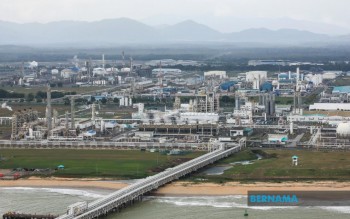
Malaysia's examination of establishing a national petroleum reserve reflects a significant strategic pivot toward building long-term energy security in an increasingly volatile global landscape. The government's proposal, announced by Prime Minister Datuk Seri Anwar Ibrahim, comes at a moment when energy market analysts view geopolitical risks not as temporary shocks but as enduring structural challenges that will persist for years to come. This shift in perspective fundamentally alters how policymakers in the region should approach energy planning and crisis management.
The Strait of Hormuz has emerged as the focal point of this energy security dilemma. This critical waterway handles approximately 20 million barrels of petroleum daily—roughly one-fifth of the world's oil supply—making it indispensable to global energy systems. What distinguishes the current situation from previous regional crises is the recognition that threats to this passage are no longer exceptional events but recurring complications. Analysts increasingly view the strait as a persistent source of market uncertainty rather than an isolated geopolitical flashpoint that can be resolved through temporary diplomatic measures.
Stephen Innes, managing partner at SPI Asset Management, underscores this transformation in risk perception. He emphasizes that shipping delays, elevated insurance premiums, limited tanker availability, and geopolitical brinkmanship have collectively introduced a permanent risk premium into global energy pricing. The fundamental obstacle to resolving these vulnerabilities is the absence of adequate alternative infrastructure. Constructing bypass pipelines, developing alternative export corridors, and establishing competing shipping routes would require many years of sustained investment and multinational cooperation. Until such alternatives materialize, the Strait of Hormuz will remain a source of periodic volatility that market participants must price into their calculations.
Recent developments in the Red Sea illustrate how regional tensions are multiplying rather than consolidating. Houthi forces affiliated with Iran have reportedly completed preparations to target vessels transiting the southern entrance to the Red Sea, and they have already claimed responsibility for attacks on Saudi oil tankers. These incidents follow intensified United States military operations against Iranian military installations. The proliferation of conflict zones affecting energy logistics creates a compounding risk scenario that extends far beyond a single chokepoint. For Southeast Asia, including Malaysia, the possibility of simultaneous disruptions spanning both the Persian Gulf and Red Sea represents a qualitatively different threat environment than historical supply interruptions.
The economic implications of such coordinated disruptions would be severe for the region. Higher oil prices would cascade through transportation, manufacturing, and electricity generation sectors. Freight costs would spike, potentially disrupting supply chains that depend on just-in-time logistics. Refined product availability could tighten, creating domestic energy shortages even for import-dependent economies. Innes argues that Southeast Asian governments must treat energy resilience as a multifaceted challenge requiring coordinated preparation rather than isolated national responses. Strengthening ASEAN coordination on strategic inventory levels, developing protocols for managing shipping disruptions, and establishing emergency supply-sharing arrangements would create collective buffers against supply crises.
Malaysia's specific vulnerability deserves particular attention. Although the country produces approximately 570,000 barrels of crude oil daily, it relies on imported refined fuels for domestic consumption and imports crude from sources concentrated around the Strait of Hormuz region—accounting for 69.2 percent of its crude imports in 2025. This dependency creates a structural exposure to whatever disruptions affect the strait's operations. A national petroleum reserve would function as what analysts term "emergency insurance," providing policymakers with temporal flexibility during crises. By maintaining strategic inventories separate from commercial stocks designed for operational continuity, Malaysia could purchase time for alternative supply arrangements to be activated and for market conditions to stabilize.
Implementing an NPR effectively requires embedding it within a comprehensive energy resilience framework rather than treating it as an isolated policy instrument. Innes emphasizes that a petroleum reserve cannot address every supply challenge but should operate alongside diversified supplier relationships, improved storage infrastructure, and transparent governance rules determining when reserves are mobilized and subsequently replenished. He further advocates for Malaysia to simultaneously pursue supply-side diversification by cultivating relationships with crude suppliers outside the Strait of Hormuz region, investing in alternative shipping corridors, and encouraging commercially sustainable domestic gas production expansion.
Current crude oil pricing reflects these structural tensions, with Brent crude rising 2.97 percent to US$96.86 per barrel and West Texas Intermediate climbing 1.93 percent to US$88.76 per barrel. These prices incorporate the persistent risk premium that geopolitical concerns inject into global markets. Energy analysts observe that without fundamental changes in the underlying infrastructure, such elevated premiums will likely persist. This reality should inform Malaysia's fuel subsidy policies, according to Innes, who recommends transitioning away from broad subsidies that artificially suppress prices while creating budgetary pressures. Targeted support for lower-income households and strategically important industries would prove more financially sustainable if oil prices remain chronically elevated.
The conceptual distinction between energy security and energy resilience deserves emphasis in Malaysian policy discussions. Energy security traditionally focuses on ensuring adequate access to energy supplies at acceptable prices. Energy resilience, by contrast, encompasses the capacity of energy systems to continue functioning when normal supply or transport mechanisms are disrupted. This resilience requires developing backup inventories, securing relationships with multiple suppliers, identifying alternative shipping routes, fortifying electricity grids, and building flexibility to transition between energy sources during emergencies. These preparations must occur before crises materialize, not in response to them.
BMI's oil and gas analyst Tariro Chiweza reinforces the timing argument for Malaysia's NPR initiative. Commercial petroleum inventories serve important operational functions but were not designed to withstand prolonged external disruptions of the type that geopolitical crises create. The case for a strategic national reserve has become increasingly compelling as part of a broader resilience architecture. Malaysia should simultaneously advance its domestic energy transition through expanded gas production, renewable energy development, battery storage systems, regional power interconnectors, transport electrification, and nuclear power exploration. These initiatives work synergistically to reduce import dependency across multiple energy vectors.
Existing Malaysian programs demonstrate the government's growing recognition of resilience requirements. Solar@PETRA supports distributed renewable generation, the Corporate Renewable Energy Energy Supply Scheme enables business participation in renewable markets, B15 biodiesel expands transport fuel options, and electric public transport reduces petroleum consumption. These complementary measures collectively strengthen energy system flexibility. BMI forecasts that Malaysia's dry gas production will reach 82.3 billion cubic metres in 2026, which would strengthen the domestic energy supply base while supporting the broader energy transition narrative. Such production capacity directly reduces reliance on imported energy sources.
For Malaysian policymakers, the emerging consensus among international energy analysts points toward urgency in implementation. The geopolitical environment appears structurally tilted toward recurring disruptions rather than stabilization. A national petroleum reserve, embedded within a comprehensive resilience strategy encompassing supply diversification, infrastructure investment, and regional coordination, represents a practical response to genuine systemic risks. The window for planning and establishing such capacity may narrow if global tensions intensify further, making thoughtful deliberation now preferable to rushed implementation during actual crises.

