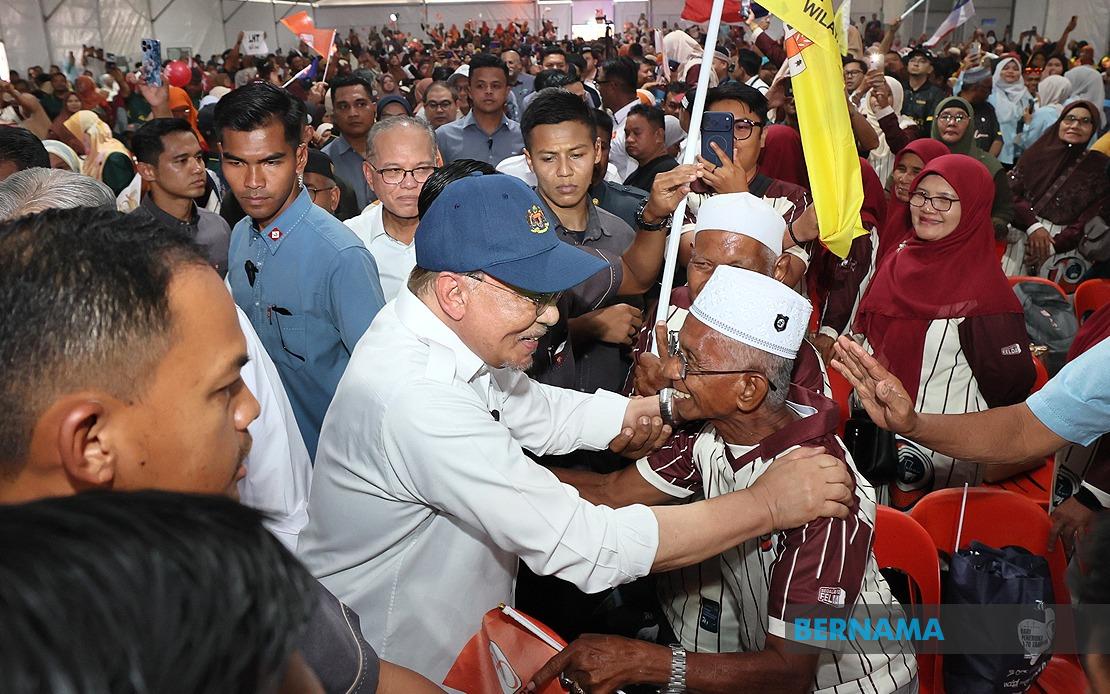
The Federal Land Development Authority (FELDA) has entered a new phase of modernisation as the government rolled out a substantial investment plan designed to uplift the quality of life for its settler population. During celebrations marking both FELDA Settlers' Day and the organisation's 70th anniversary at Tun Abdul Razak Stadium in Jengka, Pahang, Prime Minister Datuk Seri Anwar Ibrahim presented a series of targeted initiatives that underscore renewed political commitment to one of Malaysia's most historically significant rural development frameworks.
The centrepiece of the announcement involves RM15.85 million earmarked exclusively for advancing digital literacy capabilities among FELDA inhabitants spread across 317 qualifying settlements. This allocation reflects broader recognition within government circles that technological competency has become essential for economic participation in rural Malaysia. The digital divide remains a persistent challenge in agricultural communities, where older settler populations and their descendants have historically lacked affordable access to computing education and internet training programmes. By concentrating resources on literacy rather than hardware alone, policymakers signal awareness that skills development must accompany infrastructure investment to yield meaningful outcomes.
Complementing the digital initiative, authorities have reserved RM10 million specifically for rehabilitating 370 primary and secondary schools situated within FELDA jurisdictions. Educational infrastructure deterioration has long plagued agricultural settlements, contributing to student attrition and limiting academic performance in these regions. Many FELDA schools operate with ageing facilities, inadequate laboratories, and substandard learning environments that disadvantage young people competing for tertiary education and professional opportunities. The refurbishment programme addresses this disparity directly, signalling that government intends to equalise educational amenities between rural FELDA communities and more prosperous urban areas.
Healthcare delivery has similarly received targeted attention through a RM3 million allocation directed toward FELDA MAYA Squad healthcare teams. These mobile units represent a pragmatic response to geographic isolation and limited clinic capacity in scattered settlements. Rural health access remains chronically underfunded relative to urban provision, and dedicated funding streams for community-based teams can substantially improve preventive care, maternal health outcomes, and chronic disease management in populations traditionally underserved by conventional hospital infrastructure.
The personal testimony of award recipients and settlers provides crucial grounding for understanding how these investments translate into lived experience. Milah Yoot, a 73-year-old resident of FELDA Chemplak in Segamat, Johor, and recipient of the 2025 Outstanding Woman Settler Award, articulated the perspective that government support mechanisms carry genuine transformative potential when combined with settler agency. Her emphasis on younger generations utilising facilities for self-improvement captures a critical dependency: infrastructure and funding prove effective only when communities possess motivation and capacity to leverage them productively. This intergenerational framing suggests FELDA policymakers recognise that sustainable development requires both material investment and cultural reinforcement of educational and economic aspiration.
Haron Sulaiman, a 66-year-old from FELDA Jerangau Barat in Ajil, Terengganu, expressed particular enthusiasm regarding digital literacy programmes as mechanisms for enabling younger settlers to navigate contemporary economic challenges. His framing of government support as essential rather than supplementary reflects the structural vulnerabilities that FELDA communities face when competing in increasingly knowledge-based employment markets. Agricultural commodity dependency has traditionally constrained economic diversification in these settlements, and digital skills represent potential pathways toward remote work, entrepreneurship, and professional advancement previously unavailable to geographically isolated populations.
Muhammad Farizul Hafiz Awang, a 36-year-old resident of FELDA Panching Utara in Kuantan, highlighted proposed legislative amendments as particularly significant for younger settler cohorts seeking to establish permanent residence and household stability. His remarks underscore how regulatory frameworks directly shape economic opportunity for community members. Current restrictions limiting settlers to single housing units per residential lot have constrained property-based wealth accumulation and prevented family members from building adjacent residences, artificially limiting social and economic consolidation within settlements.
The government's planned amendment to the Land (Group Settlement Areas) Act 1960 (Act 530) represents a potentially consequential structural reform. Enabling multiple housing units on individual residential lots would facilitate intergenerational property development, allow settlers to rent additional units for supplementary income, and permit adult children to establish households without requiring external land acquisition. This modification could transform FELDA settlements from relatively static communities into more economically dynamic ecosystems where younger generations perceive viable futures without necessitating permanent relocation to urban centres.
The timing of these announcements during FELDA's 70th anniversary celebration carries symbolic and political significance. Established as a nation-building institution during the immediate post-independence period, FELDA pioneered systematic rural development and smallholder agricultural integration into commercial markets. Over seven decades, the organisation has become embedded in Malaysian national identity and rural political consciousness. Renewed government investment represents both acknowledgment of FELDA's historical importance and recognition that contemporary challenges—digital exclusion, educational infrastructure gaps, healthcare access inequities, and housing constraints—require fresh policy responses adapted to 21st-century conditions.
For Malaysian policymakers navigating broader rural development strategy, the FELDA initiative offers instructive lessons. Targeted funding streams addressing specific capability gaps prove more effective than undifferentiated subsidy approaches. The digital literacy programme, school rehabilitation, and healthcare enhancement each address distinct bottlenecks impeding settler prosperity. Additionally, regulatory reform enabling property development flexibility acknowledges that economic opportunity increasingly depends on removing artificial constraints imposed by outdated legislation rather than merely expanding direct government expenditure.
Regionally, FELDA's modernisation efforts carry relevance for other Southeast Asian nations confronting rural development challenges. Malaysia's structured approach to agricultural settlement and resource redistribution has influenced development policy across the region. Contemporary investments emphasising digital inclusion, educational equity, and health service accessibility provide a potential template for other governments seeking to retain rural populations while enhancing their capacity for economic advancement.
The convergence of capital allocation, regulatory reform, and community engagement reflected in these announcements suggests Malaysian governance has evolved toward more comprehensive rural development frameworks than simple income support or agricultural subsidies. Whether these investments translate into sustained community improvement will depend substantially on implementation effectiveness, institutional coordination, and sustained political commitment beyond electoral cycles. Nevertheless, the scale and specificity of commitments signal that FELDA communities remain strategically important to national development discourse and will continue receiving material government attention.

