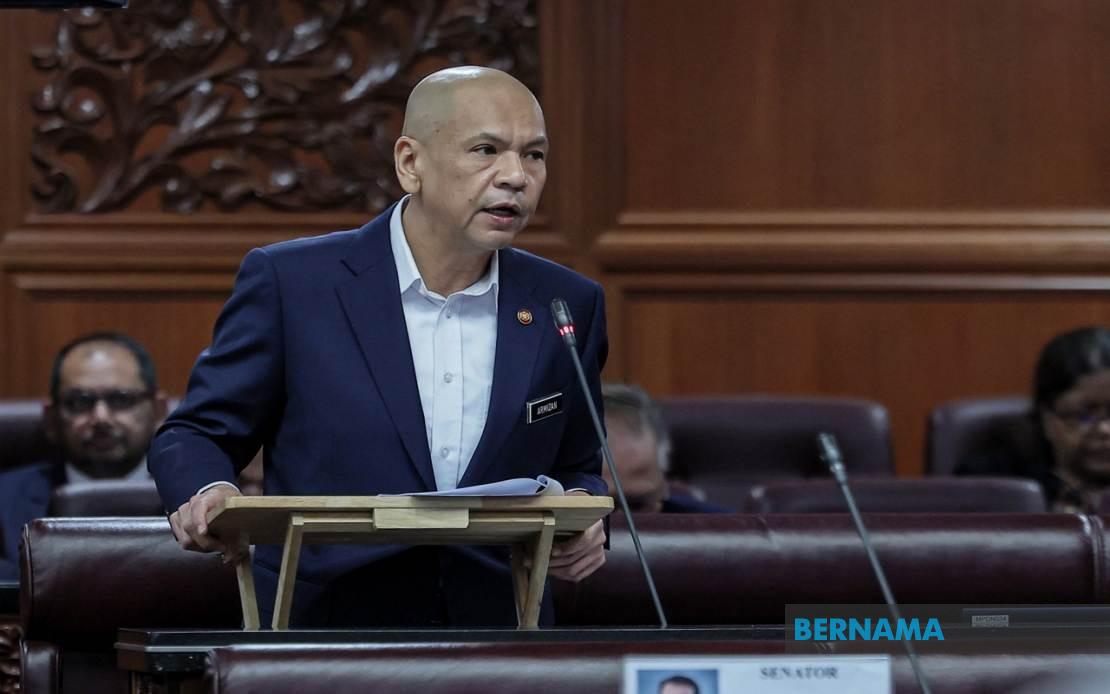
The Malaysian government has intensified its cost-of-living support efforts, conducting 15,881 Rahmah MADANI Sales Programme events nationwide between January and June this year, covering all 600 state constituencies and 40 Federal Territory zones spanning Putrajaya, Kuala Lumpur, and Labuan. Domestic Trade and Cost of Living Minister Datuk Armizan Mohd Ali revealed the figures during parliamentary proceedings, underscoring the administration's commitment to expanding this consumer assistance initiative across all parts of the country.
The scale of the initiative has grown dramatically year-on-year, reflecting intensified government focus on managing household expenses amid persistent economic pressures. In 2023, the ministry orchestrated 6,870 sales sessions. This figure surged to 12,419 by 2024, and projections for 2025 have soared to 25,708 events. Minister Armizan disclosed that the government had initially targeted 23,040 sessions for the current year but subsequently elevated this to 30,000 following Prime Minister Datuk Seri Anwar Ibrahim's May announcement, which positioned the expanded programme as a stabilising response to supply chain disruptions and energy crises stemming from West Asian geopolitical tensions.
The evolution from sporadic discount initiatives to a systematised nationwide network reflects a strategic recalibration of how Putrajaya approaches consumer relief. Prior government administrations had organised bargain sales on an ad hoc, unscheduled basis. The MADANI government has fundamentally restructured this approach through five interconnected strategies designed to create sustainability and predictability. The first mechanism institutionalised the sales programme as a permanent budgetary fixture beginning in 2024, assigning it dedicated funding allocations and a distinct activity classification. This transformation signals that subsidised retail events have transitioned from temporary expedients to permanent economic policy instruments.
The second strategic pillar establishes fixed annual targets and structured scheduling across every constituency and zone nationwide. Rather than permitting sporadic implementation determined by resource availability or political timing, the government now maintains a predetermined calendar of events. This ensures equitable geographic distribution and allows citizens in both urban and rural areas to anticipate and plan around designated shopping periods, reducing uncertainty and enabling households to synchronise major purchases with known discount windows.
Private-sector engagement constitutes the third operational strand. The government has mobilised 2,695 strategic retail partners, comprising companies, businesses, and cooperatives from the retail ecosystem, as of late June. This coalition approach broadens the programme's reach beyond government-controlled venues and leverages existing commercial infrastructure. By integrating independent retailers and major chain operators, the initiative achieves broader geographic penetration and product variety without requiring equivalent public expenditure expansion.
The fourth approach emphasises delivery method diversification tailored to consumer convenience and geographic realities. Sales events operate through in-store promotions at partner retailers, open-air markets in community spaces, and mobile units that bring discounted merchandise to underserved areas. Additionally, the programme synchronises promotional calendars with significant consumption periods—festive seasons including Hari Raya, Chinese New Year, and Deepavali; monthly payday cycles; and back-to-school seasons. This temporal alignment ensures promotional efforts concentrate purchasing power at moments when households face predictable expenditure spikes.
The fifth component, launched in 2025, represents a consumer information breakthrough. The introduction of a Rahmah MADANI Sales Programme calendar provides citizens advance notice of event dates, times, and locations for all 600 constituencies and 40 zones. This transparency enables households to plan shopping strategies systematically rather than discovering opportunities opportunistically. For families in remote areas or those managing tight budgets, this predictability facilitates substantial household savings by allowing consolidation of purchases during designated periods.
The programme's expansion occurs within Malaysia's broader cost-of-living context. Inflation, fuel prices, housing costs, and food expenses have strained household finances across income segments. While monetary policy and structural economic reforms require extended implementation periods, demand-side consumer subsidies through discount retail events provide immediate relief. The Rahmah MADANI approach specifically targets middle and lower-income households lacking cushion to absorb price shocks, addressing the immediate purchasing power challenge that monetary policy adjustments cannot directly mitigate.
For regional observers, Malaysia's scaled retail subsidy approach offers comparative insight into how democracies manage inflation expectations and consumer welfare without comprehensive price controls. Rather than imposing regulatory caps that risk supply disruptions, the government subsidises consumption directly through strategic public-private retail partnerships. This market-responsive mechanism maintains supply chain functionality whilst reducing consumer burdens, a model with potential relevance across Southeast Asia where inflation and purchasing power pressures similarly challenge household finances.
The parliamentary confirmation during question-and-answer proceedings also reflects political attention to cost-of-living accountability. Opposition parliamentarians have questioned whether such initiatives genuinely address structural affordability challenges or merely provide temporary relief masking underlying issues. Minister Armizan's detailed enumeration of programme mechanics, geographic coverage, and expansion trajectories represents the government's defence of the initiative's efficacy and sustainability, suggesting this remains a politically salient issue requiring continuous demonstration of tangible public benefit and systematic implementation rather than ad hoc announcements.

