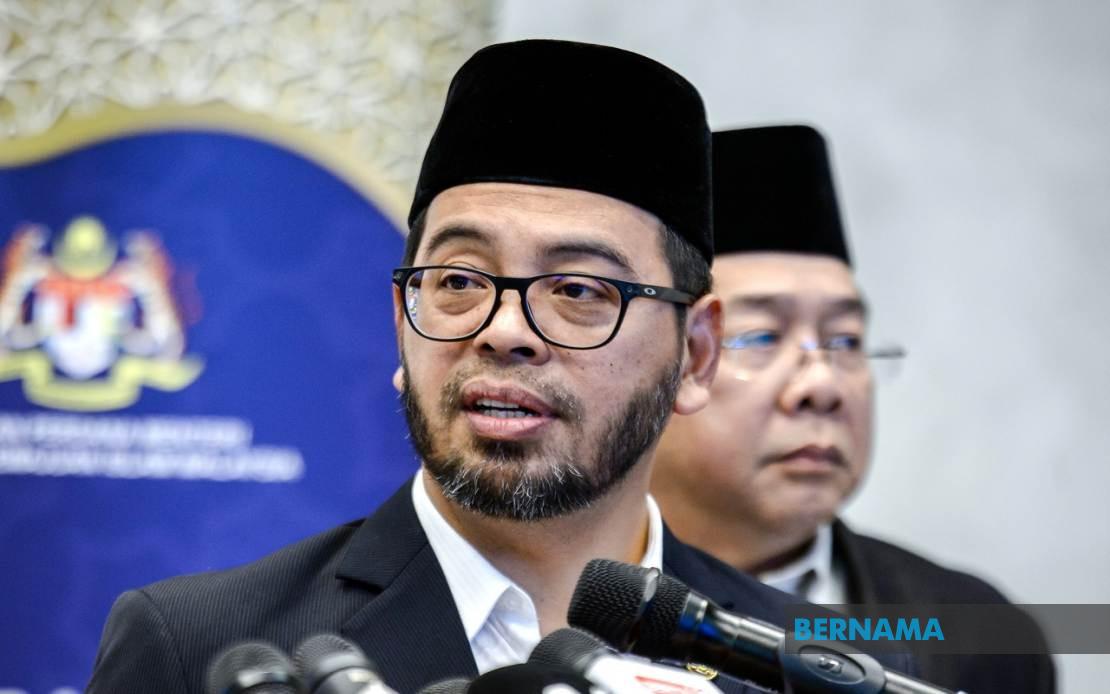
Malaysia has lodged a strong diplomatic protest against the detention of Sheikh Muhammad Hussein, the Grand Mufti of Jerusalem and custodian of the Al-Aqsa Mosque, following his apprehension by Israeli authorities last Friday after leading prayers at Islam's third holiest site. The incident, which occurred in occupied East Jerusalem, drew an immediate response from Malaysia's religious establishment, with the Prime Minister's Department (Religious Affairs) characterizing the arrest as a breach of fundamental religious freedoms and an affront to the sanctity of one of Islam's most revered locations.
Senator Dr Zulkifli Hasan, the Minister in the Prime Minister's Department (Religious Affairs), articulated Malaysia's displeasure in measured but unambiguous terms, emphasizing that the brief detention of such a prominent spiritual figure while executing his religious functions represents a violation of internationally recognized rights. Although Sheikh Muhammad Hussein was released shortly after his detention, the mere act of his arrest raised serious questions about the protection of religious personnel and the security of Islamic holy sites under current occupation arrangements. Dr Zulkifli stressed that the incident underscores persistent concerns regarding religious liberty in Jerusalem, where Muslim worshippers and leaders operate under significant constraints.
The Malaysian government has escalated the matter to the international stage, specifically appealing to two major global bodies with responsibility for human rights and religious freedom. The United Nations, which maintains various mechanisms for addressing violations of religious liberty and minority protections, has been urged to examine the circumstances surrounding the detention and to implement measures ensuring that the rights to worship are preserved. Similarly, the 57-member Organisation of Islamic Cooperation, which represents the collective voice of Muslim-majority nations and serves as a coordinating body for Islamic concerns, has been called upon to mobilize diplomatic pressure and coordinate a response proportionate to the gravity of the incident.
Malaysia's statement underscores Kuala Lumpur's broader commitment to Palestinian causes and its consistent support for Palestinian self-determination. The ministry reiterated that Malaysia remains committed to the Palestinian struggle and will continue championing efforts toward a comprehensive peace settlement that respects Palestinian sovereignty and dignity. This position reflects Malaysia's historical stance as a vocal advocate within international forums for Palestinian rights, a role that has been maintained across successive administrations and remains a core element of Malaysia's foreign policy orientation in the Middle East.
In a related but distinct development, Dr Zulkifli drew attention to another significant historical tragedy affecting Muslims—the Srebrenica massacre in Bosnia and Herzegovina, which occurred 31 years ago this month. The atrocity, perpetrated in July 1995 when Bosnian Serb military forces systematically executed over 8,000 Bosniak Muslim men and boys, represents one of the darkest chapters in contemporary European history. Despite international designation of Srebrenica as a protected safe zone under UN supervision, the protective mechanisms proved ineffective, and the town fell to besieging forces with catastrophic consequences for the civilian population.
The scale of the Srebrenica massacre extended beyond the immediate death toll, as the aftermath of the violence continues to reverberate across the region decades later. More than 1,000 victims of the massacre remain unidentified and unburied, their remains still awaiting proper identification through forensic analysis and DNA matching so that surviving families can finally lay their loved ones to rest. This ongoing humanitarian challenge has become emblematic of the massacre's lasting impact on Bosnian Muslim communities, where the absence of closure perpetuates collective trauma and suffering among bereaved families.
Malaysia's historical involvement in the Bosnian crisis reflects the nation's broader humanitarian mission and demonstrated commitment to supporting persecuted Muslim populations. Former Prime Minister Tun Dr Mahathir Mohamad played a catalytic role in bringing international attention to the Bosnian Muslim plight during the 1990s, while current Prime Minister Datuk Seri Anwar Ibrahim has continued advancing Malaysia's solidarity with the Bosnian people. Beyond diplomatic efforts, Malaysia's grassroots civil society organizations, particularly the Muslim Youth Movement of Malaysia (ABIM), undertook early humanitarian initiatives to provide relief and raise awareness about the Bosnian crisis among Malaysian Muslim communities.
The scope of Malaysia's material contributions to Bosnia's reconstruction and protection extended significantly into military and educational dimensions. Between 1993 and 1998, Malaysia deployed a substantial military contingent comprising 10,514 officers and personnel from the Malaysian Armed Forces to serve under UN mandates in Bosnia and Herzegovina. These forces operated through two distinct operational frameworks: the Malaysian Battalion (MALBAT), which provided peacekeeping operations during the conflict, and the Implementation Force (IFOR), which later assisted in implementing the Dayton Peace Agreement that concluded the war. This deployment represented one of Malaysia's most significant overseas military missions and underscored the nation's willingness to commit resources to protect Muslim populations from ethnic cleansing and sectarian violence.
Beyond military deployment, Malaysia opened its educational institutions to Bosnian refugees seeking safety and opportunity following the conflict's end. The International Islamic University Malaysia (IIUM), as the nation's premier institution for Islamic learning and research, provided scholarships and admission pathways for Bosnian Muslim students, enabling them to access quality higher education and eventually contribute to their homeland's post-conflict reconstruction. This educational support mechanism represented a practical expression of Islamic solidarity and created lasting institutional connections between Malaysian and Bosnian Muslim communities.
Dr Zulkifli's commemoration of Srebrenica carries particular pedagogical significance for contemporary audiences, especially younger generations who did not directly witness the 1990s conflicts in the Balkans. By invoking the massacre as a cautionary historical lesson, the minister highlighted the dangers inherent in permitting unchecked ethnic and religious hatred to proliferate unchallenged within societies. He urged Malaysian youth to extract meaningful lessons from the Srebrenica tragedy, specifically rejecting ideologies of sectarian division, communal hatred, and systemic oppression. The minister emphasized that the massacre represents not merely a historical footnote but an enduring moral teaching about the consequences of allowing prejudice to overwhelm principles of common humanity and coexistence.
The dual focus of Dr Zulkifli's statements—addressing both the immediate detention of Jerusalem's Grand Mufti and commemorating the Srebrenica massacre—reveals Malaysia's multifaceted approach to defending Muslim religious freedom and dignity across different geopolitical contexts. Rather than confining advocacy to singular flashpoints, Malaysia frames religious persecution and communal violence against Muslims as interconnected phenomena requiring sustained international attention and coordinated responses. This perspective positions Malaysia as a bridge between different Muslim populations facing distinct but related challenges, leveraging its diplomatic voice to advocate for universal principles of religious liberty and human dignity.

