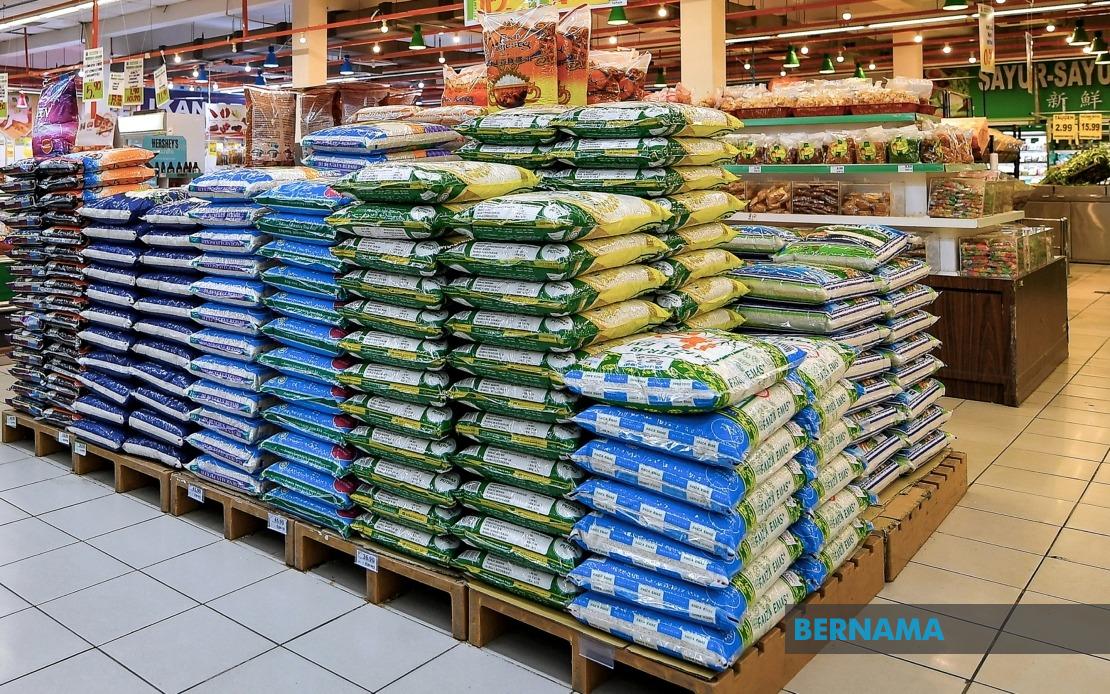
Malaysia's staple food security remains robust, with government reserves positioned to meet the nation's rice requirements throughout the next half-year, according to statements from the Economy Ministry. The assurance comes at a time when global food supply chains face significant disruption, prompting governments across Asia to reassess their strategic reserves and pricing policies. For Malaysian households already contending with inflationary pressures in other essential categories, the confirmation of adequate rice stocks provides a measure of relief in an otherwise uncertain economic environment.
Economy Minister Akmal Nasrullah Mohd Nasir delivered the security assessment during a high-level policy briefing focused on mitigating the impact of worldwide supply uncertainties on domestic food security. The minister's statement underscores the government's determination to insulate ordinary Malaysians from the market volatility that has characterised global commodity markets in recent years. The commitment extends beyond merely ensuring physical availability of rice; it encompasses a formal pledge that the price of Local White Rice, the most common variety consumed across the country, will experience no increase from current levels.
This price-freeze commitment carries particular significance for Malaysia's lower and middle-income households, for whom rice represents a substantial proportion of their food budget. The decision reflects a strategic government intervention designed to prevent cascading inflation across the broader consumer economy. By anchoring rice prices at existing levels despite international pressures, policymakers aim to create a stabilising effect that could slow the transmission of external shocks into domestic retail prices for other food categories. The approach acknowledges that rice price volatility can trigger broader purchasing-power erosion among vulnerable populations.
The policy announcement emerged from deliberations at the National Economic Action Council, a high-level coordinating body chaired by Prime Minister Datuk Seri Anwar Ibrahim that convened at the Parliament building. The MTEN forum brings together senior government officials responsible for macroeconomic management, suggesting that rice security and price management have been elevated to the status of national economic priorities rather than treated as routine agricultural matters. This institutional elevation reflects international recognition that food security concerns directly influence broader economic stability, consumer confidence, and social cohesion.
Beyond the domestic supply assurance, the government has simultaneously addressed the economic pressures confronting Malaysia's agricultural producers themselves. The Ministry distributed RM45.98 million to approximately 118,908 paddy farmers throughout Peninsular Malaysia via the Paddy Farmers Plowing Incentive programme. This financial support acknowledges the structural challenges facing rice cultivation, where farmers have endured mounting pressures from climate-related production disruptions and the persistent increase in farming costs, ranging from fuel and fertiliser expenses to labour and equipment maintenance.
The agricultural support mechanism represents a dual-track approach to food security: simultaneously protecting consumer welfare while providing direct financial relief to the production base. By cushioning farmers against rising operational expenses, the government aims to preserve incentives for continued rice cultivation and investment in the sector. Without such interventions, margin compression among farmers could trigger supply-side constraints as marginal producers exit the market or reduce cultivation areas, ultimately creating future scarcity conditions more difficult to manage than present-day abundance.
Malaysia's rice security situation must be understood within the broader Southeast Asian context, where several countries have faced acute food supply challenges in recent years. Thailand and Vietnam, both major regional rice exporters, have implemented export restrictions or state-managed marketing arrangements to prioritise domestic supply. India's periodic export controls have reverberated across global and regional markets. Against this backdrop, Malaysia's self-sufficiency in rice production and maintenance of buffer stocks positions the country relatively favourably compared to import-dependent neighbours. However, the six-month buffer represents a finite timeframe, necessitating continuous monitoring of production outcomes and consumption patterns.
The government's emphasis on food supply stability reflects awareness that price shocks in essential commodities can rapidly erode public confidence in economic management and trigger political backlash. In Malaysia's diverse society, where food security concerns span multiple income strata and ethnic communities, maintaining affordable access to staple carbohydrates represents a foundational social contract expectation. The visible commitment to rice price stability functions partially as a signal to consumers and market participants that government retains agency over essential supply chains despite globalisation and market liberalisation.
Climate variability poses an ongoing challenge to the long-term sustainability of Malaysia's rice supply position. Irregular rainfall patterns, flooding, and drought conditions have increasingly disrupted planting and harvesting cycles. The government's support payments to farmers acknowledging climate pressures indicate recognition that adaptation to these conditions requires financial resources beyond what individual farming households can readily mobilise. Sustaining domestic rice production in coming years will likely demand continued government intervention through both direct support and investment in climate-resilient agricultural infrastructure and techniques.
Looking forward, the six-month buffer provision serves primarily as a defensive measure rather than a permanent solution to food security questions. The timeframe suggests that maintaining domestic production capacity remains strategically essential rather than optional. Any significant decline in production from current levels would eventually deplete the buffer and necessitate larger-scale imports, exposing Malaysia to the international price volatility that protective policies currently shield consumers against. This reality means that continued agricultural support and investment in paddy farming productivity will remain central to long-term food security strategy, even as immediate consumer price pressures are successfully managed through current policy interventions.

