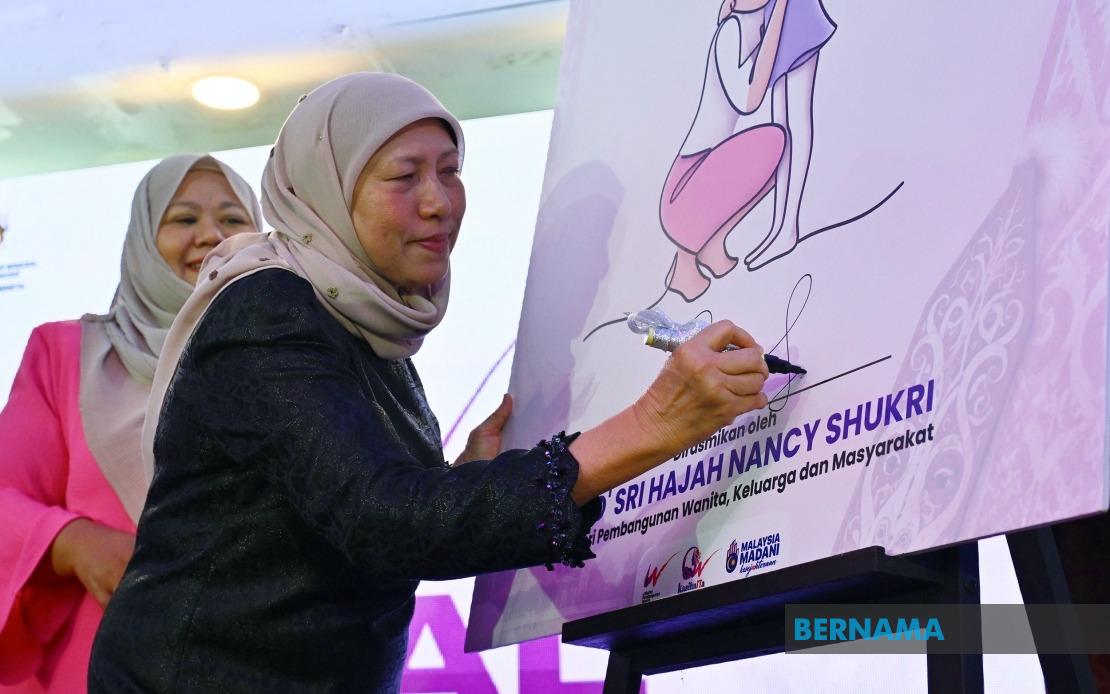
The Ministry of Women, Family and Community Development has officially launched the next phase of its Single Mothers Support programme, known as KasihnITa, in Sarawak. The initiative represents a coordinated approach to addressing the multifaceted challenges faced by single mothers across the country, with the Sarawak deployment following earlier rollouts in Selangor. Minister Datuk Seri Nancy Shukri oversaw the state-level inauguration of KasihnITa 2026, where approximately 130 participants attended a three-day intensive programme designed to equip vulnerable women with practical knowledge and access to critical services.
The programme's core strength lies in its collaborative framework, which mobilises expertise and resources from several major government institutions. The Credit Counselling and Debt Management Agency, Bank Negara Malaysia, the Legal Aid Department, and the Syariah Judiciary Department work in concert to create a comprehensive support ecosystem tailored to single mothers' needs. This integration ensures that participants gain exposure to financial planning strategies while simultaneously accessing legal counsel and understanding the welfare assistance available through official channels. By concentrating multiple service providers in one venue, the programme removes barriers that might otherwise prevent women from seeking help they urgently require.
Financial literacy emerges as a central pillar of the KasihnITa initiative. Single mothers often juggle limited household budgets while managing childcare costs, education expenses, and other family obligations, making effective financial management crucial to household stability. The programme equips participants with practical tools for budgeting, debt management, and long-term financial planning. Through sessions facilitated by AKPK and Bank Negara Malaysia, attendees learn how to navigate credit systems responsibly, avoid predatory lending practices, and build resilience against unexpected financial shocks. This knowledge transfer addresses a critical vulnerability in many single-parent households, where financial mismanagement can rapidly cascade into more severe hardship.
Legal support represents another indispensable component of the initiative. Child maintenance remains a contentious issue in Malaysian family law, with many single mothers struggling to enforce court orders when ex-partners default on maintenance obligations. The programme provides a structured platform for legal consultation, enabling participants to understand their rights and available remedies under both civil and Islamic family law frameworks. Syariah Judiciary Department representatives assist mothers seeking guidance through Islamic legal processes, while the Legal Aid Department ensures that financial constraints do not prevent access to legal expertise. This dual-track approach acknowledges Malaysia's dual legal system and ensures no beneficiary finds herself without appropriate guidance.
Minister Shukri emphasised that the programme's design reflects a deliberate commitment to ensuring no woman is marginalised from the development agenda. The initiative operationalises an inclusive policy framework by directly incorporating beneficiary voices into future policy refinement. By gathering first-hand feedback during these programmes, the Ministry gains granular understanding of systemic gaps and emerging challenges. This participatory approach contrasts with top-down policy formulation and signals genuine commitment to responsive governance that evolves based on lived experiences of target communities.
The psychological and social dimensions of the programme deserve equal weight alongside its tangible service delivery. Many single mothers experience profound isolation, bearing emotional burdens while managing household responsibilities alone. The three-day format deliberately creates space for peer exchange, allowing participants to share experiences, strategies, and encouragement. This community-building aspect strengthens social cohesion among beneficiaries and demonstrates that institutional support extends beyond mere financial or legal assistance to encompass recognition of emotional struggles inherent in single parenthood.
The staged geographical rollout strategy reflects pragmatic implementation planning. Beginning in Selangor and expanding to Sarawak suggests deliberate sequencing that allows programme refinement before nationwide acceleration. Sarawak presents particular relevance given its dispersed population geography, making integrated service delivery particularly valuable for rural and semi-urban communities where individual service access might otherwise prove logistically challenging. Success in Sarawak could inform subsequent deployments to other states with distinct demographic and geographic characteristics.
The child maintenance enforcement component addresses one of family law's most persistent implementation gaps. Court orders mandating maintenance payments frequently go unfulfilled, leaving single mothers bearing extraordinary financial strain. By positioning legal consultation as integral to the broader support framework, KasihnITa transforms abstract legal rights into actionable pathways. Participants learn enforcement mechanisms, documentation requirements, and escalation procedures, reducing information asymmetries that frequently disadvantage mothers navigating legal systems independently.
The programme's integration of financial counselling with legal guidance reflects sophisticated understanding that single mothers' challenges rarely exist in isolation. A woman struggling with debt may simultaneously face maintenance disputes; someone managing childcare costs might require debt restructuring. The holistic approach acknowledges these intersections and prevents compartmentalised service delivery that leaves beneficiaries navigating fragmented bureaucracies. This integrated model offers valuable lessons for other government initiatives targeting vulnerable populations across Southeast Asia.
Looking forward, KasihnITa's expansion trajectory will depend on sustained political commitment and adequate resource allocation. The initial positive response in participating states suggests strong demand for such comprehensive support mechanisms. However, the programme's ultimate impact will be measured not merely by participation numbers but by tangible improvements in single mothers' financial stability, legal security, and overall household resilience. As Malaysia positions itself as a regional leader in social protection, the KasihnITa model demonstrates how coordinated institutional effort can meaningfully improve outcomes for vulnerable family structures.

