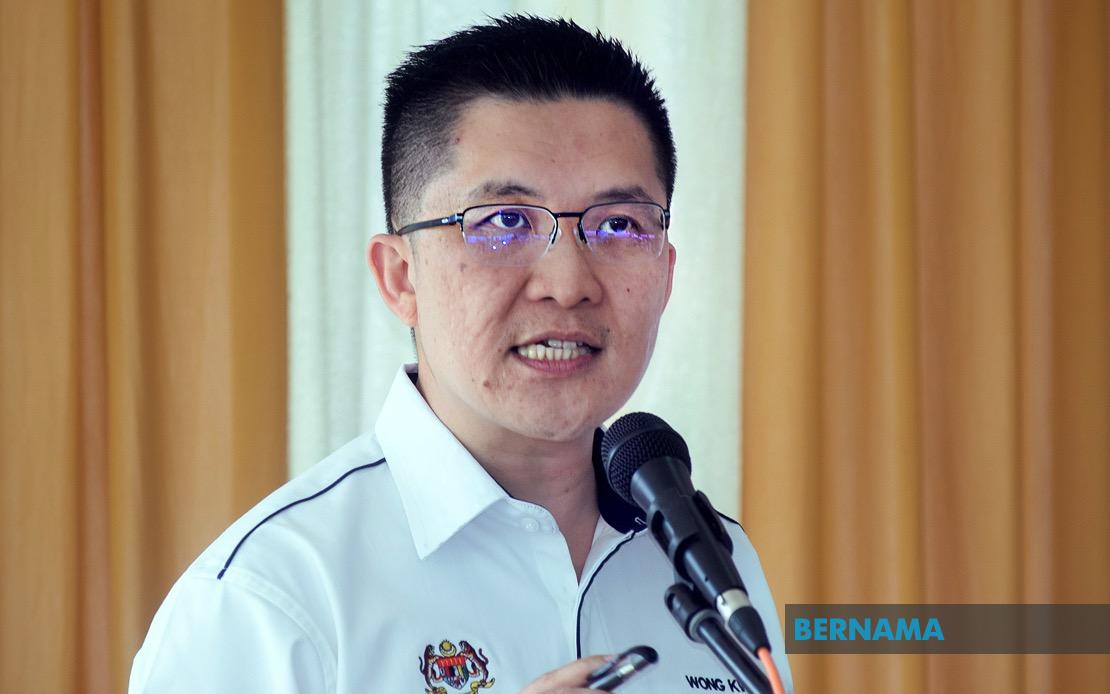
Malaysia maintains a substantial network of 528 Tamil national-type schools (SJKT) serving approximately 78,501 pupils as of late May this year, according to information tabled in Parliament. The figures underscore the continued presence of Tamil-medium education within Malaysia's plural schooling landscape, despite broader demographic and enrolment shifts affecting minority-language institutions across the region. Deputy Education Minister Wong Kah Woh provided these statistics during a special parliamentary session when addressing concerns about the viability and future direction of Tamil education in the country.
Participation in major national examinations reveals a gradual downward trend in SJKT candidacy. The Sijil Pelajaran Malaysia (SPM) examination saw 8,023 candidates from Tamil schools register in 2023, a figure that declined to 7,925 in 2024, 7,693 in 2025, and 7,494 registrations in the current year. This pattern mirrors demographic changes affecting Tamil-language communities nationally and reflects shifting parental choices regarding medium of instruction, though the absolute numbers remain significant. The ministry has sought to reassure stakeholders that Tamil language options remain available even to students attending schools without dedicated Tamil streams, provided they meet examination registration requirements.
The government has committed to sustaining Tamil as an examinable subject within the SPM framework, with the Education Ministry pledging continued support through curriculum development and pedagogical enhancement. The Tamil language subject will be retained among language options offered through the national examinations body. Importantly, this commitment extends beyond traditional SJKT settings, acknowledging that Tamil-speaking families increasingly select alternative educational pathways. The ministry's pledge reflects recognition of Tamil's cultural and linguistic significance within Malaysia's multicultural educational ecosystem, even as implementation mechanisms continue to evolve.
Johor state exemplifies the geographical distribution and scale variation within the SJKT network. The state operates 71 such schools accommodating 12,906 pupils, with Johor Bahru district alone hosting 15 institutions serving 7,840 students. Four Johor Bahru schools demonstrate particularly robust enrolment: SJKT Taman Tun Aminah with 1,529 pupils represents the largest single institution documented, followed by SJKT Ladang Rini (1,055 pupils), SJKT Jalan Yahya Awal (890), and SJKT Masai (768). These schools anchor the Tamil education sector within the state's urban centres, serving as focal points for community investment and ministerial resource allocation.
Capital infrastructure development has become a primary policy lever for supporting Tamil school operations. The ministry has allocated RM4.3 million each to construct new buildings at SJKT Ladang Rini and SJKT Kulai Besar, with projections suggesting each facility will accommodate an additional 200 to 300 pupils upon completion. These investments signal the government's material commitment to expanding physical capacity within existing networks rather than allowing contraction. Such building programmes typically require multi-year implementation timelines and represent substantial commitments to communities relying on Tamil-medium instruction.
However, under-enrolment presents a persistent structural challenge within the SJKT ecosystem. As of May 31 this year, 135 Tamil schools nationwide operated with insufficient pupil numbers to sustain traditional single-grade classroom configurations. The ministry has developed a comprehensive roadmap addressing this challenge through pedagogically-sound multi-grade teaching arrangements, strategic school relocations to areas with greater Tamil-speaking populations, and retention decisions calibrated to local demographic realities. Within this framework, 135 under-enrolled institutions have implemented multi-grade classes, whilst 36 schools have received approval for relocation to potentially more viable locations.
Teacher supply and qualification standards represent another critical policy domain shaping SJKT sustainability. The ministry reported a requirement for 1,334 option-level Tamil teachers within primary SJKTs, yet current staffing has reached 1,733 positions, suggesting an oversupply at this level. Secondary schools present a different profile, with 584 required positions against a current complement of 648 teachers. These figures indicate that teacher availability is not constraining SJKT operations, at least numerically, and that the ministry has successfully recruited staff exceeding minimum requirements. However, quality and deployment efficiency remain separate considerations requiring ongoing attention.
The ministry has undertaken diverse initiatives to strengthen Tamil language pedagogy and learning outcomes. Implementation of the 2027 School Curriculum framework promises curriculum refinement aligned with contemporary educational standards. Enhancement of teaching and learning quality involves professional development, resource provision, and pedagogical innovation. Strengthening Tamil literature—a subject area central to language depth—reflects awareness that numerical expansion alone cannot sustain linguistic and cultural transmission. These initiatives position Tamil education within modernisation frameworks applicable across the broader school system.
Questions regarding examination grading transparency have prompted official clarification of assessment methodologies. The ministry confirmed that examination results are determined through systematic evaluation of candidate mastery against curriculum standards rather than through quota systems or predetermined percentage targets. Specialist panels comprising subject experts, curriculum specialists, and educational measurement professionals establish grade boundaries by examining cohort performance, examination instrument characteristics, curriculum requirements, and competency standards. This evidence-based approach mirrors international examination practices, lending methodological legitimacy to Malaysian assessment procedures and addressing concerns about potential arbitrary or politically-influenced grading.
Grade boundary flexibility across examination years reflects pedagogically-sound assessment practice rather than inconsistency. The ministry explained that boundaries may vary year-to-year depending on candidate cohort performance and examination instrument design, consistent with international examination standards. This acknowledgment recognises that absolute difficulty standardisation is neither achievable nor necessarily desirable; instead, comparative assessment relative to curriculum requirements ensures valid measurement of student learning. Malaysian educators increasingly adopt such international frameworks, positioning the country within global assessment communities.
For Malaysian policymakers and Tamil-language advocates, these parliamentary disclosures indicate sustained commitment to pluralistic education delivery despite demographic pressures. The combination of infrastructure investment, teacher recruitment, curriculum modernisation, and under-enrolment mitigation strategies suggests the government views Tamil schools as legitimate permanent fixtures within the education system rather than temporary or declining institutions destined for phased closure. However, the declining SPM candidacy figures hint that medium-to-long-term sustainability depends on community confidence and perceived educational quality remaining robust.
Southeast Asian context matters here: several regional nations have witnessed erosion of minority-language educational pathways as dominant-language schooling consolidates. Malaysia's active policy interventions—including building programmes, teacher training, and examination framework preservation—distinguish its approach. Whether such measures prove sufficient to maintain enrolment momentum and community engagement remains an ongoing question, particularly as globalisation and economic pressures shape family educational choices across the region.

