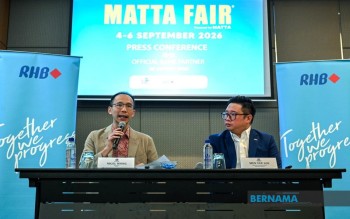
Malaysia's tourism industry is mounting a coordinated push for fiscal support, with the Malaysian Association of Tour and Travel Agents positioning tax relief and investment in attractions as critical to reviving the sector ahead of the Visit Malaysia 2026-2027 campaign. The organisation's leadership has outlined a comprehensive package of demands for the upcoming Budget 2027, due to be presented by the Finance Minister on October 9, that reflects both immediate business concerns and longer-term destination competitiveness anxieties within the travel trade.
Nigel Wong, MATTA's president, has zeroed in on tax deductions for tour operators as the primary mechanism through which government can accelerate promotional activity abroad. His framing positions enhanced tax incentives not merely as business-friendly policy, but as a strategic instrument aligned with the government's own tourism recovery narrative. By allowing operators to deduct larger promotional expenses, Wong contends that companies will feel empowered to invest more aggressively in marketing Malaysia in source markets, ultimately feeding into the Visit Malaysia 2026-2027 initiative and driving visitor arrivals during what the government views as a critical recovery window.
The logic underlying this request reflects a fundamental tension in Malaysia's tourism economics. Tour operators, particularly those focused on inbound travel, operate on thin margins and depend on sustained visitor volume to justify overseas marketing expenditure. A modest tax concession can alter the calculus significantly, shifting what appears to be discretionary spending into tax-deductible business development. For MATTA, this mechanism offers the dual advantage of supporting member companies' bottom lines while appearing to advance the government's own destination-marketing objectives, creating alignment between private sector interests and public policy goals.
Beyond immediate tax relief, Wong has articulated a broader argument for government capital expenditure on tourism infrastructure and heritage preservation. His invocation of the Sultan Abdul Halim Muadzam Shah Building—a landmark that has indeed gained iconic status following recent restoration—serves as a concrete exemplar of how strategic public investment can reshape a destination's appeal. This reference carries particular weight because it illustrates tangible outcomes: a historic structure transformed from neglected colonial artifact into a must-see attraction, generating photographs, social media content, and word-of-mouth marketing that no advertising budget could replicate.
The tour operator community's pitch for heritage building upgrades speaks to a gap in Malaysia's current infrastructure strategy. While the country has invested substantially in modern attractions and resort facilities, many heritage and natural sites remain underutilised, either because of deteriorating conditions or lack of visitor amenities. A systematic programme of refurbishment targeting colonial architecture, historical temples, traditional villages, and other culturally significant locations would not only enhance visitor experiences but also differentiate Malaysia from regional competitors who rely more heavily on beach and shopping experiences. For MATTA members, upgrading such attractions expands the product range they can market, enabling them to construct more diverse itineraries and appeal to culturally motivated travellers.
Wong's call for a "whole-of-tourism approach" introducing municipal councils more systematically into urban tourism management addresses infrastructure and safety concerns that shape visitor perceptions and repeat visitation. A tourist who feels unsafe walking through a city centre at night or encounters poor sanitation and neglected public spaces will rate a destination poorly regardless of individual attraction quality. This holistic framing recognises that tourism is not solely a hotel and attraction industry; it is an urban experience economy requiring coordination across multiple government levels. Municipal councils, closest to ground conditions, are well-positioned to implement practical improvements in lighting, cleanliness, security presence, and wayfinding that create walkable, welcoming city environments.
The emphasis on promotional budget increases reflects MATTA's assessment that Visit Malaysia 2026-2027 will require sustained, multi-channel marketing to succeed. Government-level destination promotion, typically channelled through Tourism Malaysia, operates on fixed annual budgets that rarely expand proportionately with campaign ambitions. By seeking an elevated allocation alongside private sector tax incentives, MATTA is essentially advocating for a dual-channel approach where both public institutional promotion and private operator marketing ramp up simultaneously, creating cumulative messaging impact in key markets.
For Malaysian policymakers, these requests present several considerations. Tax incentives for tour operators carry modest direct fiscal cost compared to infrastructure spending, making them politically appealing, yet their efficacy depends on whether operators redirect savings into genuine marketing rather than simply improving margins. Infrastructure investment has high upfront cost but delivers long-term competitive advantage and community benefits extending beyond tourism. The timing, with Budget 2027 to be tabled in early October and the Visit Malaysia campaign launching across 2026, creates opportunity for co-ordinated implementation if government responds positively.
Regionally, Malaysia's positioning hinges increasingly on differentiation from Thailand, Indonesia, and Singapore, all competing for the same visitor pools. Thailand's recent infrastructure investments in cultural sites and urban amenities have reinforced its appeal; Indonesia's Bali continues to dominate regional tourism narratives through sustained marketing. MATTA's prescriptions, if implemented comprehensively, could sharpen Malaysia's competitive edge by offering heritage-rich experiences paired with safe, walkable urban environments and strong promotional reach. The tour operator sector's voice carries weight because it represents the commercial intermediary between destination and visitor; their requests, grounded in market feedback, signal genuine competitive vulnerabilities.

