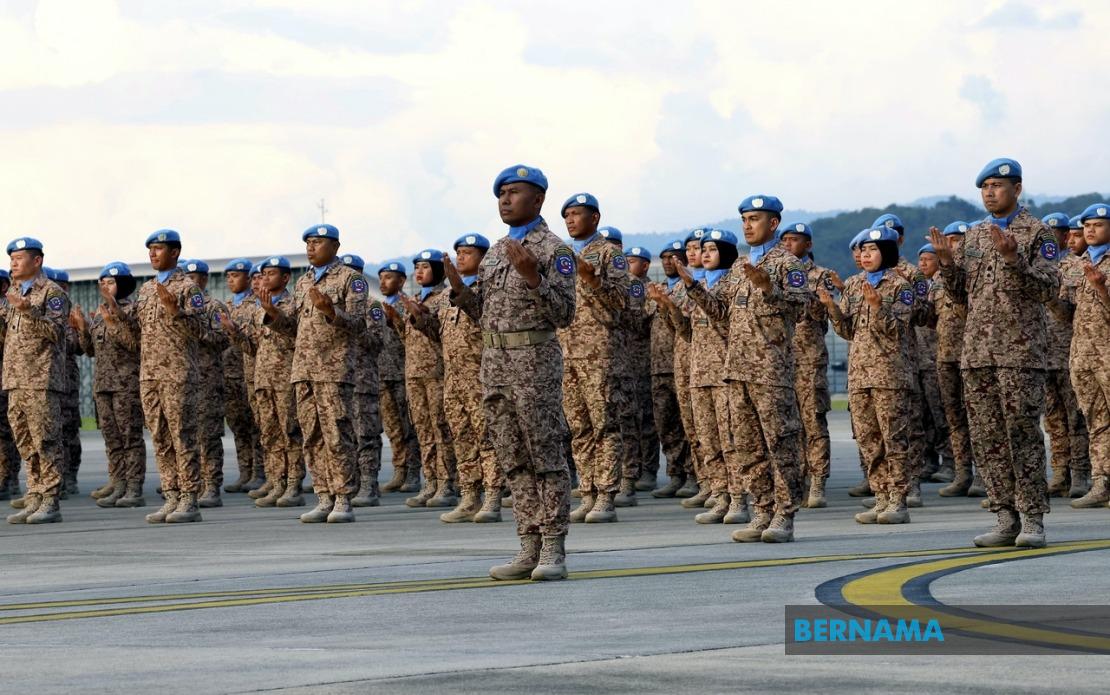
Malaysia's peacekeeping battalion deployed to Lebanon has secured a strategic advantage through its geographical positioning away from the volatile Lebanese-Israeli border, according to Defence Minister Datuk Seri Mohamed Khaled Nordin. The Malaysian Battalion (MALBATT) 850-13, operating under a United Nations mandate, maintains its primary operations centre in a central location that substantially reduces the risk of direct engagement in any potential ground combat scenario, should tensions flare along the disputed frontier.
The tactical placement of Malaysian forces represents a deliberate choice within the broader UN peacekeeping framework, where different national contingents assume responsibility for distinct geographical sectors. Rather than manning positions in proximity to the border demarcation line, MALBATT has been assigned an operational zone deeper within Lebanese territory. This arrangement means that forces closer to the actual border—including troops from France and Indonesia—would encounter any emerging ground-level threats before Malaysian personnel would face direct exposure.
Mohamed Khaled articulated this security arrangement during a public engagement in Kota Tinggi, emphasising that the positioning directly correlates to reduced casualty risk for Malaysian servicemen and women. The Defence Minister's remarks reflect the reality of UN peacekeeping deployments in the Levant, where force protection remains a paramount concern amid the region's chronic instability. By operating from a buffered position rather than a frontline location, MALBATT avoids becoming an immediate flashpoint in any potential armed escalation.
However, the Defence Minister cautioned against complacency despite the positional advantage. The nature of contemporary threats along the Lebanon-Israel border has evolved significantly, shifting from traditional ground-based military engagement toward aerial operations. Unmanned aerial vehicles, fighter jets, and sophisticated air defence systems now represent the primary security concern for UN peacekeeping personnel throughout the region. This transformation in threat assessment means that geographical distance from the border provides diminishing protection against modern airborne weapons systems capable of striking targets across considerable distances.
The aerial threat dimension introduces a qualitatively different strategic challenge. While MALBATT's central positioning effectively shields Malaysian personnel from small arms fire, artillery barrages, and other conventional ground-level warfare, the same protective layout offers minimal defence against drone strikes or jet-launched munitions. This distinction underscores the evolving nature of regional security dynamics, where traditional concepts of defensive positioning have become partially obsolete in the face of advancing military technology.
In response to this broader threat landscape, Malaysia's Defence Ministry has established comprehensive emergency protocols specifically designed for MALBATT operations in Lebanon. Standard operating procedures mandate that all deployed personnel maintain heightened vigilance and possess detailed knowledge of protective infrastructure within their operational areas. The bunker system and hardened shelters provide the primary layer of defence against aerial bombardment, requiring troops to seek immediate cover upon detecting warning indicators of incoming air strikes.
The implementation of these emergency procedures reflects lessons learned from previous peacekeeping operations throughout the Middle East and lessons identified through regular threat assessments conducted by UN security personnel. Malaysian military commanders have invested considerable effort in ensuring that every MALBATT member understands the activation procedures for emergency responses and can reach designated protective positions rapidly when required. This emphasis on bunker discipline and shelter accessibility represents the most practical mitigation available against aerial threats in a stationary peacekeeping environment.
Malaysia's participation in the UN peacekeeping mission in Lebanon carries particular significance for Southeast Asian regional security perspectives. The deployment demonstrates Malaysia's commitment to international peacekeeping responsibilities and contributes to the broader multilateral security architecture in the Eastern Mediterranean. The presence of Malaysian, French, Indonesian, and other national contingents working under unified UN command illustrates the cooperative mechanisms through which the international community attempts to maintain stability in chronically turbulent regions.
For Malaysian defence planners, the MALBATT deployment provides valuable operational experience in complex, multi-ethnic conflict environments where precise rules of engagement and clear force protection protocols prove essential. The learning acquired from managing security challenges in Lebanon informs strategic thinking across Malaysia's defence establishment and enhances military readiness for potential future peacekeeping commitments in comparable settings throughout Asia-Pacific and beyond.
The Defence Minister's public comments regarding MALBATT's positioning serve multiple purposes within Malaysia's strategic communication framework. By emphasising the thoughtful geographical placement and comprehensive safety protocols, the government seeks to assure Malaysian families that their relatives serving in Lebanon face measured, manageable risks rather than reckless exposure. Simultaneously, the transparency regarding threats demonstrates that Malaysia's defence leadership maintains realistic assessments of regional security dynamics rather than minimising acknowledged dangers.
The Lebanese deployment exemplifies how modern peacekeeping operations require sophisticated integration of force protection considerations with mission effectiveness objectives. MALBATT must simultaneously maintain sufficient visibility and operational capacity to contribute meaningfully to UN objectives while withdrawing from positions of maximum vulnerability. This balancing act reflects the inherent contradictions within peacekeeping mandates, which demand protection of civilian populations and monitoring of ceasefire compliance without placing peacekeepers at unacceptable risk levels.

