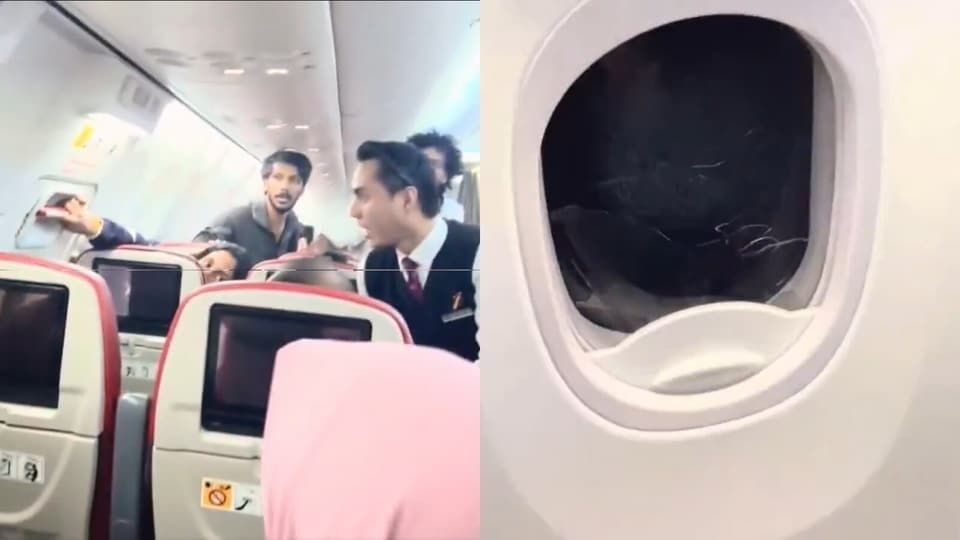
A potential aviation crisis was narrowly averted on Wednesday night when a passenger aboard a Batik Air flight from Kuala Lumpur to Kochi attempted to open the aircraft's emergency exit mid-flight, prompting his arrest by Kerala Police upon landing. The incident, which unfolded between 9.30pm and 11.05pm aboard Boeing 737 flight OD231, sent shockwaves through the airline industry and reignited concerns about in-flight security protocols across South Asian airspace.
The accused, identified as 36-year-old Jamsheer Athanikkal from Palakkad district, allegedly used his foot to damage the emergency exit's inner window panel while simultaneously attempting to force the door open. Eyewitness accounts suggest that the passenger also made threatening remarks directed at fellow travellers and members of the cabin crew, amplifying the sense of alarm throughout the cabin. The Boeing 737, one of the world's most widely operated commercial aircraft, narrowly avoided what could have developed into a catastrophic situation had the emergency exit actually opened at cruising altitude.
The aircraft's inherent design features and the physics of cabin pressurisation played a decisive role in preventing disaster. According to post-flight accounts shared by passenger Matty Mathew on social media, the emergency door remained sealed despite the attempts to prise it open, a safety mechanism that has proven crucial in numerous potential emergencies over the decades. When the breach occurred, a rush of air swept through the cabin, jolting most of the sleeping passengers awake and alerting them to the unfolding emergency. The combination of aerodynamic forces and the sealed cabin environment rendered the door inoperable regardless of the passenger's efforts.
Crew members and fellow passengers demonstrated remarkable composure under pressure, swiftly restraining Jamsheer before the situation could deteriorate further. Their intervention prevented what might otherwise have escalated into a far more serious incident with potentially catastrophic consequences for the 200-plus individuals aboard the aircraft. Mathew's account acknowledged the terrifying nature of the experience whilst emphasising the relief that no lives were lost and all passengers remained safe. This collaborative response underscores the critical importance of passenger awareness and crew training in managing in-flight emergencies.
Upon the aircraft's arrival in Kochi early Thursday morning, Jamsheer was taken into custody by Kerala Police acting on the basis of a formal complaint lodged by Batik Air's security personnel at the airport. Preliminary investigations have revealed concerning details about the passenger's behaviour and mental state during the incident, though authorities have not yet disclosed whether substance abuse or psychological distress played any role in triggering the event. The case registration has invoked multiple legal frameworks to address the severity of the alleged conduct.
Prosecutors have charged Jamsheer under Section 351(3) of the Bharatiya Nyaya Sanhita for criminal intimidation, a provision designed to address threats and menacing behaviour. Additionally, Section 11A of the Aircraft Act has been invoked, specifically targeting violations of safety and security directives that govern behaviour aboard commercial flights. The Kerala Police Act's Section 118(e), which addresses acts endangering public safety, rounds out the legal charges against the accused. These multiple charges reflect the gravity with which Indian aviation authorities regard incidents that jeopardise passenger and crew safety.
The incident arrives at a particularly sensitive moment for regional aviation safety, following another alarming occurrence just two days earlier. Air India flight AI2379, departing from Phuket, Thailand, and bound for Delhi, experienced a sudden and unexplained loss of altitude during cruise on Tuesday. The aircraft, carrying 137 passengers and eight crew members, descended abruptly before pilots regained control and managed to land the Airbus safely in Delhi. The unexpected altitude loss resulted in 13 passengers and four crew members requiring hospitalisation, indicating the physical trauma inflicted by the sudden manoeuvre.
The Air India incident has prompted wider industry scrutiny regarding maintenance protocols and pilot training standards, particularly given that the aircraft involved was only seven years old according to flight-tracking service Flightradar24. The airline has pledged full cooperation with relevant regulators and the aircraft manufacturer, indicating Boeing's involvement in determining the technical factors that contributed to the altitude loss. These sequential incidents within 48 hours have amplified passenger concerns about safety standards across South Asian carriers operating regional routes.
The Batik Air emergency exit incident raises additional questions about passenger screening procedures and in-flight security measures currently employed by airlines operating on the Kuala Lumpur-Kochi route. This corridor represents a significant traffic volume for both Malaysian and Indian carriers, with thousands of passengers transiting between Malaysia and Kerala annually for business, leisure, and family reasons. Airlines have historically balanced security protocols with passenger comfort and operational efficiency, yet incidents like this underscore the necessity for heightened vigilance without compromising the travel experience.
Malaysian and Indian aviation authorities will likely conduct joint reviews of security procedures and emergency response protocols following this incident. The prompt intervention by Batik Air crew and passengers highlights the effectiveness of collective awareness, yet industry observers suggest that additional safeguards, including enhanced passenger profiling and mental health assessments, may become increasingly prevalent in the future. Airlines may also accelerate implementation of technologies designed to reinforce emergency exits and alert crew members to suspicious behaviour patterns more rapidly.
For Malaysian travellers, these incidents underscore the importance of familiarising oneself with aircraft safety procedures and emergency exit locations before takeoff. The role played by calm, alert passengers in restraining Jamsheer demonstrates that collective passenger responsibility contributes meaningfully to in-flight safety outcomes. Industry analysts predict that these events will generate heightened scrutiny from aviation regulators across Southeast Asia and South Asia, potentially leading to revised safety protocols and stricter enforcement of existing security measures on regional routes.

