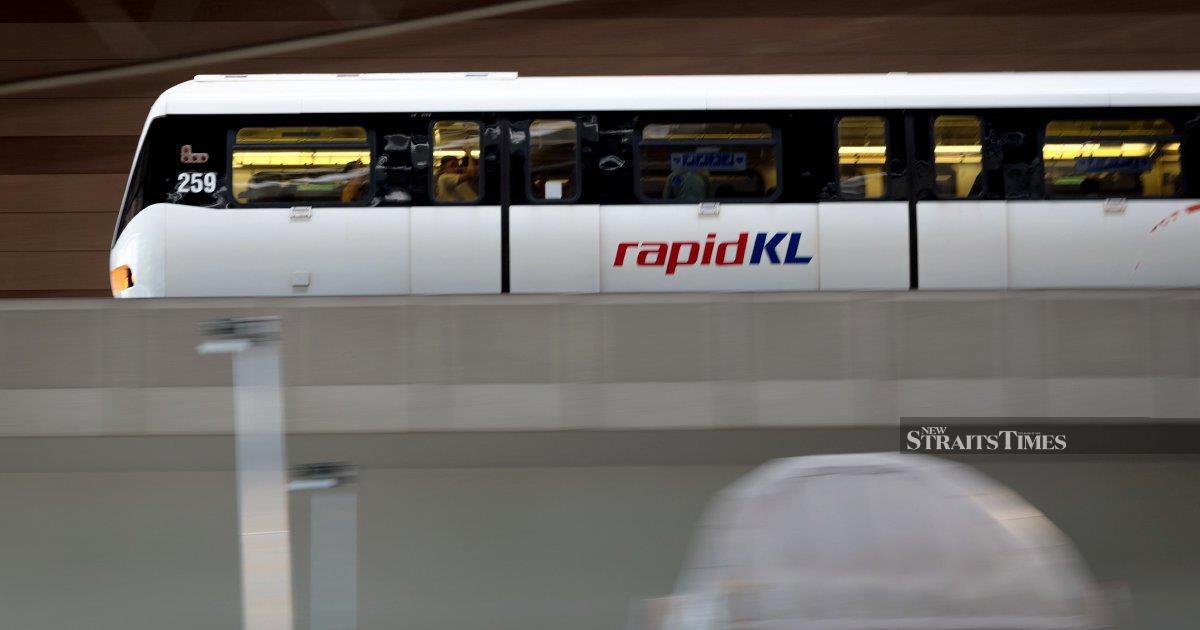
A man has been taken into custody following an incident involving unauthorized track access at Jalan Meru Station on Rapid KL's Shah Alam Line, which resulted in service interruptions during the early morning period. The arrest came after the individual was discovered on the railway line itself, prompting an immediate response from transport authorities and law enforcement personnel.
The trespassing incident at Jalan Meru Station, a key stop along the Shah Alam Line corridor, forced Rapid KL operators to temporarily suspend train movements on the affected section while the situation was brought under control. The disruption occurred during morning commute hours, affecting passengers relying on the service for their daily travel through the Klang Valley metropolitan area. The duration of the service suspension was kept to a minimum through swift intervention by responding teams.
Track intrusions remain a persistent safety concern for rail operators across Malaysia's public transport network. Such incidents pose considerable risks not only to unauthorized individuals who breach railway boundaries but also to operational efficiency and passenger safety. Rapid KL and other transit authorities have increasingly emphasized the dangers of trespassing on active railway lines, where high-speed trains operate with minimal clearance and reaction time.
The Shah Alam Line serves as one of Kuala Lumpur's critical transport arteries, connecting residential areas in the western suburbs with employment and commercial centres. The route handles substantial daily passenger volumes, making service continuity essential for economic activity and commuter convenience across the region. Disruptions, even brief ones, cascade through the broader transit network and often force commuters to seek alternative transport arrangements.
Motives for track trespassing incidents vary widely. Some individuals inadvertently cross railway boundaries while others deliberately venture onto tracks, sometimes due to mental health crises, substance influence, or attempts to access locations more quickly. Authorities have noted that educational campaigns about railway safety, combined with improved fencing and signage, help reduce unauthorized access, though enforcement remains necessary.
Rapid KL has implemented various security measures to prevent unauthorized track access, including perimeter fencing, surveillance systems, and staff training protocols. However, determined individuals occasionally manage to breach these barriers, necessitating rapid emergency response procedures to ensure passenger safety and minimize service impacts. The organization continues to review security protocols following each significant incident.
This latest incident underscores the importance of public awareness regarding railway safety protocols. Commuters and the general public are regularly advised to respect boundary markers and remain outside designated passenger zones. The consequences of track access violations extend beyond individual risk, affecting thousands of other passengers who depend on reliable transit services for their daily routines.
The arrest at Jalan Meru Station occurred within the broader context of ongoing transit security operations across Klang Valley rail networks. Rapid KL works continuously with law enforcement partners to investigate such incidents and implement preventive measures. Details regarding the individual's identity, specific charges, and motivations behind the trespassing remain under investigation by relevant authorities.
Service restoration following the incident proceeded according to standard safety protocols, with comprehensive track inspections and clearance procedures completed before trains resumed normal operations. Passengers experiencing delays or disruptions were advised of alternative routing options and were gradually reaccommodated as service capacity normalized. Rapid KL communications teams issued timely advisories through their official channels to keep the travelling public informed throughout the incident.
Incidents of this nature highlight the vulnerability of above-ground rail infrastructure to human interference. Unlike metro systems operating entirely underground, surface-level railway lines such as those on the Shah Alam Line remain accessible at multiple points, presenting ongoing operational challenges. Balancing public safety with operational accessibility remains a delicate consideration for urban rail planners and operators.
The case has renewed attention on enforcement of railway bylaws and penalties for unauthorized track access. Malaysian rail authorities maintain strict policies regarding trespassing, with penalties intended to deter future violations and protect both the public and operational integrity of transport networks. Coordinated responses involving transport police and municipal authorities have proven effective in managing such incidents.

