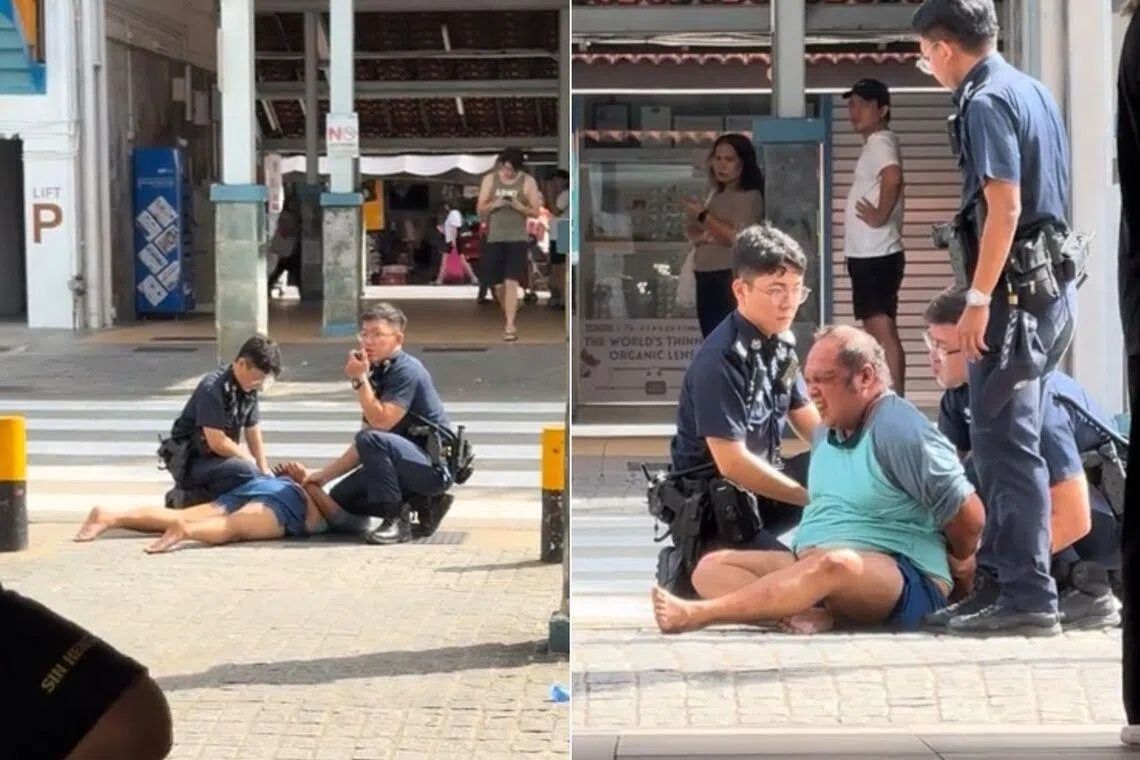
A 36-year-old man was taken into custody in Singapore's Toa Payoh district on Sunday, June 28, following an altercation with law enforcement that resulted in injuries to a police officer. The incident unfolded during the morning hours when authorities responded to reports of disruptive behaviour at a commercial establishment, prompting swift police intervention at the scene.
According to a police statement released to media outlets, officers received an emergency call at approximately 9.45am requesting assistance at Block 184 Toa Payoh Central, where a barefoot man was causing a disturbance inside a coffee shop located in the vicinity. The nature of the initial complaint suggested the situation required police attention to manage public order concerns in what appears to be a busy residential and commercial area.
The situation escalated significantly when the suspect resisted arrest. As officers moved to detain the man, he reportedly struck one of the attending policemen directly in the face with his fist. This act of violence against a law enforcement officer transformed a public disturbance call into a more serious criminal matter, triggering additional charges beyond the initial offence.
Social media content captured the incident's final stages, providing a public window into how the arrest unfolded. A TikTok user identified as Kee Wee Shang posted multiple video clips documenting the police response. In one sequence, two uniformed officers can be observed physically restraining the barefoot suspect on the ground as they work to control the situation. A subsequent clip from the same user reveals a third officer participating in the arrest procedure, with the suspect now visibly restrained in handcuffs and being escorted away from the location by the assembled police personnel.
The arrest resulted in formal charges reflecting the dual nature of the offence. Police have pursued criminal prosecution under two main counts: committing an obscene act in public and voluntarily causing hurt to a public servant with intent to deter that officer from performing their lawful duties. The second charge carries particular legal weight in Singapore, where assaults on police personnel are treated seriously as they constitute interference with official functions.
The 19-year-old police officer who bore the brunt of the assault sustained minor injuries during the altercation. Despite being physically harmed in the line of duty, the young officer was able to remain conscious and received medical attention at a hospital facility for examination and treatment. The fact that injuries were classified as minor suggests the officer's condition is not critical, though the incident highlights the occupational hazards that law enforcement personnel face during routine operations.
This incident reflects broader questions about public order maintenance and officer safety in urban environments. Singapore's police force regularly encounters situations where individuals experiencing behavioural crises or mental health challenges present risks to both the public and responding officers. The speed with which additional officers arrived at the scene demonstrates the police's rapid deployment protocols for managing potentially volatile situations, though it also underscores the challenges inherent in such responses.
The legal implications for the arrested individual are substantial. Singapore's penal framework imposes meaningful penalties for assaulting public servants, particularly police officers engaged in legitimate law enforcement activities. The combination of charges suggests prosecutors intend to pursue a comprehensive case addressing both the initial disturbance and the subsequent assault, likely resulting in conviction and sentencing if evidence supports the charges.
Investigations remain active as police gather further evidence and testimony from those present at the scene. The availability of eyewitness accounts and video documentation from the incident should facilitate the investigative process, providing corroborating evidence alongside statements from the attending officers. Authorities will likely examine whether any underlying factors contributed to the suspect's behaviour and the severity of his reaction to police intervention.
For Malaysian observers, this incident represents a reminder of operational realities faced by law enforcement agencies across the region when responding to public disturbances. The situation demonstrates how routine calls can escalate unexpectedly when individuals resist lawful police action, and underscore the importance of adequate officer training in de-escalation techniques alongside personal safety protocols. It also reflects the increasing role of mobile video documentation in contemporary policing, where public recording of police activities has become commonplace.
The incident serves as a case study in how urban public spaces can become flashpoints for conflict, particularly during morning hours when commercial establishments are actively serving customers. Coffee shops and similar gathering places represent spaces where tensions can emerge unpredictably, requiring police to maintain readiness for rapid response. The involvement of multiple officers suggests institutional protocols were followed appropriately in managing the situation and securing the suspect without causing unnecessary additional harm.

