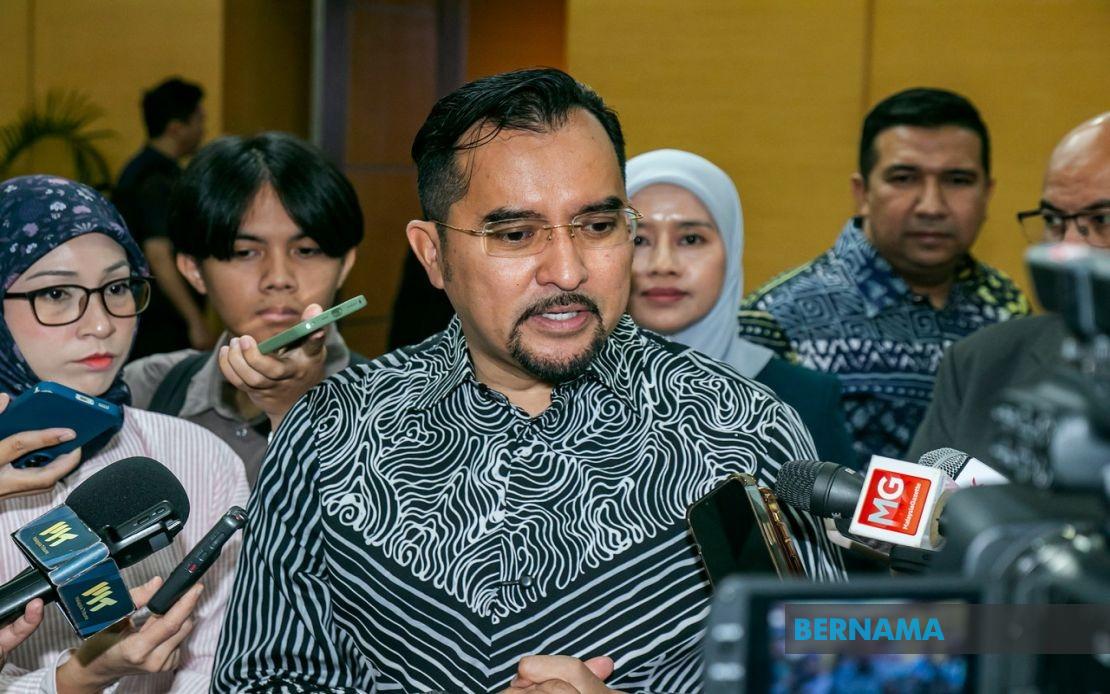
The federal government is preparing to overhaul the legislative framework governing Majlis Amanah Rakyat (MARA), with the proposed MARA Bill 2026 expected to reach Parliament in November. The initiative represents a comprehensive effort to modernise institutional safeguards at an agency responsible for advancing Bumiputera and Malay interests across Malaysia. MARA chairman Datuk Asyraf Wajdi Dusuki announced that the Bill has reached its concluding phase following Cabinet endorsement, signalling an imminent legislative push to restructure the organisation's governance architecture.
At the heart of the reform agenda lies a deliberate strategy to constrain executive authority within MARA. The proposed legislation substantially curtails the chairman's administrative scope, fundamentally departing from the expansive powers granted under the original MARA Act 1966. Rather than wielding direct control over day-to-day operations, the chairman's role would be redefined as a purely policy-setting and board-chairing function, with meaningful checks and balances embedded throughout the institutional structure. This recalibration reflects broader global shifts toward corporate governance that emphasise separation of powers and institutional accountability.
Datuk Asyraf Wajdi emphasised that governance considerations dominate the Bill's architecture, with roughly four-fifths of its substantive provisions dedicated to implementing international best practices and rigorous corporate standards. The reforms deliberately restrict opportunities for power concentration, thereby creating structural barriers against potential abuse. He characterised his stewardship as a custodian mandate, noting his temporary tenure while working to establish institutional foundations capable of withstanding future leadership transitions. This framing suggests recognition within MARA's senior management that durable institutional strength requires embedding safeguards beyond any single officeholder's tenure.
The need for legislative modernisation reflects the substantial gap between MARA's existing statutory framework and contemporary governance expectations. When Parliament enacted the original MARA legislation in 1966, institutional design reflected mid-twentieth-century administrative norms that have since become obsolete. The intervening decades witnessed fundamental shifts in public sector accountability standards, transparency requirements, and risk management frameworks. Datuk Asyraf Wajdi acknowledged this temporal disconnect, arguing that organisational governance must continuously evolve to address emerging challenges and incorporate lessons from evolving best practices.
Former governance challenges at MARA appear to have catalysed this legislative initiative. The Bill explicitly addresses a litany of institutional vulnerabilities including irregular asset deployment, financial irregularities, resource wastage, and systematic misconduct. By embedding preventive mechanisms directly within the statutory framework rather than relying on administrative guidelines, the government aims to create structural impediments against recurrence of such problems. This approach reflects a recognition that voluntary compliance measures prove insufficient without legal reinforcement.
For Malaysian stakeholders monitoring institutional reform, the MARA Bill 2026 exemplifies broader bureaucratic modernisation efforts underway across the federal administration. The emphasis on constraining executive prerogative aligns with regional and international governance movements prioritising institutional checks and transparency mechanisms. Within Southeast Asia, competing governance models continue generating debate about optimal structures for state-linked enterprises and Bumiputera-focused agencies. Malaysia's approach through statutory constraint of chairman powers offers a distinctly structural solution to corruption and mismanagement risks.
The implications for MARA's operational trajectory merit careful observation. Reduced chairman authority could enhance collective decision-making through the Board of Directors, potentially improving deliberation quality while complicating rapid response capabilities. The balance between distributed authority and organisational agility will determine whether governance improvements yield corresponding efficiency gains. Malaysian policymakers designing similar reforms across other federal agencies may reference the MARA experience when calibrating chairman and board authority distributions.
Parliamentary consideration of the Bill this November will subject the proposals to legislative scrutiny, potentially generating debate about optimal governance structures for Bumiputera-advancement institutions. Opposition legislators and governance advocates may propose amendments addressing specific areas, while government backbenchers may advance concerns about operational flexibility. The parliamentary process itself will provide valuable public insight into the government's legislative priorities regarding institutional accountability and executive constraint.
The timing of the proposed legislation merits consideration within Malaysia's broader political economy. As Datuk Asyraf Wajdi explicitly disavowed personal ambition regarding the reforms, emphasising institutional rather than individual interests, the initiative appears positioned as a structural legacy designed to transcend particular personalities. This depersonalisation of governance reform suggests recognition within MARA leadership that sustainable institutional credibility requires moving beyond individual stewardship models toward genuinely distributed authority systems.

