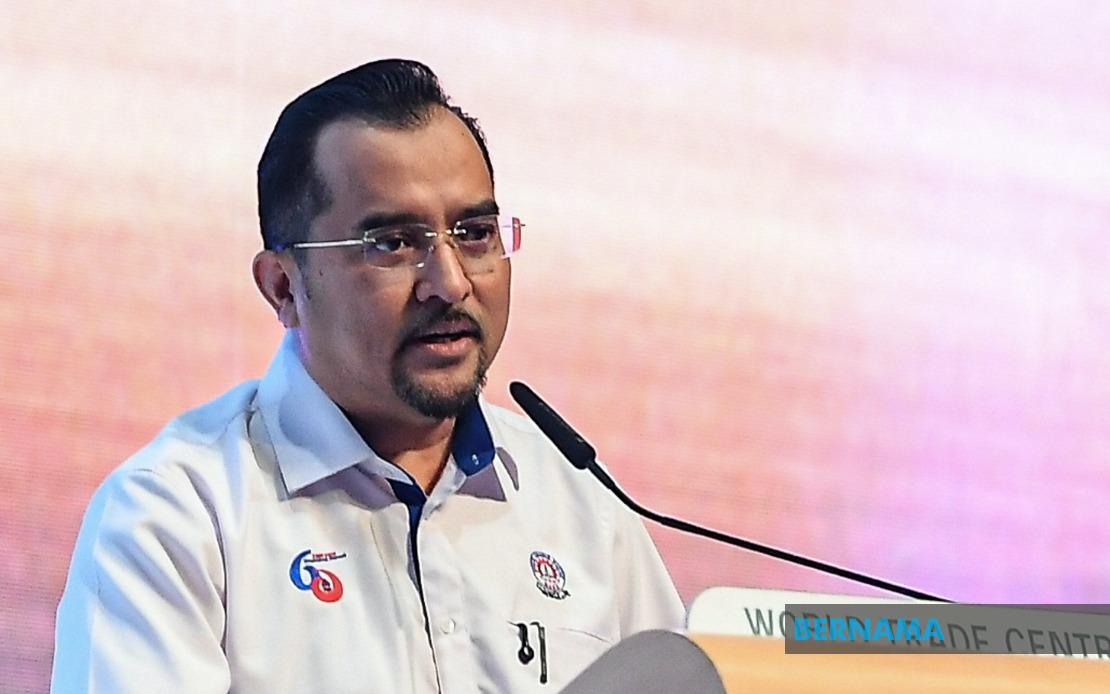
MARA Chairman Datuk Asyraf Wajdi Dusuki has declared that six MARA Junior Science College (MRSM) students in Johor will be expelled if investigations confirm they bullied a fellow pupil, signalling an uncompromising stance on student misconduct within Malaysia's premier residential college network. The declaration came hours after police arrested the Form Five students for their alleged involvement in the incident, which has sparked fresh concerns about safety and discipline in Malaysia's high-achieving secondary institutions.
Datuk Asyraf instructed MARA's Secondary Education Division and the affected MRSM's management to immediately convene the College Disciplinary Committee, with proceedings to commence within 24 hours. This swift mobilization underscores the gravity with which the organisation is treating the allegations and reflects mounting public pressure on educational authorities to act decisively when student welfare is compromised. The urgency of the directive also suggests that MARA recognizes the reputational implications of failing to respond swiftly to what appears to be a serious breach of institutional values.
The bullying incident came into public view only after the victim's parents took to social media to document their 14-year-old son's ordeal. According to their account, the boy had requested to withdraw from MRSM because the psychological toll of sustained bullying had become unbearable. This detail is significant because it reveals how institutional hierarchies and power dynamics within boarding schools can silence victims, forcing young people to contemplate abandoning their education rather than endure mistreatment. The parents' decision to air the matter publicly rather than work through conventional channels suggests possible frustration with the institution's initial response or perceived inadequacy of existing grievance mechanisms.
Following the parents' social media disclosure, the victim's family lodged a formal police report, transforming what might have remained an internal disciplinary matter into a criminal investigation. The six arrested students remain in two-day police custody assisting investigators, a procedural step that signals the authorities are treating the allegations seriously enough to explore potential criminal charges beyond administrative discipline. This dual-track approach—simultaneous police investigation and internal institutional proceedings—is increasingly common in Malaysian education circles, reflecting broader societal expectations that serious misconduct should face both institutional and legal accountability.
Datuk Asyraf's public statement employed forceful language to communicate MARA's unequivocal position. He articulated his personal disappointment and regret, framing the incident as a betrayal of institutional trust. Crucially, he rejected any rationalization of bullying as corrective discipline of junior students, a cultural practice that has historically persisted in Malaysian boarding schools under euphemisms like "mentoring" or "character building." By categorically refusing to accept such justifications, the MARA Chairman is attempting to reshape institutional culture and establish clearer boundaries around acceptable conduct between senior and junior students.
The "YOU TOUCH, YOU GO" slogan that Datuk Asyraf repeatedly invoked represents a deliberate attempt to embed a deterrent message into the MRSM community. This phrasing is direct and unambiguous, leaving no room for interpretation or negotiation. By vowing that expulsion is non-negotiable for bullies regardless of academic standing or family connections, he is signalling that meritocratic achievement within the classroom does not immunize students from consequences for predatory behaviour. Such messaging is particularly important in Malaysia's elite boarding school ecosystem, where high-performing institutions sometimes inadvertently enable misconduct by high-achieving students.
Datuk Asyraf also extended his warnings to potential facilitators and concealers of bullying, cautioning that MARA will pursue appropriate action against anyone attempting to shield perpetrators. This dimension of his statement recognizes that institutional bullying frequently persists because witnesses, junior staff, or sympathetic peers remain silent or actively obstruct investigations. By extending accountability beyond the primary perpetrators, he is attempting to establish a culture of transparency and moral responsibility across the institution. The implicit threat of institutional action against complicit adults or peers represents a more sophisticated approach to culture change than focusing solely on the identified bullies.
The incident also reflects broader patterns of adolescent violence within Malaysian boarding schools that periodically surface in public discourse. While MRSM institutions are generally regarded as academically rigorous and well-managed compared to many public schools, they are not immune to the social pathologies that afflict all-male or gender-segregated residential environments. The stress of academic competition, hormonal turbulence among teenagers, and hierarchical peer structures can combine to create conditions where bullying flourishes unless institutional cultures actively prevent it. The present case suggests that despite MARA's apparent commitment to discipline, preventive mechanisms may require strengthening.
The victim's parents' recourse to social media rather than internal channels raises questions about the adequacy of existing reporting mechanisms within MRSM institutions. Most Malaysian residential colleges maintain formal complaint procedures involving wardens, discipline teachers, and school counsellors, yet this family apparently felt compelled to bypass these structures entirely. This gap between formal procedures and actual parent confidence suggests that MARA may need to review not only how it investigates bullying allegations but also how accessible and credible its reporting channels appear to families. Datuk Asyraf's appeal for students to report incidents to teachers and wardens will ring hollow unless victims and parents perceive these channels as genuinely protective rather than institutionally defensive.
The expulsion threat, if implemented, will carry significant symbolic weight within Malaysia's educational ecosystem. MRSM placement is highly competitive, with admission determined by rigorous entrance examinations and selection processes. For a student to gain a place, only to lose it through disciplinary action, represents a severe consequence with long-term implications for university admissions and career prospects. The severity of this potential punishment indicates that MARA is attempting to recalibrate the cost-benefit calculation that potential bullies might unconsciously make. However, it also raises rehabilitation questions: expulsion addresses the immediate problem but does nothing to address the underlying behavioral or psychological issues that motivated the bullying behaviour.
For Malaysian parents of MRSM students, this incident and the institutional response will influence confidence in these institutions' ability to maintain safe environments. The story has already circulated widely on social media, reaching audiences far beyond Johor. Other parents will likely scrutinize MARA's follow-through on its expulsion threat and observe whether the promised 24-hour disciplinary meeting actually occurs and concludes with definitive action. The transparency of the investigation process, the credibility of its findings, and the visibility of any expulsion decisions will collectively determine whether this moment becomes a turning point for institutional accountability or merely another incident that eventually fades from public memory.
Datuk Asyraf's strong response also reflects evolving societal expectations around student welfare and institutional duty of care. A generation ago, boarding school bullying was often regarded as an inevitable rite of passage, something students endured silently. Today, parents increasingly expect institutions to actively prevent and swiftly punish such conduct rather than tolerate it as unavoidable. The MARA Chairman's statement aligns with this contemporary understanding, positioning bullying prevention not as peripheral to educational mission but as central to institutional legitimacy. Whether this rhetorical commitment translates into systemic changes—including enhanced counselling services, improved monitoring systems, and genuinely accessible complaint procedures—will determine whether MRSM can actually realize the zero-tolerance culture that Datuk Asyraf has promised.

