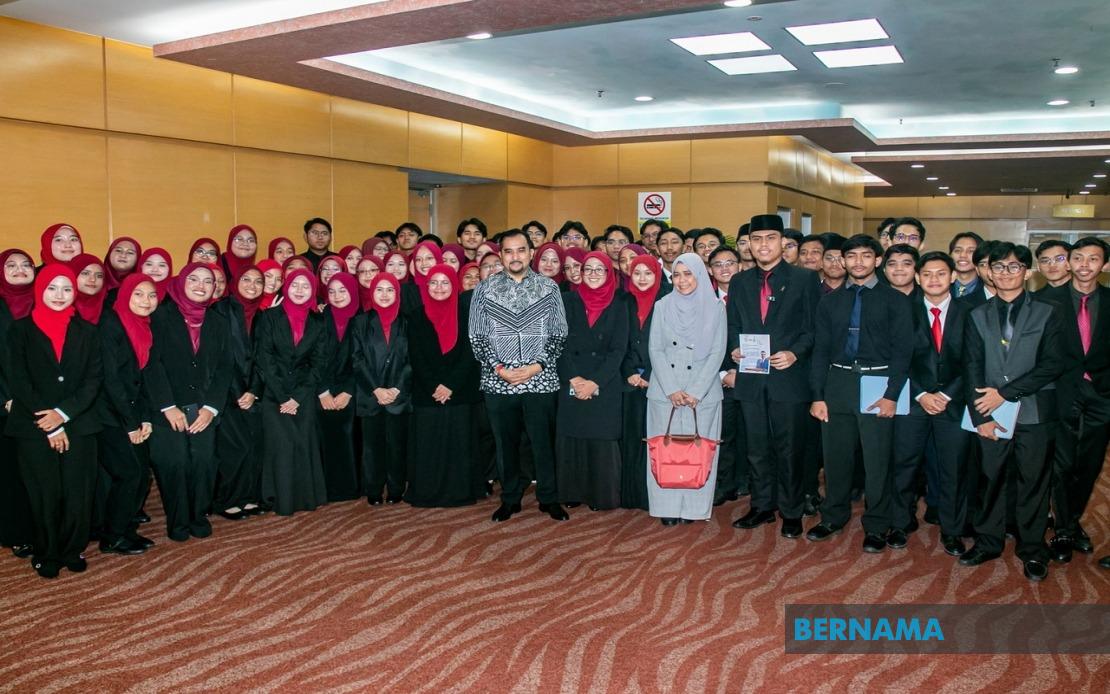
Malaysia's flagship scholarship agency, Majlis Amanah Rakyat (MARA), has officially resumed its long-dormant medical training programme at Egypt's prestigious Al-Azhar University, marking a significant expansion of overseas educational opportunities for bumiputera students. The programme, which lay dormant since 2019, will see an initial cohort of 78 medical students commence their studies this year, representing the first substantive intake in nearly a decade. The resumption comes after the Cabinet granted formal approval to the initiative, signalling renewed government commitment to diversifying pathways for qualified Malaysian students seeking medical qualifications abroad.
According to MARA chairman Datuk Dr Asyraf Wajdi Dusuki, the financial architecture underpinning the scheme makes it an attractive alternative to local medical training. The total investment per student, encompassing tuition and residential costs across the five-year medical degree, is estimated at RM350,000. This represents a substantial reduction from the typical cost of pursuing medicine within Malaysia, where private and public institutions often charge between RM700,000 and RM800,000 per graduate. The favourable pricing reflects a negotiated 50 per cent discount that Al-Azhar University extended to MARA, a concession that underscores the longstanding institutional relationship between Malaysia and one of the Islamic world's most respected centres of learning.
The strategic decision to resurrect the Al-Azhar pathway addresses multiple policy objectives simultaneously. By channelling medical students to an internationally recognised institution at significantly reduced cost, MARA maximises the return on public investment in human capital development. Al-Azhar's credentials as a world-class medical institution, coupled with its Islamic educational ethos, appeals to Malaysian policymakers seeking to blend contemporary medical excellence with values-based education. The move also reflects a calculated diversification away from traditional Anglo-American medical schools, reducing Malaysia's dependency on costly overseas placements in premium jurisdictions whilst maintaining academic rigour.
Datuk Seri Anwar Ibrahim's administration has positioned itself as supportive of expanding educational opportunities for deserving Malaysians, and the Prime Minister's personal endorsement of this initial cohort underscores the political importance attached to scholarship programmes. MARA's announcement explicitly referenced the Premier's approval, reflecting the agency's awareness that such high-visibility initiatives require visible executive backing. For Anwar's government, backing MARA's renewed commitment to overseas scholarships aligns with broader messaging around meritocratic advancement and youth opportunity, particularly within bumiputera communities who form the bulk of MARA's beneficiaries.
Beyond the Al-Azhar resumption, MARA is mobilising a substantially larger overseas scholarship cohort this year. The agency is orchestrating the departure of 600 sponsored students bound for multiple destinations, representing a coordinated wave of educational mobility spanning several continents. These students originate from MARA's three premier preparatory colleges—Kolej MARA Seremban in Negeri Sembilan, Kolej MARA Banting in Selangor, and Kolej MARA Kuala Nerang in Kedah—institutions that function as rigorous feeder systems identifying and preparing high-potential students for undergraduate placement globally. The geographic diversity of placements, encompassing New Zealand, Canada, Australia, South Korea, the United Kingdom, and Egypt, reflects MARA's deliberate strategy to build networks across multiple educational systems and geographies.
The agency's performance metrics within elite academic institutions validate the effectiveness of its selection and preparation mechanisms. Notably, 11 MARA-sponsored students have secured places at Imperial College London for the current academic year, continuing a track record of placement success at world-leading institutions. More broadly, 40 MARA beneficiaries have gained admission to universities ranked within the global top 10, whilst 107 have been accepted to top-20 ranked institutions. These figures, whilst representing a modest proportion of the overall cohort, demonstrate MARA's capacity to identify and nurture students capable of competing successfully at the highest levels of international academia, a distinction that justifies continued investment in overseas scholarship provision.
The Al-Azhar programme's resurrection carries particular significance for Southeast Asian context. Egypt's position as a regional Islamic knowledge hub, combined with its geographic proximity to the Middle East and Africa, positions Al-Azhar as a natural institutional partner for Malaysia's aspirations to deepen ties within the broader Muslim world. Malaysian medical graduates trained at Al-Azhar may subsequently serve in various Islamic contexts, facilitating knowledge exchange and professional networks across the umma. The programme also reflects Malaysia's subtle reorientation towards strengthening South-South educational cooperation, moving beyond traditional reliance on Western institutions.
Financial efficiency underpins the programme's sustainability prospects. The RM350,000-per-student investment becomes particularly compelling when positioned against Malaysia's broader tertiary education expenditure. For MARA, which operates under fiscal constraints typical of government agencies, the Al-Azhar discount essentially doubles the purchasing power of each scholarship allocation. This efficiency gain permits the agency to sponsor additional students without proportional budget increases, effectively expanding access to medical training within existing resource constraints. The calculus incentivises MARA to actively explore similar partnerships with other international institutions capable of offering quality education at discounted rates.
The seven-year hiatus raises implicit questions about the programme's discontinuation in 2019. The timing coincided with Malaysia's political transition and potential shifts in government priorities regarding overseas scholarship allocations. The resumption under the current administration signals a deliberate restoration of interrupted initiatives, possibly reflecting the Anwar government's reassessment of overseas educational partnerships. This trajectory—interruption followed by purposeful resumption—suggests that MARA scholarship policy responds significantly to political-administrative shifts, indicating that such programmes remain sensitive instruments of government educational and social policy rather than purely bureaucratic mechanisms.
For Malaysian students aspiring to medical careers, the Al-Azhar pathway now represents a viable alternative to the conventional routes through Commonwealth nations or American institutions. The five-year programme structure aligns broadly with global medical education standards, ensuring that graduates trained at Al-Azhar will be eligible for professional registration and practice in Malaysia and many other jurisdictions. The cost advantage relative to local medical education makes the programme particularly attractive to qualified bumiputera students from middle and lower-income backgrounds who might otherwise lack access to medical training. The geographic and cultural dimension—studying in Egypt, a majority-Muslim nation with deep civilisational significance to Malaysian Muslims—adds a formative element beyond purely technical medical instruction.
Looking forward, MARA's expansion of the Al-Azhar programme may catalyse broader sectoral interest in developing similar institutional partnerships. Other Malaysian scholarship agencies and educational bodies may view the Al-Azhar model as a template worthy of replication, seeking comparable discount arrangements with other international universities. Such multiplication of cost-effective overseas partnerships would substantially increase Malaysia's capacity to send students abroad without proportional budgetary escalation. The precedent established by MARA's negotiated arrangement with Al-Azhar demonstrates that prestigious institutions are willing to offer attractive terms for established partnerships with credible Malaysian scholarship bodies, potentially unlocking additional opportunities across multiple academic disciplines and destination countries.

