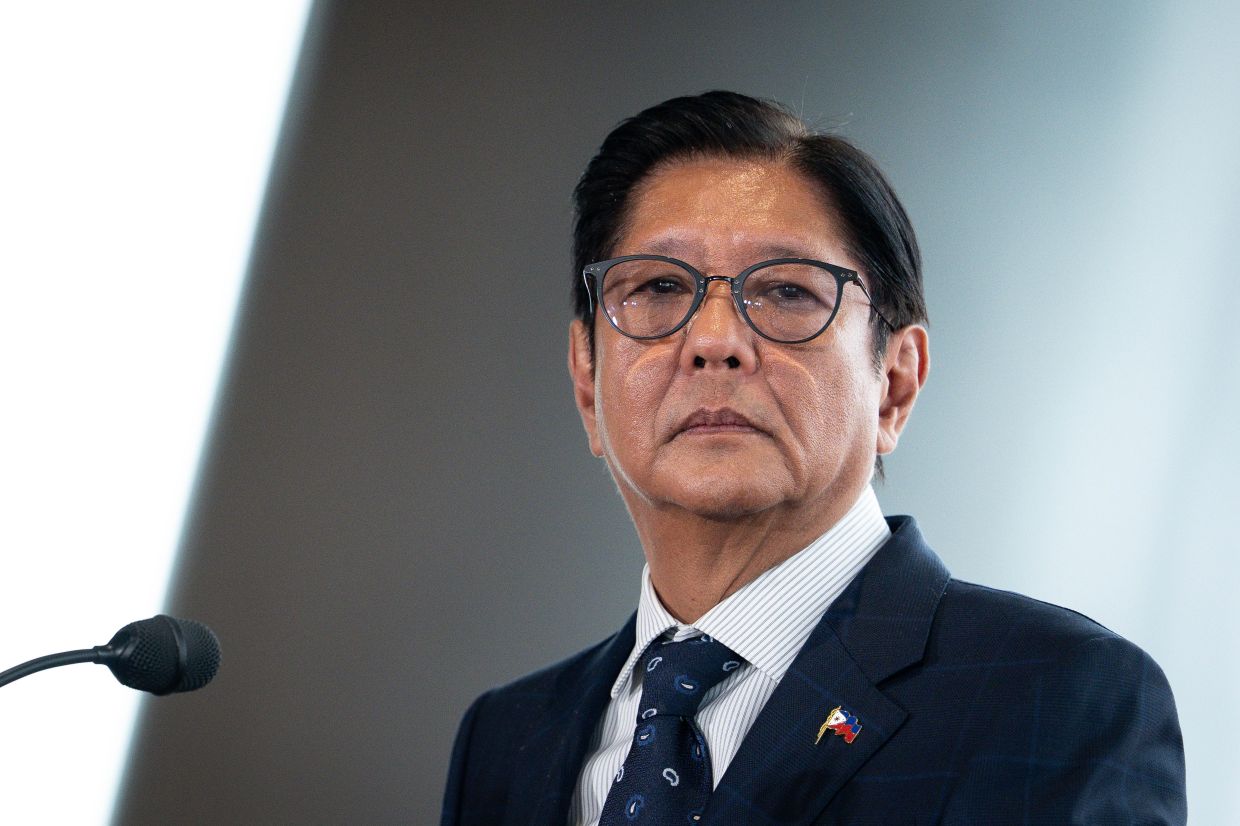
Philippine President Ferdinand Marcos Jr faces a defining moment as he prepares to address Congress on Monday, tasked with reversing the fortunes of a presidency that has been buffeted by revelations of systemic corruption, economic contraction, and fractured political alliances. The timing of his address coincides with an unusually delicate domestic situation: public trust in the administration has eroded to historic lows, economic growth forecasts have been slashed, and the credibility of his anti-corruption platform—a cornerstone of his election campaign—has been severely undermined by a year of perceived inaction on a massive graft scandal.
Twelve months earlier, Marcos stunned the nation by unveiling during his previous State of the Nation address the existence of billions of dollars in corruption tied to flood-control infrastructure schemes. Rather than bolstering confidence in his administration's commitment to clean governance, the disclosure triggered the opposite effect: economic activity decelerated as confidence evaporated, corporations postponed investment decisions, and households trimmed discretionary spending in response to uncertainty. The paradox facing Marcos is that his own transparency appears to have accelerated the economic deterioration he now seeks to reverse, creating an uncomfortable narrative that challenges his positioning as a graft-fighting reformer.
Analysts observing the political landscape note that Marcos inherits a presidency weakened not merely by external economic shocks but by internal contradictions. Hansley Juliano, a political science instructor at the Ateneo de Manila University, underscores the core challenge: the president has articulated the problem but failed to deliver the decisive action the public demands. Without concrete evidence of prosecutions, asset recoveries, or structural reforms to prevent future corruption, Marcos risks becoming defined by the very scandals he exposed rather than celebrated for his transparency. The gap between diagnosis and cure has become a liability.
Complexifying his position further is a fractured ruling coalition and a vice president actively working against him. Vice President Sara Duterte, currently defending herself against Senate charges including allegations of graft and threats against the president, could emerge as a political rival in the 2028 elections if acquitted—a scenario that would fundamentally reshape the political calculus heading into the final two years of Marcos's term. Rodel Taton, dean of the San Sebastian College-Recoletos Graduate School of Law, observes that internal fractures within the administration have weakened the governing coalition's coherence, with even Marcos's sister Senator Imee Marcos frequently distancing herself from presidential policies. This erosion of party discipline signals deeper problems in consensus-building at the highest levels.
The economic dimension of Marcos's challenge is substantial and measurable. Growth forecasts for 2026 have been slashed from as much as 6 percent to a range of 3.5 to 4.5 percent, a downgrade that reflects both the Middle East conflict's impact on energy costs and broader investor hesitancy stemming from governance concerns. The Philippines sources over 90 percent of its oil from the Middle East, making external energy price shocks particularly consequential. Compounding this vulnerability is the nation's underperformance relative to regional peers: in the first quarter of 2026, Philippine gross domestic product expanded by just 2.8 percent, trailing both Malaysia and Singapore and representing a sharp deceleration from the 5.5 percent expansion recorded in the quarter immediately following last year's State of the Nation address. The benchmark stock index has declined 1.5 percent since that speech, while the peso has weakened nearly 8 percent against the dollar, signalling deep investor wariness.
For multinational investors and capital allocators, the Philippines presents a troubling risk profile. The nation captured less than 5 percent of regional foreign direct investment flows to Southeast Asia in the preceding year, a figure that reflects systemic concerns about governance, project execution capacity, and political stability. Radhika Rao, senior economist at DBS Bank in Singapore, emphasizes that the Philippines requires not merely a pivot toward growth-oriented policies but credible demonstrations of improved project delivery and governance standards. Without such proof points, the nation risks remaining marginalized in regional competition for investment dollars even as neighbours from Vietnam to Indonesia actively court manufacturing relocations and supply chain integration.
Concrete grievances at the grassroots level illustrate the human cost of delayed accountability and stalled infrastructure. In Calumpit, roughly fifty kilometres from Manila, a broken dike remains unrepaired, and flood-control sheet piling has scarcely begun. Local official Sergio Miranda's observation—that residents' bodies may become immune to floodwaters before the project concludes—encapsulates the mixture of frustration and dark humour pervading communities most vulnerable to typhoons. These populations expected that exposing graft would accelerate remedial action; instead, they perceive project delays and bureaucratic paralysis. Such sentiments fuel the broader narrative that Marcos has diagnosed the problem without solving it.
The Management Association of the Philippines articulates the tension facing policymakers: the nation cannot simultaneously prioritize anti-corruption enforcement at the cost of economic dynamism. Business leaders recognize that corruption must be combated decisively, yet they worry that excessive focus on prosecutions and accountability mechanisms risks becoming a drag on investment climate perceptions and growth momentum. This tension mirrors dilemmas faced across Southeast Asia, where governance reform and economic performance exist in uneasy relationship. The business community's plea is for concrete action against identifiable wrongdoers—including a senator and former public works secretary implicated in the schemes—coupled with demonstrable progress on economic stabilization and investment attraction.
On the question of inflation and living standards, the administration's record has disappointed. Efforts to cushion consumers from external shocks have yielded limited results, and public purchasing power continues to deteriorate. April Lynn Tan, chief equity strategist at COL Financial Group Inc., identifies the metrics investors require: clarity on oil price mitigation strategies, credible plans for permanent inflation control, and evidence of renewed foreign investment attraction. Without such signals, capital will continue flowing toward more stable and transparent jurisdictions within the region.
The logistical and political backdrop to Monday's address adds layers of complexity. The event coincides with the anniversary of the founding of Iglesia ni Cristo, the influential religious organization whose recent anti-Marcos protests disrupted the capital and whose membership numbers in the hundreds of thousands. The church's headquarters lies mere kilometres from Congress, and the government has deployed over 21,000 police personnel to manage potential unrest. Simultaneously, marginalized groups represented by organizations such as Sanlakas plan counterprotests, with their representatives arguing that the Marcos administration's policies have deepened rather than alleviated poverty among workers, farmers, and the most vulnerable sectors.
The president's challenge, therefore, transcends economics and extends into the realm of political legitimacy and public faith. Marcos possesses the formal authority to govern for two additional years, yet his ability to command consensus and implement reforms has visibly contracted. His address must navigate between claims of invisible progress and demands for visible action, between celebration of stabilization efforts and acknowledgment of continued hardship, between technical economic remedies and the political imperative to restore public confidence. Failure to strike this balance risks rendering his final years as president a caretaker interlude rather than a period of consequential reform, leaving his legacy defined by the scandals he exposed but could not adequately address.

