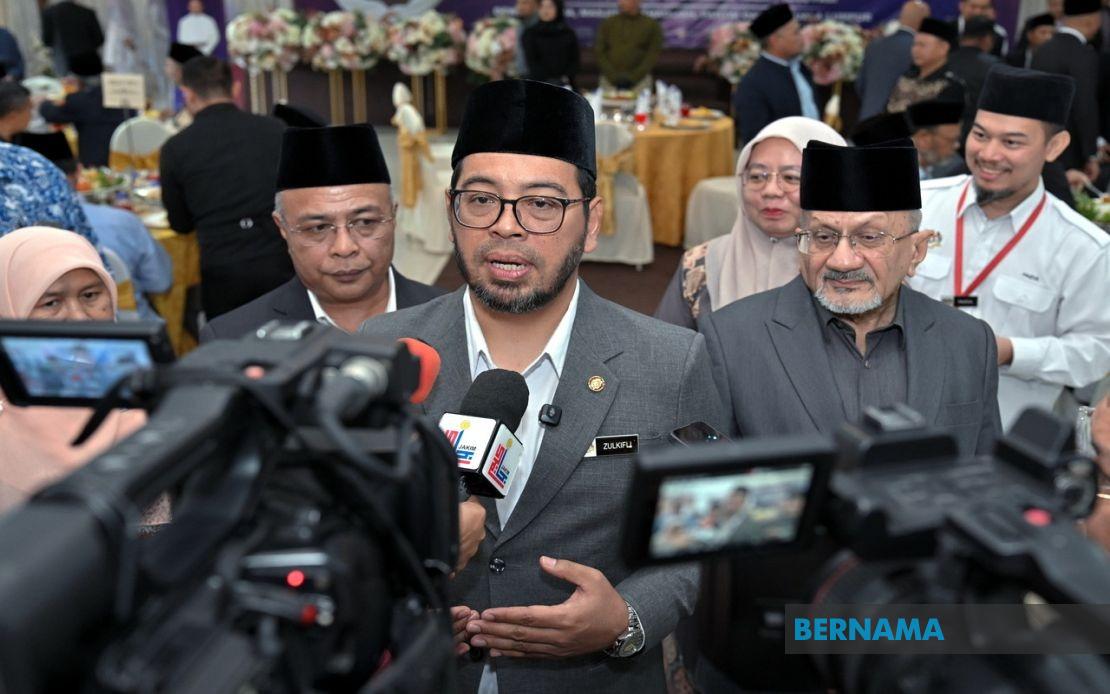
The Malaysian government is moving forward with the construction of Masjid Warisan in front of the Tun Razak Exchange (TRX) tower, according to Minister in the Prime Minister's Department (Religious Affairs) Dr Zulkifli Hasan, who announced the decision in Kuala Lumpur this week. The statement comes after several months of speculation regarding the mosque's future, with the minister emphasising that the project represents a long-established commitment to enhance the country's religious and social infrastructure.
Dr Zulkifli described the mosque development as an integral part of a broader vision to strengthen the role of mosques throughout Malaysia as anchors of community cohesion and spiritual wellbeing. The project has been under government consideration for an extended period, and officials now view its implementation as a natural progression in urban planning and religious facility provision within the federal territories. The minister's confirmation signals that planning and coordination efforts among relevant agencies have reached a stage where construction can move forward without further delays.
Concerns raised by certain quarters about the mosque's location and potential social impact prompted the minister to address scepticism directly. Rather than dismissing these concerns outright, Dr Zulkifli encouraged those with questions to contact the Federal Territories Islamic Religious Council (MAIWP) for detailed clarifications regarding the project's scope, design, and community benefits. This approach suggests that the government intends to engage with the public through official channels rather than through media exchanges, positioning transparency as central to the project's legitimacy.
The minister drew parallels with major cities worldwide, observing that mosques have long coexisted peacefully alongside other urban developments and commercial landmarks. He noted that the call to prayer serves as a source of spiritual tranquillity for practitioners rather than a source of disruption, challenging assumptions that religious facilities and modern high-rise developments cannot function harmoniously in the same vicinity. This perspective reflects an attempt to normalise the presence of religious architecture within contemporary metropolitan contexts, particularly in areas marked by significant commercial investment like the TRX.
The timing of the minister's announcement coincides with his official duties in appointing committee members for Federal Territories mosques and Friday prayer surau for the 2026-2029 term. During a ceremony at Masjid Al-Khadijah in Kampung Pantai Dalam, Dr Zulkifli presented appointment letters to selected candidates, underscoring the government's commitment to strengthening mosque governance and institutional capacity across the federal territories. This simultaneous focus on both a major capital project and day-to-day mosque administration indicates a holistic approach to religious affairs management.
The selection process for the 2026-2029 committee membership was rigorous, with 3,010 nominations submitted across 91 mosques and 124 Friday prayer surau operating in the federal territories. From this substantial pool of candidates, 2,914 individuals were ultimately selected following an integrity vetting process that involved multiple government agencies, including the Royal Malaysia Police, the Malaysian Anti-Corruption Commission, and the Insolvency Department. This multi-agency screening suggests that the government prioritises transparency and accountability in mosque management, seeking to exclude individuals with questionable backgrounds from positions of religious authority and trust.
For Malaysian Muslims and the broader public, the Masjid Warisan project carries symbolic and practical significance. The location in front of TRX places the mosque at one of Malaysia's most prominent commercial and financial hubs, demonstrating that Islam remains central to national identity even as the country pursues ambitious modernisation projects. The mosque will serve not only the many workers and visitors to TRX but also residents of surrounding communities, potentially becoming a landmark destination for Friday prayers and religious gatherings.
From a Southeast Asian perspective, Malaysia's approach to integrating religious infrastructure within modern urban landscapes offers an instructive model. As other nations in the region grapple with questions about accommodating religious expression in increasingly secular or commercially-oriented public spaces, the Masjid Warisan demonstrates confidence in allowing diverse faith expressions to thrive alongside economic development. The government's willingness to engage with public concerns rather than simply imposing decisions suggests an evolving approach to stakeholder management in religious affairs.
The controversy surrounding the project, while not fully detailed in official statements, hints at broader societal tensions regarding religious symbolism, urban planning, and community identity in Kuala Lumpur. Some observers may view a prominent mosque near a major financial centre as affirming Islam's place in Malaysian economic life, whilst others might harbour concerns about noise, traffic, or changing neighbourhood character. By directing critics toward MAIWP rather than engaging in protracted public debates, the government has chosen institutional channels over media discourse, possibly hoping to defuse tensions through personal dialogue and information provision.
Looking ahead, the construction phase of Masjid Warisan will likely attract media attention and public interest given its high-profile location and the preceding controversy. The project's eventual completion and operation could serve as a test case for how well religious and commercial functions coexist in Malaysia's most visible urban space. Success would validate the government's approach and might encourage similar projects elsewhere, whilst any perceived difficulties could fuel ongoing debates about urban development and religious accommodation in multicultural Malaysia.

