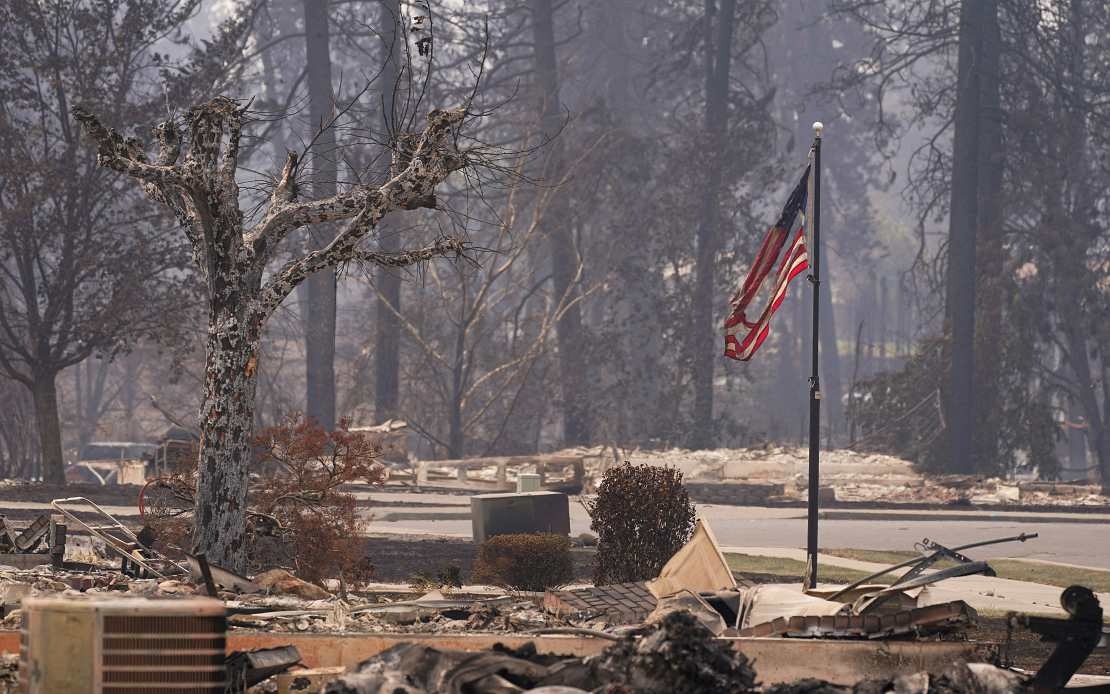
The Pacific Northwest is gripped by a devastating wildfire crisis that has forced the evacuation of more than 65,000 residents from their homes across Washington state. The American Red Cross confirmed the massive displacement on Monday, underscoring the scale of a catastrophe that has upended daily life for tens of thousands of families. Initial damage assessments reveal that the flames have already claimed more than 700 homes, with the heaviest concentration of destruction centred in Spokane County, a region that has become ground zero for the emergency response.
Law enforcement has made significant progress in identifying suspected causes for at least one of the major blazes. Spokane County Sheriff John Nowels announced that authorities have arrested a 37-year-old man identified as Aaron F. Farinacci on a first-degree arson charge. The arrest occurred on Monday afternoon local time, and the suspect is being held on a $1 million bond. Investigators have linked Farinacci to the Old Trails Fire, one of several blazes currently consuming the landscape across the region, suggesting that deliberate human action may have contributed to the humanitarian crisis now unfolding across multiple counties.
The situation remains fluid and dangerous despite some tactical progress by emergency responders. The Spokane Complex Fire Incident Management Team reported that improving weather conditions in recent days have provided crews with a narrow window to advance their defensive positions along the fire lines. However, data from InciWeb, an interagency fire tracking system, reveals the scale of the challenge ahead. Fires burning near Spokane and Stevens counties have torched 8,026 acres since Saturday, equivalent to more than 3,248 hectares of charred land. Despite days of intensive firefighting efforts involving hundreds of personnel, these particular fires remain completely uncontained, meaning they could expand explosively if weather conditions deteriorate.
Other active fires across Washington present even more alarming scenarios for state officials and residents. The Sinlahekin fire, which ignited after being triggered by lightning on July 26, has already expanded to consume 85,000 acres across 34,398 hectares of forest and grassland. More than 820 firefighters and support personnel are actively engaged in battling this massive blaze, yet it too remains at zero percent containment. The geographical scale of these fires is staggering—to put this in perspective for Southeast Asian readers, the Sinlahekin fire alone has destroyed an area larger than Singapore. Meanwhile, the Little Giant Fire, located northwest of Leavenworth in the Okanogan-Wenatchee National Forest, has burned through 51,298 acres, comprising nearly 20,759 hectares of protected forestland that will require years to recover.
Governor Bob Ferguson of Washington has taken personal charge of coordinating the disaster response and providing regular updates to anxious residents and the national media. The governor reported that emergency management officials have successfully accounted for nearly everyone who contacted authorities seeking assistance during the evacuation. However, a small but significant concern remains: officials are still attempting to reach 14 people through phone and other communications to verify their safety. Ferguson was careful to note that these individuals are not classified as missing persons, but rather as individuals whom authorities simply wish to confirm are unharmed and have found secure shelter away from the fire zones. This distinction is important, as it reflects the controlled nature of the evacuation process despite the chaos of the situation.
The absence of confirmed fatalities at this stage represents a silver lining in what is otherwise a catastrophic situation for tens of thousands of Washington residents. The successful evacuation of such a large population—65,000 people represents a significant portion of the regional population—demonstrates the effectiveness of emergency management systems when local officials provide timely warnings and residents comply with evacuation orders. However, the psychological and economic toll on evacuated families remains immense. Most have lost their homes or face the threat of destruction, and many are uncertain when they will be permitted to return to their communities to assess damage and begin the lengthy process of rebuilding their lives.
For Malaysian and Southeast Asian observers, this disaster highlights several critical vulnerabilities that resonates with the region's own wildfire challenges, particularly those that occur during dry seasons across Indonesia and Malaysia. The rapid spread of uncontained fires across vast territories, the difficulty in mobilizing sufficient firefighting resources, and the cascading social consequences of mass evacuations are phenomena that officials throughout the region understand intimately. Washington's experience demonstrates that even wealthy, developed nations with advanced infrastructure and substantial government resources struggle to contain multiple simultaneous wildfires during peak fire season. The coordination challenges, the limitations of air and ground resources, and the unpredictability of weather patterns affect firefighting efforts universally.
The arrest of a suspect on arson charges raises important questions about the human dimension of wildfire causation. While lightning ignites some fires naturally, human carelessness and, in this case, alleged deliberate action can trigger conflagrations that spread far beyond the initial point of ignition. In the context of Washington's crisis, the arrest serves as a stark reminder that fire prevention strategies must address both environmental factors and human behavior. Educational campaigns about fire safety, enforcement of regulations concerning open burning, and prosecution of deliberate arsonists represent essential components of comprehensive wildfire management strategies that officials across North America and Asia must continually strengthen and refine.
The economic and environmental consequences of these fires will extend far beyond the immediate evacuation period. Hundreds of destroyed homes represent billions of dollars in property loss, and the rebuilding process will strain insurance markets and construction resources. The forests and grasslands consumed by these fires will require decades to regenerate, affecting water supplies, wildlife habitat, and carbon sequestration capacity for years to come. For communities dependent on tourism, logging, or agriculture, the destruction of landscape infrastructure means long-term economic hardship that will ripple through regional economies well after the flames have been extinguished and evacuated residents have returned home.

