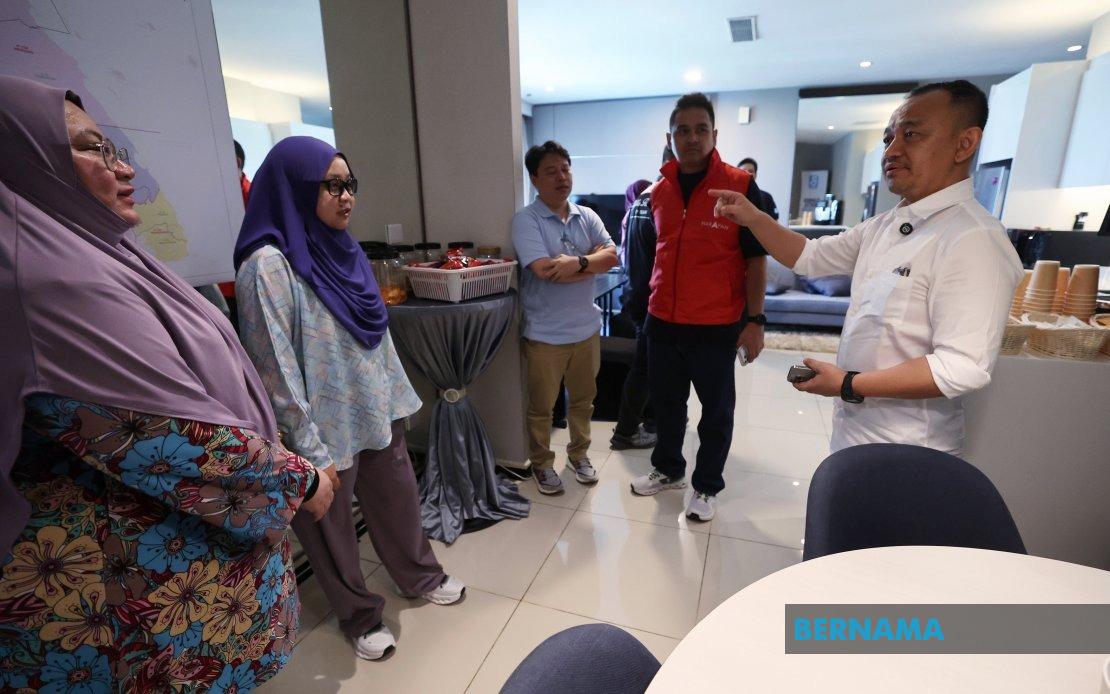
Dr Maszlee Malik, the Pakatan Harapan candidate vying for the Puteri Wangsa state seat in the July 11 Johor election, is positioning himself as a tech-savvy representative ready to harness digital tools for better governance. His signature proposal centres on launching a bespoke mobile application designed to enable residents to report municipal problems and lodge grievances with greater ease and speed. The initiative reflects a broader shift within Malaysian political campaigning towards technology-driven constituent engagement, particularly as voters increasingly expect modern, accessible channels for raising concerns with their elected representatives.
The Puteri Wangsa constituency presents a compelling case for such innovation. Maszlee characterises the seat as geographically expansive with a demographically mixed population, spanning affluent residential enclaves like Austin Heights alongside rural communities such as Felda Ulu Tebrau. This diversity creates genuine logistical challenges for traditional door-to-door campaigning and one-on-one constituent meetings. A centralised digital platform capable of capturing and categorising complaints by locality and issue type would theoretically allow his team to prioritise resource allocation and respond to problems more systematically than conventional methods permit.
Beyond simple complaint lodging, Maszlee envisions the application serving a social safety-net function. The tool would help identify marginalised residents, including single mothers and persons with disabilities, who qualify for government assistance but remain unaware of their entitlements or encounter bureaucratic barriers preventing access. This dimension addresses a persistent problem in Malaysian governance: the gap between available welfare programmes and actual uptake among eligible beneficiaries. By creating a searchable, user-friendly interface that cross-references resident profiles with available assistance schemes, the app could theoretically reduce administrative friction and ensure more equitable distribution of social support.
When asked about his inspiration, Maszlee points to New York City Mayor Zohran Mamdani's community engagement methodology, which integrates dedicated digital applications with social media to solicit direct feedback from constituents. This international benchmarking reflects an emerging trend among reformist-minded Malaysian politicians to study urban governance models elsewhere and adapt them to local contexts. However, the transposition of such models into Malaysian political and administrative frameworks remains complex, given differences in digital literacy, internet penetration, and governmental capacity across constituencies. Johor's relatively urban and economically developed character compared to rural states makes Puteri Wangsa a plausible testing ground for such innovations.
Maszlee's broader engagement strategy extends far beyond the mobile application. He is committed to sustaining regular dialogue with non-governmental organisations, residents' associations, and government agencies, supplemented by town hall forums that bring constituents and elected representatives into direct conversation about pressing local matters. This multipronged approach recognises that digital tools, whilst valuable, cannot entirely replace the trust-building and legitimacy functions that face-to-face interaction provides, particularly in Malaysian political culture where personal relationships remain significant.
His campaign team is implementing a sophisticated social media strategy explicitly designed to reach voters historically difficult to access through conventional grassroots campaigning. This includes Generation Z voters, Malaysian professionals working in Singapore, and urban working-class populations for whom time constraints limit availability for street walkabouts. The recognition that demographics diverge in their accessibility and communication preferences reflects a maturing understanding of voter heterogeneity—something Malaysian political campaigns have traditionally overlooked. Young Malaysians and cross-border workers often escape the conventional campaign's reach, yet collectively represent a growing electoral force that campaigns cannot afford to ignore.
Yet Maszlee candidly acknowledges the real limitations embedded within digital campaigning infrastructure. Social media algorithms and filter bubbles can inadvertently restrict campaign message penetration, with algorithms potentially suppressing content that falls outside users' existing information ecosystems. Rather than accepting this constraint passively, his campaign is crafting localised content variants tailored to specific neighbourhoods and demographic cohorts, accounting for socio-economic circumstances, ethnic composition, and other identifying characteristics. This granular targeting approach—differentiating messaging for Gen Z, Singapore-based workers particularly from Chinese communities, non-urban populations, and salaried professionals—recognises that no single message resonates uniformly across diverse constituencies.
The underlying logic here reflects a fundamental insight about contemporary Malaysian electoral competition: constituencies are increasingly internally diverse, with multiple distinct communities harbouring distinct concerns requiring correspondingly distinct political messaging. Generic campaign narratives that worked effectively in more homogeneous districts lose efficacy when addressing pluralistic neighbourhoods. Maszlee's acknowledgement that different communities possess different priorities and expect tailored policy attention suggests a more sophisticated political engagement model than traditional mass campaigning.
The Puteri Wangsa contest will be contested by five candidates. Alongside Maszlee, the race features Rashifa Aljunied representing the Malaysian United Democratic Alliance (MUDA), Teow Chia Ling standing for Barisan Nasional, Nicholas Paul Vincent of Parti Bersama Malaysia, and independent contender Wang Wee Siong. This five-way split potentially benefits candidates with concentrated support bases, as vote fragmentation can elevate second-preference candidates above those with broader but shallower support. The election itself is scheduled for July 11, with early voting commencing on July 7.
Maszlee's positioning as a technology-oriented reformer carries particular resonance given his prior service as education minister, a portfolio increasingly concerned with digital literacy and online safety. Whether his app proposal will meaningfully differentiate his candidacy or resonate with Puteri Wangsa voters remains uncertain, but the initiative represents a noteworthy attempt to import governance innovations into Malaysian state politics during a period when constituencies increasingly demand evidence of practical problem-solving capacity rather than purely ideological pronouncements.

