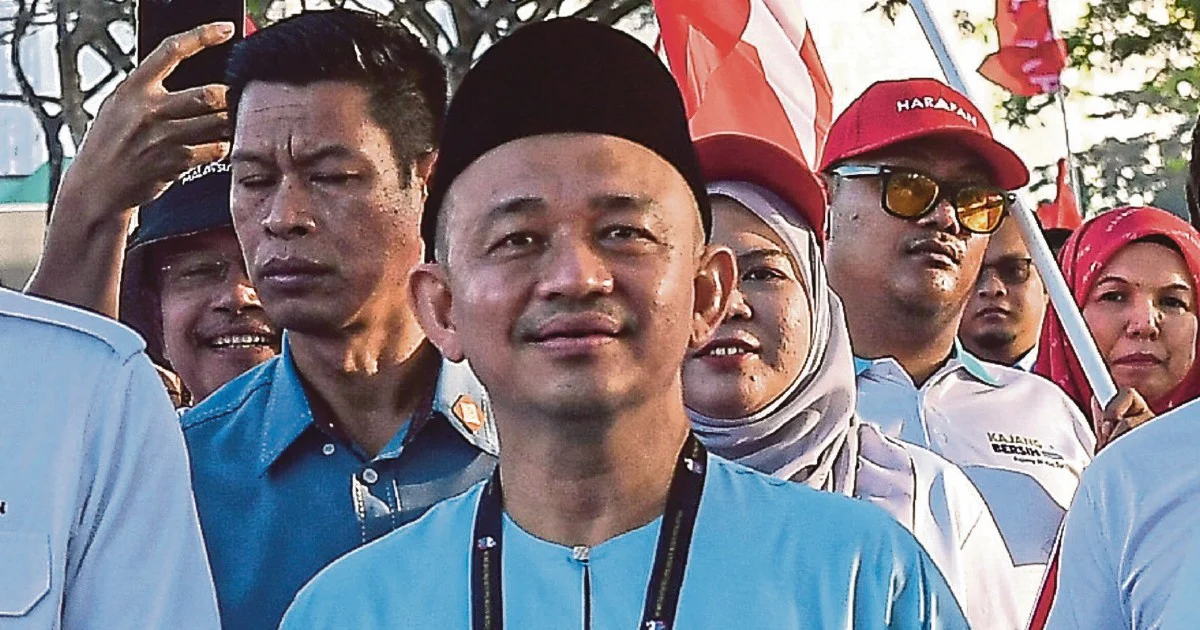
A Pakatan Harapan triumph in the Johor election, particularly in the Puteri Wangsa constituency and other contested seats, would fundamentally reshape the state's developmental trajectory and governance model, according to former education minister Dr Maszlee Malik. His comments reflect the coalition's strategic positioning ahead of polls that carry significant implications not only for Johor's political landscape but for the broader federal balance of power in Malaysia's increasingly fragmented political environment.
Dr Maszlee's remarks underscore the high stakes involved in the Johor contest, where control of the state assembly could pivot on relatively narrow margins in key constituencies. Puteri Wangsa, as a bellwether seat, represents the type of swing district that often determines the difference between comfortable governance and narrow coalitions. A PH victory would signal that the coalition has successfully mobilised urban and suburban voters, demographic groups that have become critical to political outcomes across Malaysia's economically dynamic western corridor.
The invocation of a "new chapter" for Johor carries specific meaning in Malaysian political discourse. The state has historically been dominated by UMNO and its associated political machinery, making any shift in control a watershed moment. Johor's economic importance—as a manufacturing hub, trade gateway to Singapore, and increasingly as a technology and services centre—means that state-level policy decisions ripple through the broader regional economy. Changes to business regulation, land development, labour policies, and infrastructure investment under a different state government would have cascading effects on investor confidence and economic activity.
From a governance perspective, a PH administration would likely introduce different administrative priorities compared to the incumbent regime. The coalition has previously emphasised transparency, anti-corruption measures, and greater public accountability in its manifestos. For Johor, these principles would potentially translate into revised procurement processes, enhanced fiscal oversight, and restructured relationships between state government and the business community. Such shifts can either accelerate or constrain economic activity depending on implementation quality and business sector expectations.
The timing of the Johor election occurs within a context of broader coalition mathematics at the federal level. While state elections technically occur independently of federal politics, outcomes in economically significant states like Johor carry psychological weight for federal confidence and potential implications for coalition stability. A strong PH showing would provide the federal coalition with validation of voter support, whilst conversely a poor performance would raise questions about organisational capacity and grassroots appeal.
Puteri Wangsa specifically represents an urban, relatively affluent constituency with diverse voter demographics. Success here would indicate that PH has maintained relevance among middle-class and professional voters who form the backbone of Malaysia's service economy. These voter cohorts have historically been sensitive to governance quality, service delivery, and anti-corruption credentials—areas where PH has attempted to differentiate itself from competitors.
Johor's development agenda extends across infrastructure, education, healthcare, and industrial policy. A change in state administration could redirect investments toward different priorities and potentially shift the state's positioning within Malaysia's regional economic hierarchy. The state competes with Selangor and Kuala Lumpur for foreign direct investment, talent retention, and positioning as a technology and innovation hub. State-level governance quality directly influences these competitive dynamics.
The political narrative Dr Maszlee articulates—of a "new chapter"—appeals to voter aspirations for change and improvement. This messaging strategy assumes that current governance has plateaued or become unsatisfactory to sufficient portions of the electorate. Whether this assumption reflects genuine voter sentiment or represents optimistic coalition positioning remains to be tested at the ballot box.
For Malaysian political observers and investors, the Johor election serves as a barometer of broader political trends. The result will illuminate questions about voter volatility, coalition durability, and the relative strength of competing political projects. Johor's economic weight ensures that outcomes carry implications extending well beyond state boundaries, affecting investor calculations, business planning, and federal-level political equations in the months following any result.

