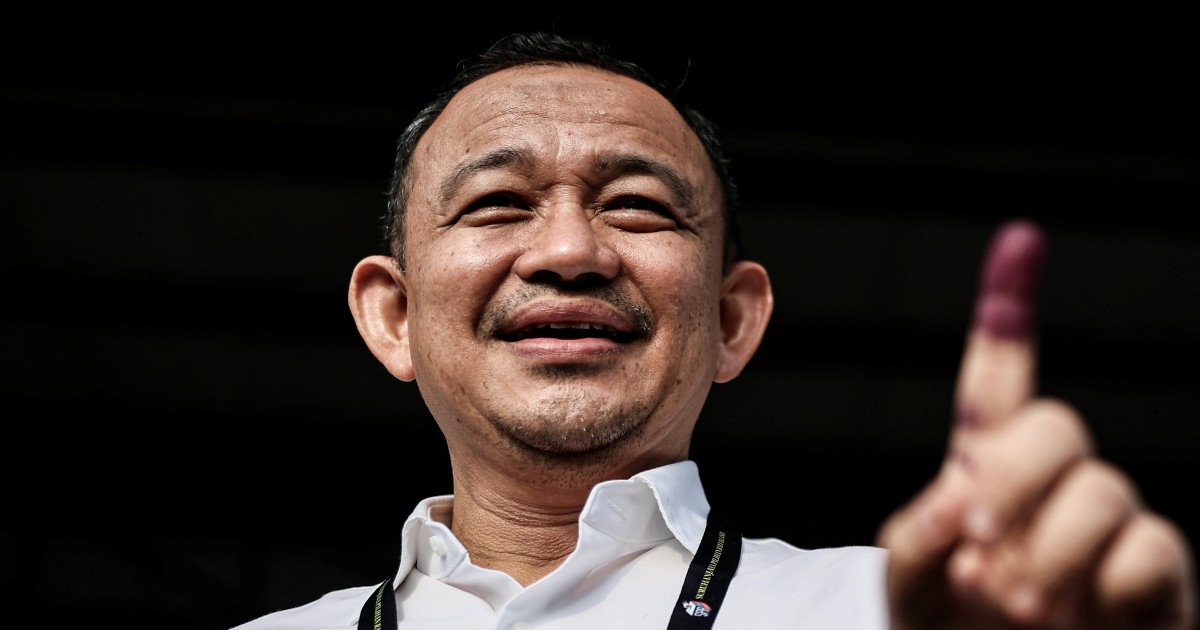
Dr Maszlee Malik, who previously served as Malaysia's education minister under the Pakatan Harapan administration, is positioned to capture the Puteri Wangsa seat in the Johor state election, marking what could be a significant breakthrough for PKR in a state where the coalition has struggled to establish electoral dominance. Preliminary tallies from voting stations across the constituency suggest the former minister has built a substantial lead over his competitors, potentially delivering PKR its first outright victory in Johor's fiercely contested political landscape.
The result carries particular weight given PKR's historically uneven performance in Johor, where the party has consistently faced headwinds despite Pakatan Harapan's formation in 2018. Dr Maszlee's personal profile as a former Cabinet minister and his advocacy on educational reform appear to have resonated with voters in Puteri Wangsa, a constituency that encompasses suburban areas of Johor Baru with diverse demographic composition. His candidacy represented an attempt by PKR to leverage high-profile personalities capable of challenging entrenched incumbent positions.
Simultaneously, the broader election results reveal a starkly different narrative for Barisan Nasional, which has demonstrated unexpected electoral vitality by making significant inroads into constituencies traditionally considered Pakatan Harapan bastions. This shift represents a substantial change from recent electoral patterns, where BN has faced considerable voter fatigue and demands for political renewal following the 2018 general election result that ended its three-decade federal dominance.
The capacity of Barisan Nasional to penetrate opposition strongholds suggests several underlying dynamics at play within Johor's electorate. Voter sentiment appears fragmented across multiple considerations, including dissatisfaction with PH component parties' delivery of promises made when the coalition held federal office from 2018 to 2020. Additionally, BN's reorganisation under new leadership and messaging appears to have gained traction, particularly among constituencies where coalition parties possess established local networks and traditional voting blocs remain influential.
For Johor specifically, this election outcome carries implications extending beyond individual seat changes. The state has emerged as a critical battleground in Malaysia's broader political contest, particularly following the federal government's expansion to incorporate former opposition figures and shifting coalition arrangements. Johor's electoral direction influences perceptions of momentum heading into future national elections, making results here a closely watched indicator of voter sentiment across the broader Peninsular Malaysia.
Pakatan Harapan's mixed performance in Johor reflects ongoing challenges the coalition faces in translating its 2018 victory into sustained electoral support. While Dr Maszlee's prospective win offers a symbolic achievement for PKR, the broader losses across constituencies suggest the coalition struggles with voter retention and persuasion in a state where economic concerns, infrastructure development, and governance effectiveness dominate electoral discourse. The coalition's internal dynamics—including tensions between component parties and questions about unified positioning—appear to have affected its competitive capacity.
Barisan Nasional's resurgence in Johor comes amid broader repositioning across Malaysian politics. The coalition has worked to rebuild its organisational machinery and reframe its political messaging toward younger voters while retaining traditional supporter bases. In Johor, where BN component parties historically maintained strong grassroots presence, revitalising these networks appears to have yielded electoral dividends. The results suggest voters remain open to evaluating BN candidates and parties on their individual merits rather than wholesale rejecting the coalition.
The geographic distribution of BN's gains becomes particularly significant when examining the nature of constituencies it has penetrated. If BN has succeeded in taking seats from PH in urban-oriented areas and middle-class constituencies, this would represent a fundamental shift in voting patterns that previous elections did not suggest. Such movements could reshape calculations for future elections, as urban and suburban voters have been viewed as increasingly volatile and responsive to issues of governance, economic management, and anti-corruption measures.
Dr Maszlee's background as education minister provides another lens through which to interpret these results. His tenure remained contentious, with debates continuing over curriculum reforms and educational policy direction. That he nonetheless appears capable of winning election suggests either that local Puteri Wangsa voters prioritised other considerations or that his candidacy successfully transcended previous controversies. This outcome may offer PKR a template for candidate selection in future contests, pointing toward individuals with national visibility and specific ministerial portfolios.
For Malaysian observers and regional analysts, these Johor results underscore the unpredictability of contemporary electoral dynamics. Traditional assumptions about voter behaviour require constant reassessment as political alignments shift and new personalities reshape competition within constituencies. The apparent simultaneity of Dr Maszlee's prospective victory and broader BN advances suggests Johor voters have rejected broad ideological framings in favour of evaluating specific candidates and local considerations.
Looking forward, both coalitions will likely draw competing lessons from this election. Pakatan Harapan may seek to consolidate around high-profile individuals capable of winning personal mandates, while Barisan Nasional may view these results as validation for its ongoing organisational rebuilding efforts. The sustainability of BN's apparent momentum and the durability of Dr Maszlee's expected victory will become clearer as subsequent electoral contests unfold across Malaysia.

